If Afghanistan does not witness a modicum of internal stability, adherence to human values and shuns terrorism of all hues, not only the region but beyond too will be impacted adversely, writes Lt Gen Kamal Davar (retd) for South Asia Monitor


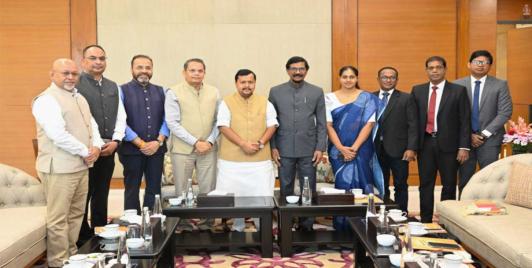
For Sri Lankan politics, this is more than diplomatic sightseeing. It raises a fundamental question whether the JVP is developing a sophisticated strategy of balancing relations with India and China or is it gradually adapting itself to the organisational models of powerful one-party or dominant-party systems in China and India respectively?

The ongoing civil war in Myanmar has caused an influx of armed cadres (Meitei, Naga and Kuki) into Manipur's border tracts like Kamjong district, further squeezing finite land resources and aggravating historical territorial disputes. What began as a localized dispute under the state's newly elected government in February 2026 has escalated into intense, multi-district armed warfare.

Hamidullah’s tenure has been marked by promotion of Bangladesh's soft power, with the envoy going around the country underlining the deep roots of people-to-people ties.
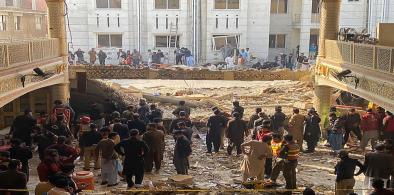
India must also recognise that Pakistan's internal security crisis has wider regional implications. Escalating Pakistan–Afghanistan tensions could create additional uncertainty along the western frontier, while attacks on Chinese projects could affect regional connectivity and investment.
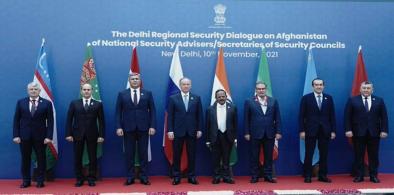
If Afghanistan does not witness a modicum of internal stability, adherence to human values and shuns terrorism of all hues, not only the region but beyond too will be impacted adversely, writes Lt Gen Kamal Davar (retd) for South Asia Monitor
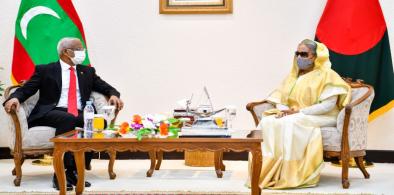
Hasina's visit to the Maldives is in keeping with Bangladesh's larger aspirations, writes Ozair Islam for South Asia Monitor

Fairness, sustainability and dialogue must be cornerstones of any climate change policy, not a dialogue bogged down by Westernized notions, write Nishtha Gupta and Aditya Matolli for South Asia Monitor
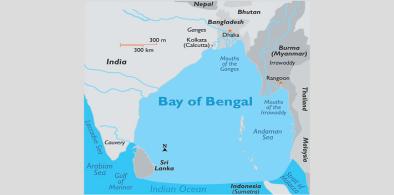
Whether Bangladesh is involved in the Indo-Pacific Strategy or Belt and Road, it must maintain peace and rule of law to reap maximum economic benefits from the Bay of Bengal, writes Pathik Hasan for South Asia Monitor

The China-Iran partnership scenario is not a product of coincidental political and trade decisions over the years, but rather a part of a carefully crafted policy, writes Ivaylo Valchev for South Asia Monitor
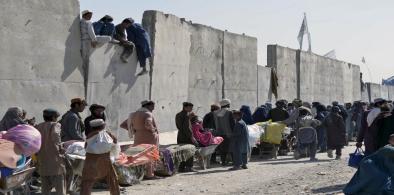
Support to the Pakistan Taliban and Afghan Taliban is rebounding on Islamabad as both Talibans don’t recognize Durand Line and want Pakistan to be Sharia-ruled, writes Lt Gen P. C. Katoch (retd.) for South Asia Monitor

The Killer Squadron traces its genesis to the 1971 war when it took part in operations that enabled the Indian Navy to dominate the Arabian Sea, crippling the Pakistan Navy, writes Col Anil Bhat (retd) for South Asia Monitor
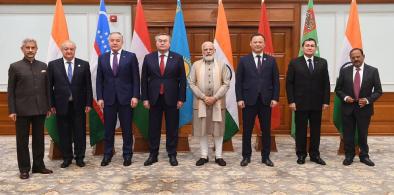
India, as also Eurasia – Russia and the Central Asian Republics (CARs) - have a common adversary in terrorism and need to make it a common goal to work on, writes Mahendra Ved for South Asia Monitor

How does India compare with the South Asian neighbourhood? The World Inequality Lab database indicates that regional disparities are less than India’s, writes N. Chandra Mohan for South Asia Monitor

With some 600 million Indians facing high to extreme water stress, ‘games’ offer vital insights for expanding self-governance to help people manage water more sustainably, write Ruth Meinzen-Dick and Pratiti Priyadarshini for South Asia Monitor

The two countries’ leaders have brought Delhi and Dhaka closer and can together bring economic prosperity to South Asia, writes Pathik Hasan for South Asia Monitor
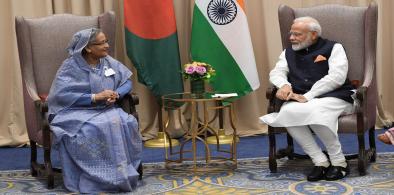
The foremost geostrategic challenge for India vis-à-vis Bangladesh is to counter the machinations of the China-Pakistan axis, writes Amb Pinak Ranjan Chakravarty (retd) for South Asia Monitor
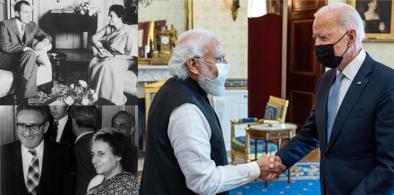
As a result of the Nixon-Kissinger folly that made it an accomplice of the Pakistani crimes in Bangladesh, Washington is now facing a formidable rival in China, writes Arul Louis for South Asia Monitor
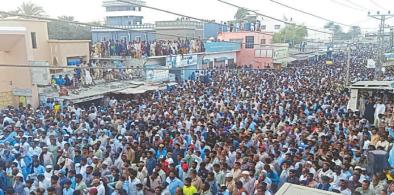
The movement in Gwadar under the leadership of Maulana Hidayat Ur Rehman Baloch has attracted a massive number of people across Balochistan, especially from the Mekran region, writes Nizam Hassan for South Asia Monitor

The development of tribal people in the Chittagong Hill Tracts is much better than any remote region of Bangladesh, writes Hafizur Talukdar for South Asia Monitor