

India’s Indo‑Pacific Assertion: Act East Policy in Action in Modi Visit
The significance of PM Modi's visits marks a shift from episodic diplomacy to structured engagement. The convergence of defence, economics, and technology across these four partnerships signals a pragmatic foreign policy.
 Jul 08, 2026
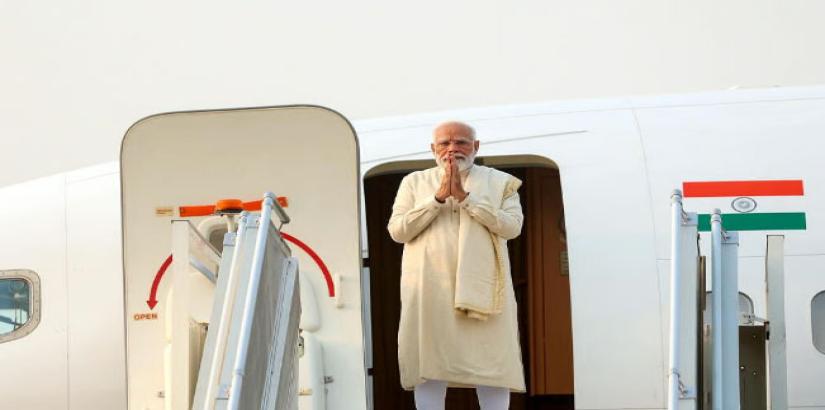
India’s Act East Policy, launched in 2014 as an upgrade to the earlier Look East approach, has steadily matured into a strategic framework that anchors New Delhi’s engagement with the Indo‑Pacific. At its core, the policy reflects India’s recognition that its economic growth, maritime security, and geopolitical leverage are inseparable from developments east of the Bay of Bengal.
The Indo‑Pacific is the world’s most dynamic economic corridor, but it is also the arena of intensifying competition, particularly with China’s expanding footprint. For India, “Act East” is not a slogan but a necessity: it is about securing sea lanes, diversifying supply chains, and building coalitions with democracies that share concerns about China’s coercion and instability.
Japan PM Visit
The past month has seen a remarkable acceleration of this policy. Japanese Prime Minister Sanae Takaichi’s visit to India produced outcomes that go well beyond symbolism. Tokyo pledged over $12 billion in new investments, while the two sides signed more than a hundred MoUs covering defence technology, semiconductors, and artificial intelligence. A co‑development project in naval antenna systems signals deeper defence cooperation, while agreements on energy resilience, including crude oil reserves and maritime transport address vulnerabilities exposed by global supply shocks.
The initiative to establish 1,000 biogas plants adds a sustainability dimension. These steps are not isolated; they represent a deliberate push to reduce dependence on China‑centric supply chains and to strengthen maritime security in the East and South China Seas. Japan’s role as a trusted partner in technology and defence makes it indispensable to India’s Indo‑Pacific calculus.
Modi's Three-Nation Trip
Prime Minister Modi’s ongoing tour of Indonesia, Australia, and New Zealand builds directly on this momentum. In Jakarta, defence and minerals dominated the agenda. Indonesia’s decision to procure BrahMos missiles worth over $600 million, alongside Astra air‑to‑air missiles, marks a significant deepening of military ties. The development of Sabang Port, strategically located near the Malacca Strait, adds a maritime edge to the partnership, giving India a foothold near one of the world’s busiest shipping lanes.
Equally important is cooperation in critical minerals such as nickel, copper, bauxite, and tin, that are vital for India’s clean energy transition and industrial resilience. India’s support for Indonesia‑specific electronic voting machines and the establishment of an IIM Bangalore campus further broaden the relationship, embedding economic and educational linkages into the strategic framework.
Australia offers another layer of depth. As a Quad partner, Canberra is central to India’s Indo‑Pacific security architecture. Discussions are expected to yield agreements on uranium supply, critical minerals, and cybersecurity. Bilateral trade, already at AUD 54 billion under the Economic Cooperation and Trade Agreement, is set to expand further. Defence cooperation continues to grow through joint military exercises and maritime domain awareness initiatives.
For India, Australia is not just a source of energy and minerals but a partner in shaping the rules of the Indo‑Pacific. Together, the two democracies can push back against coercive practices and ensure freedom of navigation across vital sea lanes.
New Zealand, often overlooked in India’s foreign policy calculus, is now being brought into the fold. Modi’s visit - the first in four decades comes on the heels of a free trade agreement signed earlier this year. The pact eliminates tariffs on 95 percent of New Zealand exports while granting duty‑free access for Indian goods. It also includes talent mobility visas for 5,000 Indian professionals and expanded student pathways.
New Zealand’s commitment of $20 billion in long‑term investments into India adds economic heft to the relationship. Beyond trade, this engagement signals India’s intent to broaden its reach into the South Pacific, diversifying partnerships and strengthening people‑to‑people ties.
A Coherent Indo-Pacific Strategy
Taken together, these visits and agreements breathe new life into the Act East Policy. They demonstrate India’s ability to weave defence, economic, and technological strands into a coherent Indo‑Pacific strategy. Yet challenges remain. The risk of these partnerships being reduced to ceremonial photo opportunities is real unless mechanisms are put in place to ensure implementation. Joint working groups, clear timelines, and monitoring frameworks are essential to translate commitments into action.
Domestically, India must enhance its manufacturing capacity, research and development, and regulatory readiness to absorb investments and technology transfers. Without such preparedness, even the most ambitious agreements risk stagnation.
China’s expanding footprint across the Indo‑Pacific has long tested India’s strategic patience. For too long, New Delhi has been overly cautious about Beijing’s sensitivities, often receiving little in return. The new partnerships with Japan, Indonesia, Australia, and New Zealand must therefore be seen not as hedging manoeuvres but as deliberate steps to counterbalance China’s coercive practices.
India is right to assert its strategic autonomy and to deepen defence, economic, and technological ties without apology. By embedding these outcomes into regional frameworks such as BIMSTEC and the Indo‑Pacific Oceans Initiative, India can project itself as a proactive leader shaping the rules of engagement in the region. This is not about provocation, but about ensuring that the Indo‑Pacific remains open, secure, and resilient, and that India’s interests are safeguarded against unilateral attempts by China to dominate the regional order. This approach also allows India to be viewed amongst ASEAN countries, as a power that is ready to do the heavy lifting required to ensure stability.
Clear Response to China Challenge
The Act East Policy today is no longer aspirational rhetoric. It is becoming a lived reality. Japan’s technological and defence cooperation, Indonesia’s mineral and maritime partnership, Australia’s energy and security alignment, and New Zealand’s trade and talent mobility initiatives together mark a decisive step forward. If India can ensure that these agreements are implemented with seriousness and sustained political will, the policy will evolve into a robust framework that secures India’s strategic autonomy and strengthens the Indo‑Pacific order.
The significance of PM Modi's visits marks a shift from episodic diplomacy to structured engagement. The convergence of defence, economics, and technology across these four partnerships signals a pragmatic foreign policy. The challenge now is execution. If India can follow through on the commitments announced in New Delhi with Japan, and build on the agreements already reached in Jakarta, while also ensuring that the forthcoming engagements in Canberra and Wellington yield tangible outcomes, the Act East Policy will stand as a cornerstone of India’s rise in the Indo‑Pacific. It will serve as a clear response to China’s challenge, a guarantor of regional stability, and a pathway to economic resilience.
(The author, an Indian Air Force veteran, served in various command, instructional and staff appointments for over 32 years and writes on geopolitics, international relations and defence issues. Views expressed are personal. His X (formerly Twitter) handle is @aparagonpilot and email praveerp@rediffmail.com )







Post a Comment