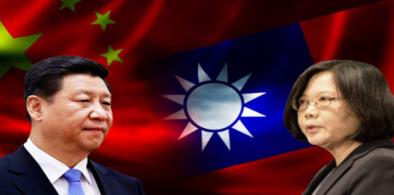
The short game might be Beijing’s to lose for now, but the long game is certainly Washington’s to squander away, writes Collins Chong Yew Keat for South Asia Monitor
Neutrality and balance — Colombo’s habitual vocabulary — have yielded little economic benefit. Ultimately, Sri Lanka slid into bankruptcy. Given this background, the land link is not merely a strategic starting point but a necessity. India’s strategic position on Sri Lanka is perennial; whether the bridge is built or not, India’s concerns remain fundamental. As an immediate neighbour and rising global power, India will not allow rivals to use Sri Lanka as a base.
If India and China choose collaboration by setting aside strategic suspicion in the climate domain, they could fundamentally reshape the trajectory of the 21st century, as they have already demonstrated individually through their pursuit of clean energy over the past decade. More importantly, such a coalition could revive the COP28 fossil-fuel phase-down pledge, which stalled at COP29 in Baku and appears to be drifting further at COP30 in Belém.
Increased industrial activity in India could generate demand for raw materials, intermediate goods, and services from countries such as Nepal, Bhutan, Bangladesh, and Sri Lanka. Bangladesh’s textile industry could strengthen its links with Indian manufacturing networks, while Sri Lanka may gain from expanded opportunities in tourism, logistics, and services.
ADB’s role has evolved beyond financing into shaping India’s structural transformation into a high-growth, technology-driven, and climate-conscious economy. Compared to other multilateral institutions, it offers a more agile, implementation-focused, and regionally attuned approach. As India moves toward becoming one of the world’s largest economies, this partnership will play a defining role in shaping not only India’s growth trajectory but also the broader economic future of Asia.
The short game might be Beijing’s to lose for now, but the long game is certainly Washington’s to squander away, writes Collins Chong Yew Keat for South Asia Monitor
Vietnam, an important country of the ASEAN (Association of Southeast Asian Nations), has territorial disputes with China in the South China Sea region. India has oil exploration projects in the Vietnamese waters in the South China Sea. India and Vietnam have been boosting their maritime security cooperation in the last few years to protect common interests.
Since the US is not a member of RCEP, the collaborative approach of the US and India will pose a big challenge to RCEP, which falls under Chinese influence, writes S. Majumder for South Asia Monitor
Michael Kugelman, a senior fellow at the Washington-based Wilson Centre, noted in a Foreign Policy Brief that the Biden administration’s growing engagement with countries like Sri Lanka, Nepal, and the Maldives, “marks a shift for Washington, which in recent decades has expended most of its diplomatic capital in the region on India, Pakistan, and Afghanistan.”
Beijing also seems nervous as its earlier run, largely on the back of support of the now-discredited Rajapaksa brothers, appears to have come to an end. Unlike earlier, a crisis-hit Sri Lanka in need of assistance is more eager than any time before in recent years to embrace India, the West, and the United States.
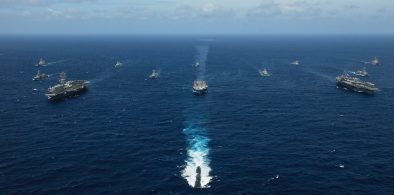
Kim Jong-un's new strategy shifts the region's counter-reaction to a new level of risk that will invite changes in the dynamics of the military spectrum, writes Collins Chong Yew Keat for South Asia Monitor
The summit is taking place under the shadow of the Russia-Ukraine conflict. It is also taking place at a time when relations between China and the Quad member countries have become fraught, with Beijing increasingly challenging democratic values and resorting to coercive trade practices.
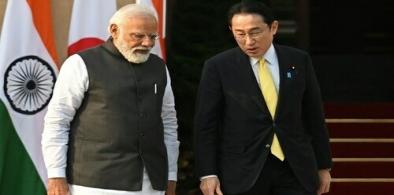
A review of Quad initiatives is one of the key agendas for the four world leaders, an Indian government statement quoted the prime minister as saying before his departure. The grouping includes the world’s oldest and largest democracies — Japan, India, Australia and US — and represents a combined GDP of $34 trillion, or 40 per cent of the global total.
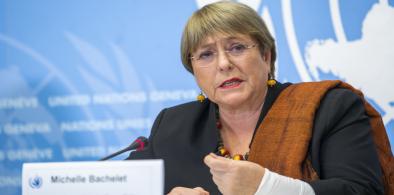
Bachelet, during her China visit between 23-28 May, will “meet with a number of high-level officials at the national and local levels, civil society organizations, business representatives, academics, and deliver a lecture to students at Guangzhou University,” the statement released by her office said on Friday
But what came as surprise amid this report was the Chinese state media's defence of India after criticism from Group of Seven (G7) nations, ANI news agency said. Global Times, a Chinese government outlet said, "Blaming India won't solve the food problem."
Chinese firms also raised objections to Pakistan’s new draft renewable energy policy, which, interestingly, calls for international competitive bidding—something the Chinese have been advocating in the Sri Lankan power sector, mainly to counter Indian influence
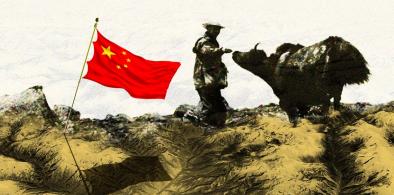
In his book "India-China Boundary Issues", late Indian diplomat R S Kalha observed that, "China will continue its policy of keeping India strategically confined to South Asia with the active assistance of Pakistan, and strategically imbalanced by continuing incursions across the LAC.In such an event, there is little change that there will be any meaningful forward movement in the settlement of the boundary dispute between India and China."
“Earlier, we used to say Chinese have strategic patience. They are ready to wait. Now, the present India has come up a long way and we also have strategic patience and we are also ready to wait,” he said
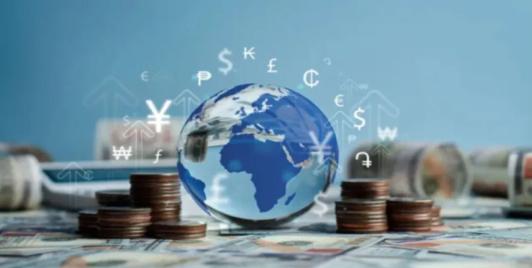
Currently, the total trade between India and China is exchanged through US dollar per se. As the Chinese yuan is not a global currency, it is more stable than the US dollar, writes S. Majumder for South Asia Monitor
Significantly, Colombo is also seeking bridge financing through bilateral means from India and China as the negotiations with the IMF will take at least three-four months. So far, New Delhi has provided assistance worth $2.4 billion dollars in form of lines of credits and loan repayment deferment.