

Taiwan is but one piece in China’s arc of aggression that runs through the Indo-Pacific region and veers into the Himalayas for the border confrontation with India. The US sees Beijing’s policy in the region as a step towards global domination.
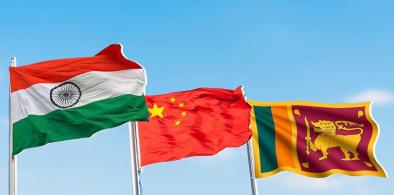
Neutrality and balance — Colombo’s habitual vocabulary — have yielded little economic benefit. Ultimately, Sri Lanka slid into bankruptcy. Given this background, the land link is not merely a strategic starting point but a necessity. India’s strategic position on Sri Lanka is perennial; whether the bridge is built or not, India’s concerns remain fundamental. As an immediate neighbour and rising global power, India will not allow rivals to use Sri Lanka as a base.
If India and China choose collaboration by setting aside strategic suspicion in the climate domain, they could fundamentally reshape the trajectory of the 21st century, as they have already demonstrated individually through their pursuit of clean energy over the past decade. More importantly, such a coalition could revive the COP28 fossil-fuel phase-down pledge, which stalled at COP29 in Baku and appears to be drifting further at COP30 in Belém.
Increased industrial activity in India could generate demand for raw materials, intermediate goods, and services from countries such as Nepal, Bhutan, Bangladesh, and Sri Lanka. Bangladesh’s textile industry could strengthen its links with Indian manufacturing networks, while Sri Lanka may gain from expanded opportunities in tourism, logistics, and services.
ADB’s role has evolved beyond financing into shaping India’s structural transformation into a high-growth, technology-driven, and climate-conscious economy. Compared to other multilateral institutions, it offers a more agile, implementation-focused, and regionally attuned approach. As India moves toward becoming one of the world’s largest economies, this partnership will play a defining role in shaping not only India’s growth trajectory but also the broader economic future of Asia.
Taiwan is but one piece in China’s arc of aggression that runs through the Indo-Pacific region and veers into the Himalayas for the border confrontation with India. The US sees Beijing’s policy in the region as a step towards global domination.
Like other nonaligned states in South Asia, Nepal seeks strategic space to pursue relations with China, India, and the United States on its own terms. That’s harder to do as countries fall over one another to court Kathmandu.
Strengthening military cooperation has the potential to provide strategic benefits for both of them. Due to their geostrategic importance, Bangladesh and Myanmar have become a hotspot in the western front’s Indo-Pacific Strategy (IPS) and China's Belt and Road Initiative (BRI).
Separately at a meeting of the India-US initiative on Critical and Emerging Technology (iCET) led by Doval and US National Security Adviser Jake Sullivan, the US committed to expeditiously review a GE proposal to jointly produce jet engines to power jet aircraft manufactured indigenously by India, according to the White House
Indonesia sees Malaysia and Australia as key players, including Vietnam and the Philippines, in forming a stronger common cooperative platform in facing the challenges of China in the Indo-Pacific.
The tunnel will link the Asian Highway network. Through this route, goods can be moved directly across the border between India, Bangladesh, and Myanmar.
China’s English language publication Global Times had said these "observers" - euphemism for party apparatchiks - had warned New Delhi of “new barriers” in talks related to de-escalation if India were to go ahead with the transportation of its most advanced missile to the western side of the LAC. It was also reported that China was quite riled about widening of roads on the Indian side of the LAC for the purpose of transporting heavy equipment, including BrahMos missiles.
The implementation of this project in Eastern Ladakh and other sectors along the LAC is going to predictably rile the Chinese.
Domino effects seen in various countries at the receiving end of Beijing's political bearhug and economic penetration, from port takeovers to media influence, should warrant alarm bells in Kuala Lumpur. Policymakers here are in full awareness of this dilemma, but it takes more than political will to reimagine a new direction in Malaysia’s thinking and policy orientation.
India’s narrative against China must be reviewed and reframed and the appropriate use of India’s military capability must get accepted by the political leadership.
With the declining impact of deterrence measures, including dwindling effectiveness of confidence-building measures and a wide array of dialogue-building processes in trying to mitigate risks of conflicts, the question of a full-blown conflict stemming from the inevitability of Thucydides’ trapping would be a matter of when and where.
When the Security Council’s Counter-Terrorism Committee (CTC) met in Mumbai last month, an audio clip of Sajid Mir directing the 26/11 terrorists at the Chabad House Jewish cultural centre was played to focus on the role of the terrorist under Beijing protection at the UN.
The rise of nationalist sentiments globally and in Europe, as seen in the premiership of Giorgia Meloni in Italy and Rishi Sunak in Britain, are conflating political circumstances for a global pushback against China’s actions where these countries are ready to call out China in a more forthright manner.
A forceful "unification" of Taiwan has been projected by most analysts as happening within the next five years of Xi’s new third term, as he will need this to cement a history-making legacy that will help him extend his rule for life
Bangladesh negotiated with India for 35 years, but the negotiations did not make any headway due to the river's importance to West Bengal. So Bangladesh has to look for other solutions where advanced Chinese technologies and experiences may have something to offer.