Sri Lankan energy crisis, primarily caused by the severe foreign exchange shortage, has reached a dangerous level this week as the country struggles to manage multiple interlinked crises, forcing authorities to ration both electricity and fuel


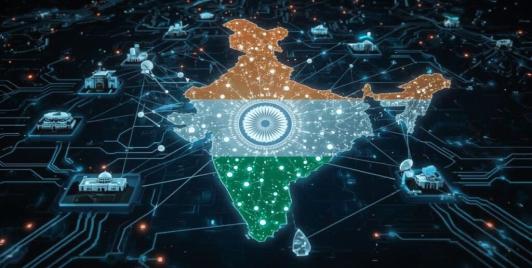
For a Viksit Bharat, data, computation and intelligence will become strategic resources. Protecting them is not protectionism; it is prudent nation-building. India should remain globally connected, internationally collaborative and technologically ambitious but sovereign enough to protect its citizens, institutions and national interests.

The real significance of AI, therefore, may not be about who is the first to cross some hypothetical finish line called AGI. It may be about who is able to diffuse AI most rapidly through the real economy, into factories, services, logistics, research and everyday business

But a plausible scenario about fear of AI could result when a rogue human coder may put in a malicious code (out of mischief ) in this far-from-equilibrium AI system and start a chain of events which may destroy the system.
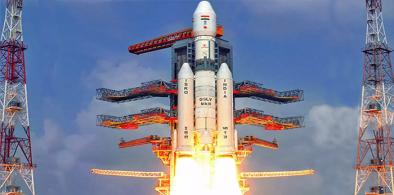
The purpose of privatisation, therefore, should not be to find a private buyer for every government-developed rocket. It should be to create an industry capable of designing, manufacturing, operating and eventually improving India's future launch vehicles.
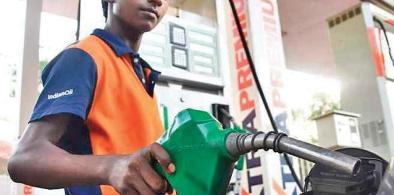
Sri Lankan energy crisis, primarily caused by the severe foreign exchange shortage, has reached a dangerous level this week as the country struggles to manage multiple interlinked crises, forcing authorities to ration both electricity and fuel

The ongoing war in Ukraine will significantly impact the tourism industry, said Maldives’ Tourism Minister Abdullah Mausoom, as tourists from Russia and Ukraine, the two countries at war now, comprise almost 20 percent of the country’s total tourists
Sri Lankan officials are expected to hold talks with the International Monetary Fund (IMF) and the World Bank for support as Colombo faces a severe economic crisis, including a shortage of fuel and essentials
The World Bank has approved a proposal to provide $300 million to Bangladesh to help strengthen its local governance against the pandemic shock and make them resilient to future shocks
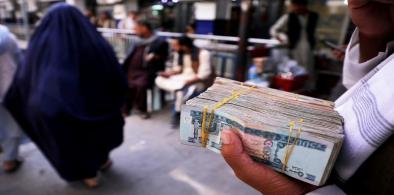
Iran has assured its assistance to help rebuild the Afghan economy, the Taliban’s Foreign Affairs Ministry said
Nepal and India on Thursday discussed enhancing bilateral energy cooperation, development of energy resources, and power trade among other related issues during the meeting of the Joint Steering Committee in Kathmandu

Billionaire philanthropist and Microsoft co-founder Bill Gates has praised India for its vaccine-manufacturing prowess and applauded the efforts of the country's manufacturers for supplying affordable vaccines across the world

Tourism-dependent Maldives welcomed Air India flight AI-267 with a water cannon salute at Male airport on Monday, commemorating 46 years of air service between the two countries
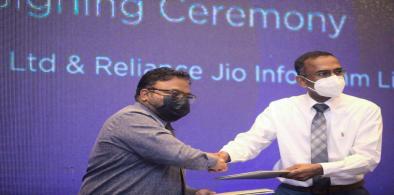
Reliance Jio Infocomm, India's largest mobile operator, will land the multi-terabit India-Asia-Xpress (IAX) undersea cable system in the Maldives’ Hulhumale, a reclaimed island south of North Male, the company confirmed in a statement on Monday
India and the US are in dialogue to look at ways beyond a free trade agreement to promote economic ties by providing better market access and enhanced engagement on investments, India's Commerce and Industry Minister Piyush Goyal said on Sunday
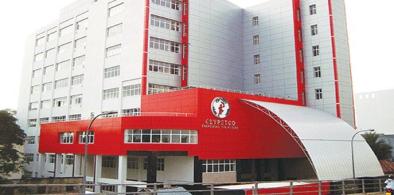
Sri Lanka's state-owned petroleum company has run out of cash, the country’s Energy Minister Udaya Gammanpila said, warning a severe fuel shortage is inevitable if tariffs aren’t increased or the government doesn’t provide another bailout
What began as a forex crisis, primarily because of the collapse of the tourism industry, blew up into an energy crisis, and now seems to jeopardise the revival of the same tourism industry.
Despite being a net energy surplus country, Nepal still imports electricity from India to supply to some regions which remain off the national grid
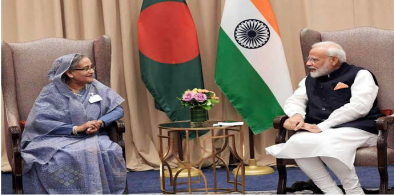
Bangladesh’s holistic development is viewed positively by New Delhi, with new opportunities arising along India’s northeastern region
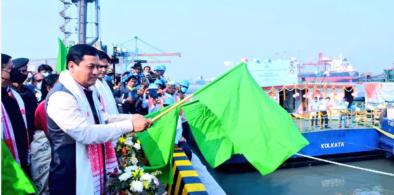
In a move to demonstrate the effectiveness of multi-modal cargo movement in eastern South Asia, the maiden voyage of a steel cargo-laden barge from Syama Prasad Mookerjee Port in Bengal's Haldia to Pandu Port in Guwahati was flagged off by India's Ports, Shipping and Waterways Minister Sarbananda Sonowal through what is being called in official jargon the Indo Bangladesh Protocol Route (IBPR)