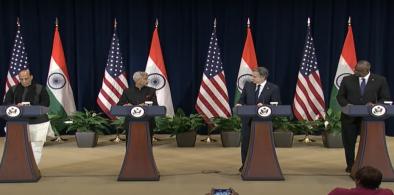
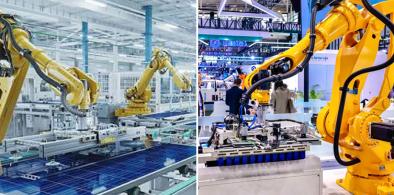

India's Home Minister Amit Shah on Thursday said the country needed to expand trade with the neighbouring countries as in the next ten years it would be among the top manufacturing countries. He, however, did not specify the countries
What we are witnessing today may only be the opening chapter. The next breakthroughs in AI may not emerge from software laboratories alone, but from nuclear reactors, cooling technologies, offshore infrastructure, advanced materials, and energy networks. The race to build intelligence has quietly become a race to master power and heat.
The era of secure, routine, desk-bound clerical jobs is drawing to a close. It is urgent for the younger generation to break free from the illusion of traditional white-collar stability and pivot toward high-value skills, tech-driven entrepreneurship, modern agriculture, or practical, specialized trades. Failing to adapt to this cognitive shift means risking economic obsolescence under the relentless advance of technology
In the effort to combat this multi-dimensional challenge, democratic states are faced with deep policy constraints, many of which can be paralyzing. The fundamental paradox is how to maintain the open, democratic character of the digital commons while at the same time countering more advanced opponents who are not held back by democratic principles. Disseminating disinformation is a tactic governments use to influence public opinion that has the potential to conflict with the strong constitutional freedoms of expression that exist in liberal democracies.
The integration of AI and Generative AI is not a distant aspiration — it is an active investment already reshaping how ports operate, how cargo moves, and how supply chains absorb shocks. For India and its neighbours, the imperative is clear: build the data foundations, governance frameworks, and human capabilities that allow intelligent mobility to reach not just the terminal gate, but every link in the maritime supply chain.
India's Home Minister Amit Shah on Thursday said the country needed to expand trade with the neighbouring countries as in the next ten years it would be among the top manufacturing countries. He, however, did not specify the countries
Sri Lanka will seek support from the International Monetary Fund (IMF), President Gotabaya Rajapaksa announced in a rare speech on Wednesday, where he acknowledged, for the first time, “sufferings” and “difficulties” faced by people as the island country faces one of its worst economic crises
Accounting for under 3 per cent, Russia is not a major supplier of oil to India, which gets most of it from the Middle East, while the US is also emerging as an important source for energy products
Dhaka has also been exploring trilateral cooperation in power sectors among India-Bhutan-Bangladesh and Nepal-India-Bangladesh
A new study conducted by the International Financial Corporation (IFC) and Dhaka Stock Exchange (DSE) puts Bangladesh at the top in South Asia when it comes to women’s leadership in listed firms. In 2021, women directors in listed firms were around six percent in comparison to five percent in 2020 when the Covid-19 pandemic hit the world.
Sri Lanka last week signed a deal with India’s Adani Group, awarding the latter two mega renewable power projects in the northern part of the country, as Colombo faces its worst power crisis, primarily caused by the foreign exchange crisis, in decades
Amidst the Ukraine war, Indian exporters are worried about exports and have seen an early trend in declining orders for engineering goods and apparels
Despite the Russia-Ukraine war that has sent oil prices skyrocketing, there will be no shortage of crude oil in India, even though the country imports the bulk of its energy requirements, Petroleum and Natural Gas Minister Hardeep Singh Puri assured
Indian External Minister S Jaishankar and Sri Lankan Finance Minister Basil Rajapaksa held a telephonic conversation and the former assured that New Delhi will continue to assist the island country which has been going through perhaps its worst economic crises
In a further intent of their deepening ties and optimising bilateral connectivty, India and Bangladesh will conduct a joint study on Comprehensive Economic Partnership Agreement (CEPA) at a commerce secretary-level talks on Friday, according to an official statement
Contrary to the Taliban’s previous assurances on banning poppy cultivation, the group this year seems to be actively encouraging opium production
Sri Lankan energy crisis, primarily caused by the severe foreign exchange shortage, has reached a dangerous level this week as the country struggles to manage multiple interlinked crises, forcing authorities to ration both electricity and fuel
The ongoing war in Ukraine will significantly impact the tourism industry, said Maldives’ Tourism Minister Abdullah Mausoom, as tourists from Russia and Ukraine, the two countries at war now, comprise almost 20 percent of the country’s total tourists
Sri Lankan officials are expected to hold talks with the International Monetary Fund (IMF) and the World Bank for support as Colombo faces a severe economic crisis, including a shortage of fuel and essentials
The World Bank has approved a proposal to provide $300 million to Bangladesh to help strengthen its local governance against the pandemic shock and make them resilient to future shocks