

Representational Photo

AI: Aid to the Mind, Not a Substitute for the Mind

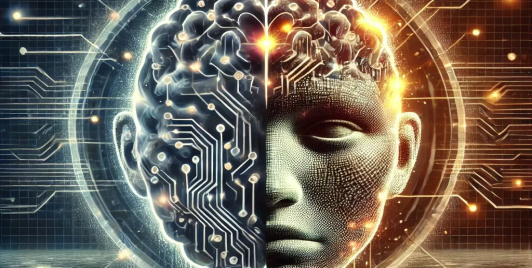
The frightening possibility is not that AI becomes more capable than humans. It is that humans stop exercising capabilities they already possess, or have not yet developed, because AI can perform those functions for them.

Months Ahead of the Monsoon: Can AI Give Us an Earlier Warning About El Niño?

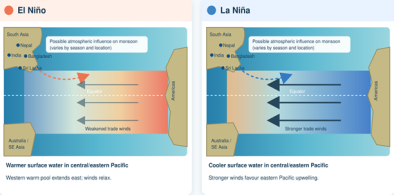
AI may genuinely extend the horizon over which seasonal climate risk can be estimated.  For communities across South Asia living under the influence of the monsoon, a longer view could mean the difference between a farmer adjusting her planting in time and a family receiving a flood warning too late to act.

AI at the Crossroads: Who Is Driving Humanity?

The central danger is, therefore, not simply that AI will be monstrous if the accelerator is pressed hard on the speed of technology. It is that the accelerator on human institutions also needs to be pressed harder to govern increasingly powerful technology.

America Has the Brain, China Has the Body: The Next US–China Tech War Will Determine Who Wins the Race for Global Dominance

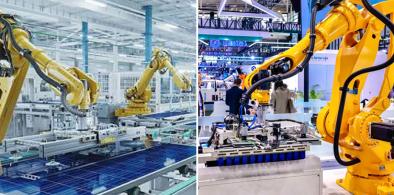
The fear of Chinese robots being the Trojan horse that can affect American and Western tech dominance and undermine cyber and military advantage will always be a strategic concern, despite attempts to view these fears as overblown.

More on AI, Tech and Innovation

Closing South Asia’s Mental Health Gap With AI: It can Improve Access, Reduce Delay and Connect More People

For people with mild to moderate distress, an AI-assisted system could provide brief, structured support based on evidence-based psychological techniques. For high-risk cases such as suicidal thoughts, psychotic symptoms, or acute trauma, the system should immediately refer the person to a human professional or a trained community health worker. 

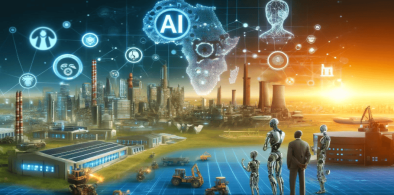
AI for Every Nepali: Jobs, Prosperity and Nepal’s Next Development Leap

Nepal does not need to become Silicon Valley. It does not need to copy India, China, Singapore or Canada. Nepal needs an AI strategy rooted in its own realities: young talent, hydropower potential, local problems, growing IT services, tourism, agriculture, small businesses and a global diaspora.

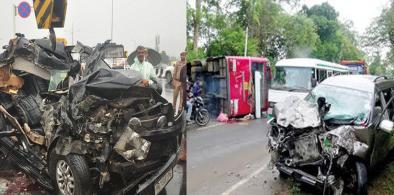
The Hidden Tax: Road Accidents Drain Over 3% of GDP From India and Sri Lanka Every Year; Generative AI Could Win it Back

The core data architecture — a national road safety data lake, AI-powered enforcement, multilingual public awareness — is replicable at any scale, in any South Asian language, in any South Asian urban or rural road environment. The technology does not need to be reinvented for Dhaka, Kathmandu or Karachi. It needs to be validated in Colombo and Delhi first.

Why the Global South Must Become AI Creators: Need to Take a More Leading Role in AI Governance and Economy

However, 118 countries, mostly developing ones, do not participate in international discussions on AI governance, according to UNCTAD. This means that billions of people may live within rules they were not involved in making.

AI's Hidden Appetite: Power, Cooling and the New Geography of Infrastructure

What we are witnessing today may only be the opening chapter. The next breakthroughs in AI may not emerge from software laboratories alone, but from nuclear reactors, cooling technologies, offshore infrastructure, advanced materials, and energy networks. The race to build intelligence has quietly become a race to master power and heat.

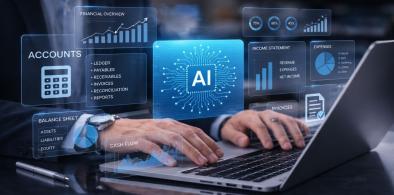
IT Sector Done, Is Commerce Next? Will the Future of Accounting Wither Under the Onslaught of AI?

The era of secure, routine, desk-bound clerical jobs is drawing to a close. It is urgent for the younger generation to break free from the illusion of traditional white-collar stability and pivot toward high-value skills, tech-driven entrepreneurship, modern agriculture, or practical, specialized trades. Failing to adapt to this cognitive shift means risking economic obsolescence under the relentless advance of technology

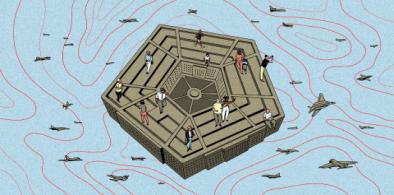
The Militarization of the Digital Commons: Need for New Regulatory Solutions

In the effort to combat this multi-dimensional challenge, democratic states are faced with deep policy constraints, many of which can be paralyzing. The fundamental paradox is how to maintain the open, democratic character of the digital commons while at the same time countering more advanced opponents who are not held back by democratic principles. Disseminating disinformation is a tactic governments use to influence public opinion that has the potential to conflict with the strong constitutional freedoms of expression that exist in liberal democracies.

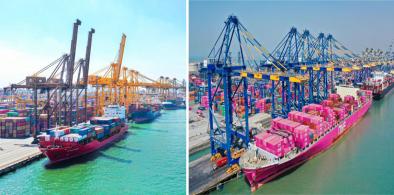
Navigating the Intelligent Tide: How AI and Generative AI are Reshaping Maritime Mobility in South Asia

The integration of AI and Generative AI is not a distant aspiration — it is an active investment already reshaping how ports operate, how cargo moves, and how supply chains absorb shocks. For India and its neighbours, the imperative is clear: build the data foundations, governance frameworks, and human capabilities that allow intelligent mobility to reach not just the terminal gate, but every link in the maritime supply chain.

The Splinternet and Fractured Digital World: Will Sovereignty Serve People, or the State, or Whoever Owns the Server?

Companies like Google, Meta, and X constantly shape public opinion and thoughts, and store public data for commercial usage. Amazon, Microsoft, and Google host the cloud infrastructure on which states and businesses depend. These are not ordinary companies anymore; they have access to critical intelligence and data. And now AI companies like Palantir use this data for surveillance, intelligence, monitoring, and on battlefields.

Non-Material ‘Presence’ in the Age of AI: A South Asian Reclamation of the Spirit Against the Machine

While TiME FLiES travels from 18th-century Boston to 20th-century Michigan and 21st-century Provence, its soul remains anchored in South Asian philosophy. It argues that while AI may simulate the "heart and mind," the true "presence" of consciousness—the Turiya—cannot be reduced to code.

Fighting Fire With Fire: How South Asia Can Use AI to Fight Cybercrime

The same generative AI that allows criminals to craft perfect phishing emails in Sinhala (or Hindi, Bangla and Urdu) or clone a Chief Financial Officer's voice from a YouTube clip, can also detect those emails before they reach an inbox and flag that voice as synthetic before a payment is authorised. The technology exists. The question is whether South Asia's institutions will deploy it in time.  

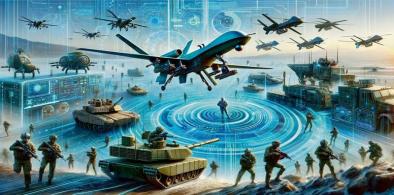
When Algorithms May Prove as Decisive as Armies: India Needs a Comprehensive National Strategy to Deal with AI-Driven Future Warfare

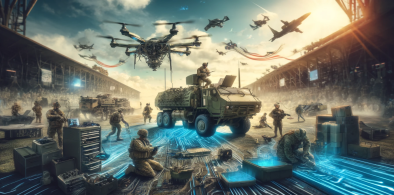
Artificial intelligence has the potential to transform border surveillance, maritime security, intelligence gathering, missile defense, logistics, and cyber warfare. In a country facing simultaneous challenges from China and Pakistan, AI-driven systems could substantially improve decision-making speed and operational efficiency. Conversely, the absence of such capabilities could expose critical weaknesses during future crises.

AI and Industrial Transformation: When Intelligence Will Become Part of a Company's Operational Infrastructure

Companies are beginning to realise that AI may not merely deliver incremental improvements of five or ten percent. In some workflows, it may produce tenfold or even hundredfold gains in speed and efficiency. That is the speed businesses are now trying to capture. The race is no longer about experimenting with AI; it is about integrating AI into operational systems before competitors do.

AI, Energy, Health, and Integrity: South Asia’s New Frontline Against Procurement Corruption

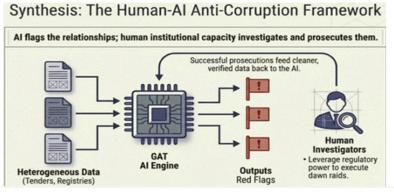
South Asia’s future depends on reliable infrastructure and trustworthy public services. Artificial intelligence—especially advanced technologies such as Graph Attention Networks—offers governments a powerful tool to reduce corruption in procurement, improve healthcare delivery, strengthen energy security and enhance public trust.

Technology and War: Shaping Future Wars, Battles, and Conflicts

The battlefield is no longer defined by geography alone. It extends into space, into networks, into supply chains, and into the human mind. Conflict today is as much about disruption as it is about destruction; as much about perception as it is about position. Lines are blurred, between soldier and system, between civilian and combatant, between war and peace.