
After six months of closure, Rasuwagadhi-Kerung, a key crossing point for bilateral trade between Nepal and China, was reopened on Monday
It also demonstrated that the EU increasingly sees India as a strategic alternative to excessive dependence on China and India increasingly sees the EU as an important technology and investment partner amid a more fragmented global trading system.
India's energy profile has changed significantly over the past decade. Crude imports from Russia, increased purchases from the United States, Brazil, Angola and other suppliers, together with expanding strategic petroleum reserves, have reduced dependence on any single source. India's energy vulnerability has not disappeared, but it has become more diversified.
As South Asia seeks to become one of the principal engines of global growth in the twenty-first century, velocity may emerge as one of the most important indicators of economic vitality. The countries that prosper most will not necessarily be those that create the most money, but those that use it most effectively.
If the twentieth century was shaped by the Atlantic and the early twenty-first century witnessed the rise of the Pacific, the coming decades may well belong to the Bay of Bengal. The foundations of that future will not be built solely through trade agreements or infrastructure projects. They will emerge from a shared commitment to connectivity, cooperation and civilisational understanding.
After six months of closure, Rasuwagadhi-Kerung, a key crossing point for bilateral trade between Nepal and China, was reopened on Monday
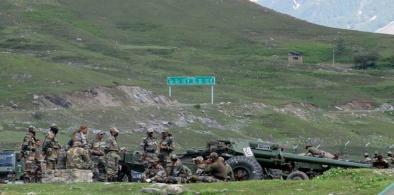
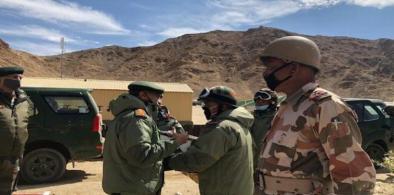
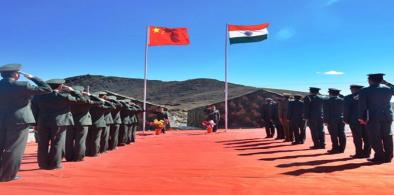
Around 30,000 troops of Indian Army are in an eyeball-to-eyeball confrontation with Chinese troops along the Line of Actual Control (LoC) in Ladakh, following the additional deployment of three brigades since the violent face-off last month
Around 40 Indian soldiers who were seriously injured in the violent face-off with Chinese troops in the Galwan Valley along the Line of Actual Control (LAC) last month had been moved for specialized treatment to Chandigarh and New Delhi ten days before the Prime Minister Narendra Modi visited Ladakh on Friday
Whatever China might do -- attack neighbours, badmouth countries, sink fishermen's boats or even fly medicines across a world crippled by coronavirus -- the stain of the pandemic refuses to leave Wuhan, and China
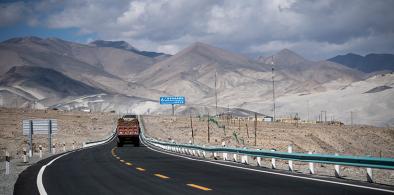
China is mulling temporarily reopening of Khunjarab border with Pakistan to allow movement of freight vehicles, stuck up due to coronavirus lockdown, its envoy said on Saturday
Indeed, China has gone astray from peaceful ascendance and has taken recourse to grabbing lands, maritime channels, and air space of many other countries
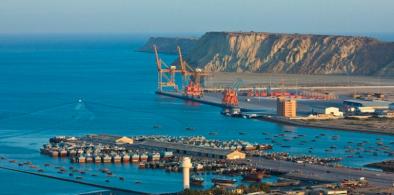
China-Pakistan Economic Corridor (CPEC) Chairman Asim Saleem Bajwa on Saturday said the Gwadar International Airport construction is underway
The controversial proposal to 'annex' Gilgit-Baltistan region of Pakistan-occupied Kashmir (PoK), which is to change the semi-autonomous status of the region, is being pushed by Pakistan to help China secure the China-Pakistan Economic Corridor (CPEC), Indian security agencies have told the government
Pakistan Foreign Minister Shah Mahmood Qureshi has reaffirmed Islamabad's extended support to China's "One China Policy", along with a complete alliance against India
Prime Minister Imran Khan vowed on Friday that the government would complete the ambitious China Pakistan Economic Corridor (CPEC) project at any cost and pass its benefits to the nation
Prime Minister Narendra Modi, while at Leh, said in a clear warning to China without naming it, that the "age of expansionism is over."
Pakistan’s future relies on agriculture and Prime Minister Imran Khan is keen to revive this sector, remarked National Food Security and Research Minister Syed Fakhar Imam while talking to Chinese Ambassador Yao Jing
From Nepal's Chief of Army Staff, General Purna Chandra Thapa to Prime Minister K.P. Sharma Oli's office, the Chinese Ambassador in Kathmandu, Hou Yanqi, has access to almost any place under the sun in the Himalayan republic
Nikki Haley, the first Indian-American to serve in the US cabinet, has praised India's decision to ban 59 Chinese apps, saying New Delhi "is continuing to show it wont back down from Chinas aggression"
After banning 59 Chinese apps, the Indian government is considering whether the presence of China's Huawei Technology Co and ZTE Corp may pose threat to security as some reports suggest their links to the Chinese ruling party and the People's Liberation Army (PLA)