
US Secretary of State Marco Rubio with Prime Minister of Hungary Viktor Orban.

New Civilisational Thesis of Western Renewal Risks Reviving Spectres of Colonialism and Racism

After Munich, Rubio travelled to Budapest and aligned himself warmly with Orbán’s government, praising Hungary’s trajectory. For European leaders committed to participatory democracy and the rule of law, the signal must have been disquieting. It suggested that Washington’s conception of Western solidarity may prioritise cultural homogeneity over liberal pluralism.

Trump’s Tariff Shock and India’s Export Reset: A Tech-Led Turn in the Making

The structural transformation of India’s export basket is no longer incremental—it is systemic. Technology-driven industries with higher value addition are steadily outpacing traditional sectors. If managed strategically, external tariff pressures could accelerate this transition. Rather than viewing tariff hikes solely as a threat, India can leverage them as a catalyst for deeper integration into global supply chains and stronger positioning in high-technology manufacturing. The reshaping of India’s export architecture is already underway. The tariff shock may simply fast-forward the process.

AI Encounters in Indian Higher Education: In Search of Humans in the Loop

Considering the potential of AI in solving complex questions and generating contents in individual writing styles, institutions need to ask a few fundamental questions - what is the role of academia in ensuring that the learners are not being slaves to AI, but masters who are aware of the potential bias and hallucinations that has a huge impact on knowledge acquisition and dissemination?  Should it be a social responsibility of higher educational institutions to ensure meaningful curriculum and assessment practices which make learners future ready in such a rapidly changing AI era?

Cryptocurrency and the Emergence of a Parallel Financial Architecture in South Asia

Recent global adoption indices confirms that South Asia has become one of the most dynamic regions for cryptocurrency engagement, with implications for remittance use. According to the 2025 crypto adoption index by Chainalysis, India secured the top position worldwide in overall crypto adoption across retail usage, reflecting pervasive grassroots digital activity. Pakistan and Bangladesh also feature prominently, with Pakistan ranking among top three in Asia and Bangladesh within top 20

More on Spotlight

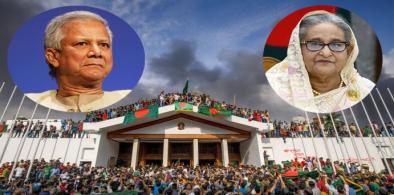
Bangladesh's quota movement: From peaceful protests to attempt at 'Bengali Spring'?

It is undeniable that although the movement was initially for quota reform, it later took the shape of a movement to overthrow the government. It was an attempt to taste power through undemocratic, back-alley, violent means. An attempt was made to create a "Bengali Spring: in Bangladesh in the style of the Arab Spring.

Exponential growth in India-Saudi Arabia relations: Moving past the Pakistan factor

The inclusion of the military dimension in India-Saudi Arabia relations is of great strategic significance which is expected to gain more momentum in the future.

Bangladesh's Solar Home Systems are an exemplar in energy access and climate resilience

Bangladesh's triumph in off-grid renewable energy, epitomized by the SHS program, serves as a global benchmark. The collaborative efforts of government, private sector, and public entities have ushered in a new era of sustainable energy. 

Pakistan's climate emergency cries for timely action and international support

Pakistan's climatic catastrophe requires a global response. Developed countries must fulfill their pledges to provide financial and technological assistance to developing countries like Pakistan so that they can effectively mitigate and adapt to climate change.

Gratuitous advice amid global disorder: US needs to smell the roses

Quite unequivocally, strategic autonomy would be a hallmark of India’s foreign and security policy allowing it to oscillate between strategic proximity and strategic distancing depending on the circumstances and need of the hour. New Delhi would certainly not be guided by the script the US, or its Western allies prescribe.

Can Afghanistan transcend its dubious legacy of terrorism?

Madrassas in Pakistan and Afghanistan, often funded by Gulf states, have spread extremist ideologies. Saudi-financed madrasas in Pakistan taught Wahhabism, fostering a transnational network of militants using Afghanistan as a base. The U.S. and Saudi Arabia provided substantial aid and funding to these madrassas and the Mujahideen, promoting jihad against the Soviets. 

Pakistan’s economic recovery contingent on political stability

Pakistan's continuous political turbulence, characterised by infighting and power rivalries, poses a serious threat to the country's economic development.

Bangladesh's recent violence was an expression of simmering political and social discontent

The violent conflicts have caused infrastructure damage, supply chain disruptions, and industry closures that have cost Bangladesh billions of dollars in lost revenue and negatively impacted essential industries like clothing, steel, ceramics, and pharmaceuticals. Its ramifications went beyond short-term financial losses. 

Baloch national gathering: Call for a new era of struggle against Pakistani State brutalities

The whole Baloch nation has faced the worst form of oppression by the Pakistani State: they have been abducted, received mutilated bodies of their loved ones, confronted illegal raids, illegal detention, and bogus cases. They have not been allowed peaceful protests; they have been totally censored by mainstream media. 

Strategic dialogue, Track 1.5 diplomacy necessary to maintain regional stability in South Asia

It is crucial for India and Pakistan to establish new confidence-building measures (CBMs) to mitigate the potential destabilizing effects of advanced technologies. Key elements of effective CBMs include robust communication channels, bilateral discussions on emerging technologies and their implications for regional peace, and strict adherence to missile test notification protocols.

Rekindling the spirit of communal amity in Sri Lanka: A Prime Minister's quest

In this newly revived spirit of amity, PM Gunawardena travelled from Jaffna to Kilinochchi by road. There were no protests and he was received at both venues with warmth and cordiality.

After back to back India visits, Hasina’s China visit demonstrates Bangladesh’s delicate balancing act

Hasina sees no contradiction in maintaining equity in ties with China and India as she is able to adeptly navigate the conflicting interests of China and India. Analysts feel that Dhaka will continue to have a balanced approach to ties with Beijing and New Delhi since Bangladesh depends on both for stability and growth. 

Modi's Russia visit was to reaffirm strategic ties in uncertain times

The Moscow meeting was to understand each other's priorities and concerns according to the evolving geopolitics and reassure each other of their commitment to deepening their relationship in the coming years. 

International education as soft power: Need for integration into nation’s foreign and security policies

A credible, viable, and sustainable foreign and security policy needs to see relationship building, collaboration, and cooperation as part of its education policy and driven by an aspiration for global good and human welfare. 

The imperative of regional cooperation in South Asia

Today, the lack of regional cooperation in South Asia impedes development and has long-term negative economic, social and security ramifications. Over-reliance on foreign powers for partnerships and financial support can have adverse economic effects as seen in Sri Lanka and Pakistan.