As the world turns more careful and looks to build with caution and care, the Indian State is going berserk in multiple directions with the goal of showing its strength outside India while ordinary Indians are getting the rough end.


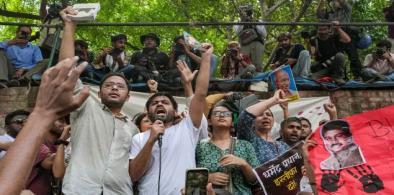
The recurring examination scandals were failures of governance. Likewise, concerns regarding foreign influence should not preclude critical examination of how regulatory institutions themselves function.
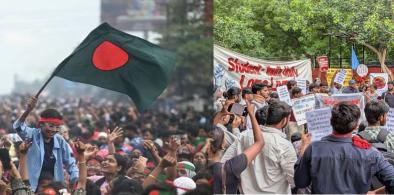
Bangladesh, Sri Lanka, India, and Nepal are not producing a series of unconnected national episodes. They are producing a young, educated, and increasingly connected generation that is redefining what citizens expect from the state
India had increasingly become an exception. The expectation that ministers should bear responsibility for institutional failure had faded almost to the point of disappearance especially since Narendra Modi became prime minister in 2014.
Nepal's greatest shortage is not simply money or infrastructure; it is leaders who can use them well. Without the right leadership, resources remain locked in inefficiency, corruption, and bureaucratic gridlock.

As the world turns more careful and looks to build with caution and care, the Indian State is going berserk in multiple directions with the goal of showing its strength outside India while ordinary Indians are getting the rough end.

Taking stock of the Kargil War 25 years later, what unfortunately emerges is that most of the important lessons have not been learnt, at least by India’s politico-bureaucratic establishment.

This also means unshackling the education sector, allowing greater freedom and autonomy to institutions of higher education in deciding curricula, courses, faculty hiring and salaries, student fees and programs. Otherwise, millions of our youth are wasting the prime years of their youth with a psychological burden, and grueling study with repeated attempts, to crack exams, where the odds of winning are worse than a lottery.
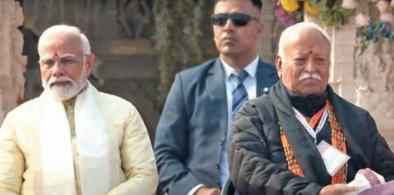
In that light, the words of Mohan Bhagwat signal discomfiture. But his hesitation to name Modi and call him out indicates that the RSS is caught in a trap of its own making.

There has to be a common thread holding the weave of a multidimensional diverse nation like India. The thread is definitely not how or to which God your pray (or not), what dress you wear (or wear no dress at all!), what you eat or not.
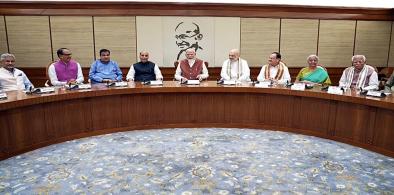
Without these reforms, the laudable objective of “India a Developed Nation by 2047” may remain a distant dream.

If India's states seek to compete with each other in a spirit of competitive federalism and use their political clout constructively for economic progress and welfare as several states have done there is nothing wrong.
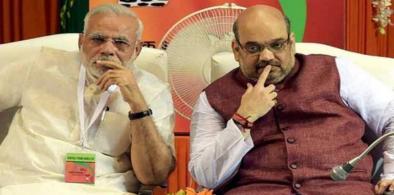
The rather curious silence on the part of the government regarding Manipur might have also led to the BJP losing in the state as well as suffering a decline in the overall seat share in the Northeast.

Now Angoncha Bimol Akojam, newly elected MP from Meitei-predominant Inner Manipur, has lashed out at the deliberate lawlessness and communal violence induced in Manipur, with both the state government and the Centre abdicating their responsibilities of governance in utter disregard of the Constitution.
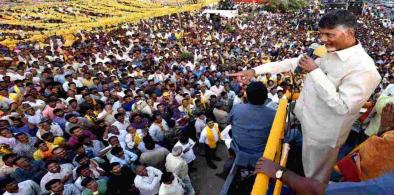
When he came to power, Hyderabad was a backward city with dirty roads, Naidu had his vision of development. Taking a cue from neighboring Bangalore, Naidu began promoting hi tech industries and software skills in Hyderabad. He established Cyberabad and to express his seriousness travelled to Seattle and waited outside the office of Bill Gates of Microsoft for an hour to get an audience with him.
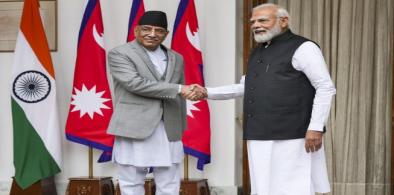
The tri-nation hydroelectricity corridor between India, Nepal, and Bangladesh will likely continue. Given that Modi has pushed for “Neighborhood First” in his interactions with South Asian countries, India’s collaboration with Nepal will be essential to the revival of the SAARC mechanism and the advancement of regionalism in South Asia.

The path toward progress does not reside in appending supplementary provisions to existing personal laws. Instead, it hinges on the establishment of progressive, gender-neutral, monogamous practices that are devoid of religious distinctions, achieved through the implementation of a uniform civil code.
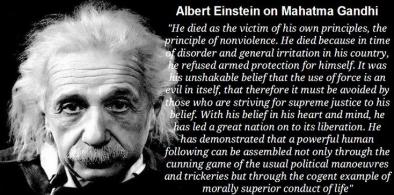
Modi should just know that today there are a large number of universities in the world where Gandhian studies are a part of their curricula. Many schools are trying to teach his values. Nearly 80 global cities have Gandhi streets and Gandhi statues installed in prominent places.

The internal migration of workers from the rest of the country to Kerala has created a mini remittance economy, as money flows from savings generated in Kerala to the home states like Odisha, Jharkhand, Assam and Bihar.
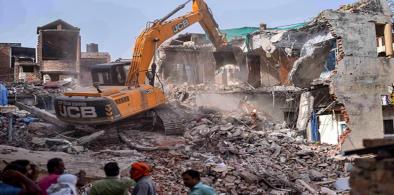
The targeted punitive measures against the Muslim community following religious clashes and the consequent demolitions constitute an instance of "ethnic cleansing", according to the UN's characterization.