Be it charkha or khadi, the symbols Gandhi espoused have remained so strong that even now when we talk of a "Atma Nirbhar Bharat", (a self-reliant India), they ignite our minds with a sense of mission and pride.


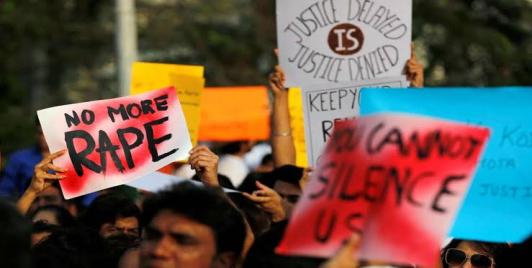
The Chopra siblings' murder in 1978, the Nirbhaya case of 2012, R.G. Kar Kolkata in 2024 and Kalkaji in 2026 belong to different historical contexts. Yet they reveal a recurring difficulty in Indian governance: we are capable of extraordinary mobilisation after extraordinary violence, yet less consistent at converting that mobilisation into permanent institutional practice.

The Tata group is a national icon, a picture of enterprise, growth and service packed in a business model that many Indians cherish and hold as an exemplar. That model, in which the bulk of a great enterprise’s profits flows to charitable trusts for the public good, is rare anywhere in the world.
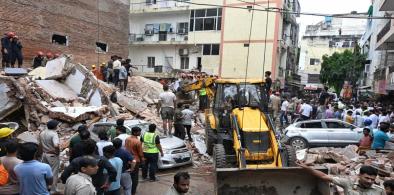
Aggressive migration of youth and workers to metro cities in search of better opportunities is common across the region. And so is the response deficit by local and central governments in providing them with basic, dignified lifestyles. The time has come for the elected representatives to think differently and narrow the gap between government schemes and results on the ground.
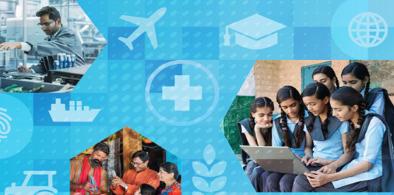
These achievements have positioned India as a digital governance exporter. Singapore, Nepal, Bhutan, France, Mauritius, Sri Lanka, and the United Arab Emirates have already established UPI connectivity, and more than 50 countries have expressed interest in replicating aspects of India Stack’s open digital infrastructure.

Be it charkha or khadi, the symbols Gandhi espoused have remained so strong that even now when we talk of a "Atma Nirbhar Bharat", (a self-reliant India), they ignite our minds with a sense of mission and pride.

With both India and France supporting a multi-polar world order led by democracies, France has been a supporter of India’s claims to permanent membership in the United Nations Security Council (UNSC).
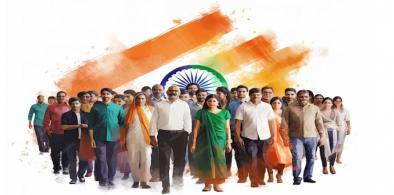
Hysteria cannot be combated by hysteria. We need the ideology which binds the weaker sections of society, the Dalits, religious minorities, women, workers and Adivasis.
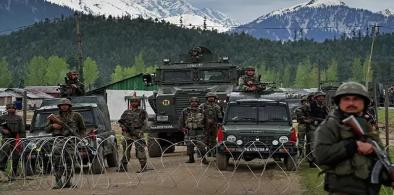
During Operation Sarpvinash, several terror bases containing large food storage, communications devices, arms, ammunition, and even medicines were destroyed. With the kind of supplies and the discovery of a large number of bunkers during Operation Sarpvinash, there was some comparison to the infiltrations India saw during the Kargil War.
The problem each year repeats like the weather itself, simply because of the awful behaviour of the airline ground staff. Our airline ground staff are perhaps the worst amongst developing/developed nations.
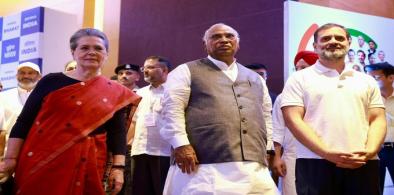
It would seem as if the Congress Party were going for broke by rejecting the invitation quite aware that it is unlikely to win even the moderately right-leaning Hindu electorate, let alone the hard Hindu right, in the foreseeable future.
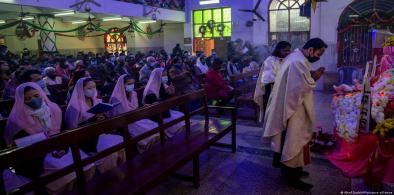
The anti-Christian violence is a low-radar activity where the priests working in remote areas are apprehended when they are conducting prayer meetings in particular.
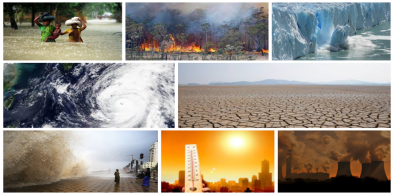
For nations like Bangladesh, it is an issue of concern since it will be difficult to successfully carry out national climate action plans for adaptation and mitigation in the absence of explicit financial commitments from wealthier nations.

What is perceptible is the government’s intention to destroy the fabric of human rights protection in India and to increase the power of the government to control and oppress the people of India.

From Sri Lanka’s example of periodically falling into a BOP crisis, one might wonder if IMF-prescribed solutions (or terms and conditions attached to IMF funding) ever help small nations like Sri Lanka to achieve long-term BOP stability.

The cavalier attitude and patronizing politics of a patriarchal society need to change to eliminate the social stigma of the victim in rape trials in India.

Reportedly, a part of China’s dole to Pakistan in March 2022 was the multirole J-10C fighter jets which can be interconnected with their Chinese counterparts through the PLA air force's KJ-500 early warning aircraft.
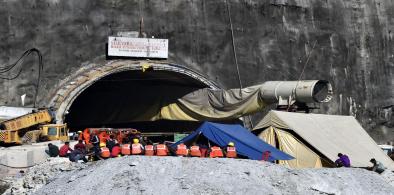
A number of such disasters could have been avoided if local geology was understood or warnings from experts had been heeded
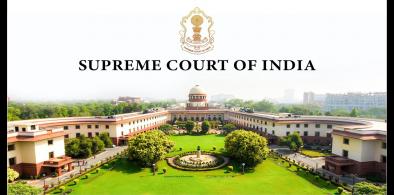
The time for half-hearted attempts, and/or conventional methods, has gone by when it comes to delivering justice in India.

Local sources claim that multiple tribal terrorist groups are holding hundreds of thousands of people in the Chittagong Hill Tracts as hostages. These groups are active in controlling and influencing their areas through various sabotage and terrorist activities, extortion, kidnapping for ransom, attacks, and counter-attacks.