The role of China will have a direct bearing on the Indo-Pacific security matrix given China’s warm relations with most of the Indo-Pacific states
Another defining feature of Bangladesh's current media environment is the emergence of "mob culture." The attack on The Daily Star and Prothom Alo offices is a serious example of mob attack. Media owners often hesitate to invite commentators associated with the previous government or opposing political viewpoints because they fear public backlash, protests, or attacks
For decades, Bofors was treated as a national scandal of almost Biblical proportions, with international ramifications. All guns ablaze. Yet when its judicial afterlife finally reaches a dead end, the story seems to have lost its political ammunition. Not even a recall that the much-maligned gun, which was accused of backfiring at those who fired, not at the target, had vindicated its purchase during the 1999 Kargil conflict.
India therefore needs a serious conversation on algorithmic accountability. If AI increasingly informs policing, citizens deserve clarity on its legal basis, safeguards against misuse, limits on data retention, independent oversight and effective judicial remedies.
The recurring examination scandals were failures of governance. Likewise, concerns regarding foreign influence should not preclude critical examination of how regulatory institutions themselves function.
The role of China will have a direct bearing on the Indo-Pacific security matrix given China’s warm relations with most of the Indo-Pacific states
Why did the influential Purana Kashmiris not think of the 1990s Kashmir Pandit exodus as a personal issue and raise their voice? Why did they take part in the conspiracy of silence that seems to have cloaked the issue for 30 odd years?
One other unintended consequence of the potential failure of the Russian operation is that it could slow down - and possibly stop the triumphant march of the autocrats – or so-called strongmen - the world over, writes Frank Islam for South Asia Monitor
The manner in which Bhagat Singh, Sukhdev and Rajguru were, first, officially executed on March 23, 1931, and their bodies brutally chopped, marks one of the darkest chapters of British colonialism in India
In Washington, Price acknowledged Monday at a briefing that India developed defence ties with Russia because the US was not ready for such a relationship when the Soviet Union and India drew close
The Biden administration and India are evolving a delicate balance at the centre of which is China on how New Delhi reacts to the Russia invasion of Ukraine
Beyond the number of deaths and whether to define the Pandits’ barbaric displacement as genocide, this is a chapter of contemporary Indian history that has received woefully inadequate media and scholarly attention, writes Mayank Chhaya for South Asia Monitor
"The unbalanced and contradictory picture of death and dying,” tells the tale of a society lost in modern medicine and unmindful of where this is taking us, write M.R. Rajagopal and Jagdish Rattanani for South Asia Monitor
He used his annual presence in Davos to make a convincing tour de horizon of the great strengths and resilience of the Indian economy, writes Amb Bhaswati Mukherjee (retd) for South Asia Monitor
If the rural poor can be given a basic ‘thali’ at subsidized price, they will not only get proper food but do away with the drudgery of cooking, writes Anil K. Rajvanshi for South Asia Monitor
The real motive behind murdering Gandhi was that he was for inclusive nationalism, the dream of revolutionaries, and for his attempts to work against untouchability and caste inequality, writes Ram Puniyani for South Asia Monitor
This unique India-Pakistan collaboration developed into this latest venture, “Thinking with Ghalib: Poetry for a New Generation”, a collection of 30 couplets with translation and commentary, write Anjum Altaf and Amit Basole for South Asia Monitor
If the meeting of Indian and Pakistani officials—expected to take place next week as per a report in The Hindu– comes through, it will be a departure from the recent past as formal dialogue has remained frozen for almost two years, writes Shraddha Nand Bhatnagar for South Asia Monitor
The Amar Jawan Jyoti -- an upturned rifle with a helmet customarily marking a battlefield grave -- amounted to nothing short of a poor apology for a war memorial at India Gate
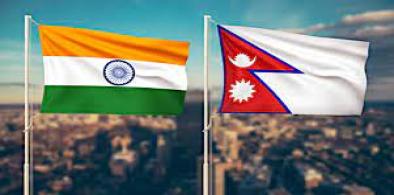
India’s position on the boundary issue is “well known, consistent and unambiguous”, the Indian Embassy in Kathmandu said, days after political parties in Nepal stoked a simmering territorial dispute in Lipulekh, Limpiyadhura and Kalapani, especially after Prime Minister Narendra Modi mentioned road construction in Lipulekh at an election rally in Uttarakhand state