Representational Photo

Custodial Deaths Are a Blot on Bangladesh's Democratic Future

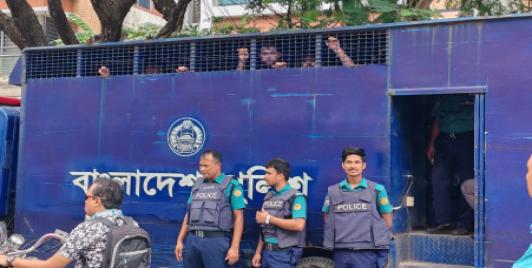
To what extent has the current BNP government been able to realise the vision that drove the 2024 mass uprising in Bangladesh? Will the BNP government, too, manipulate state mechanisms and law enforcement agencies to serve its own interests, much like the previous Sheikh Hasina regime, to suppress the opposition and silence critics? The government must therefore take serious steps to amend police laws and prevent deaths in police custody. This is one of the crucial reforms facing the administration.

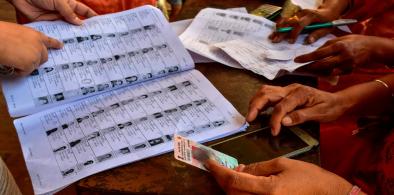
India's Electoral Roll Revision Must Protect the Right to Vote in a Democracy

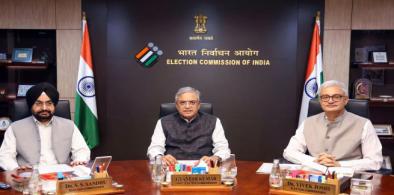
The Commission's authority rests ultimately on public confidence. Like Caesar's wife, the Election Commission must be above suspicion. It should welcome scrutiny and answer legitimate questions, especially when millions of voting rights are involved.

A Nation Stands Divided Over Charges of Electoral Manipulation and Brutal Police Crackdown

If the government and EC are confident, the answer is not a counter-letter but transparent data: a district-wise, gender-wise audit of deletions, restorations, reasons – all details to be placed on affidavit, as Lokur panel demands.

The Bigger Picture Behind the Electoral Roll Controversy in India

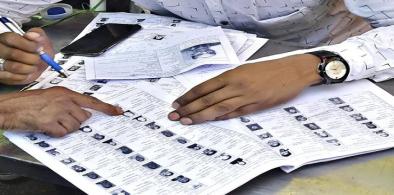
The ongoing SIR is not merely about helping a particular party win an election; it points to a much deeper design - to create a customised electorate in the country. It is intended to turn India into a Republic in which only some sections of the population remain politically relevant.

More on Governance, Public Policy and Law

Unchecked communal rhetoric will have implications for India’s foreign policy

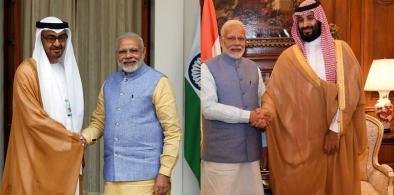
Messages, and communal narratives - and even state-sanctioned actions - targeting Muslims reach audiences in the Muslim countries in real time and will produce resentment against India and its diaspora community living there. These sentiments will eventually make it a bit harder for their governments to embrace New Delhi and do business with it, at least in the open.

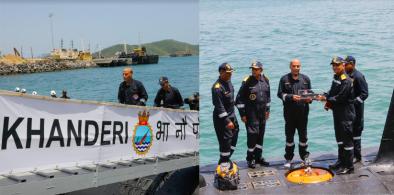
The Indian Navy's three-dimensional capabilities

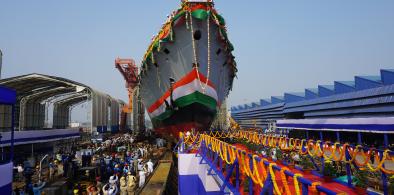
“Today, Indian Navy is counted among the frontline navies of the world. Today, the world’s largest maritime forces are ready to work and cooperate with India,” Singh said and described INS Khanderi as a shining example of the ‘Make in India’ capabilities of the country.

A bridge over the river Padma: Bangladesh's passage to a developing nation

The decision to build the much-awaited Padma Bridge, which is set to open for traffic on June 25, through its own finances has brightened Bangladesh's image in the world, writes Dr Malika-e-Abida Khattak for South Asia Monitor. 

Boosting rail connectivity between India and Bangladesh is a win-win for both

While air remains a major mode of transportation for tourists—almost 77 percent, around 80 percent of Bangladeshi tourists used the land as the mode of transportation. Thus, an integrated, cross-border railway network as a faster mode of transport could bring enormous benefits to the region, including boosting regional trade.

Progress in India’s warship building, but not enough except in surface ships

There are not many developing countries like India having the capability to produce such a wide variety of warships ranging from fast-attack craft to aircraft carriers, writes Col Anil Bhat (retd) for South Asia Monitor

How to make a better India

India is the only country in the world that was ruled by Muslims for nearly 1,000 years and yet never become a Muslim country. A probable answer lies in the higher quality of Indian spiritual thought, writes Anil Rajvanshi for South Asia Monitor

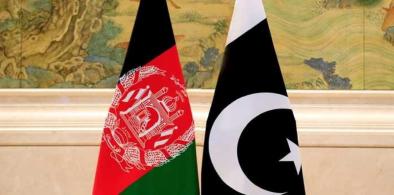
Who really gained 'strategic depth' - Pakistan or the Taliban?

For a regime as isolated as the Afghan Taliban with weak resources at its disposal, acting against the Pakistan-based TTP is like giving up on the little leverage it enjoys so far. Furthermore, there is little indication of the group’s willingness so far to transform itself into an internationally accepted ruling regime by weakening its links with ideological fellow travellers

Sri Lanka's crisis: High costs of climate injustice and foreign investment dependence

The global chemicals industry is portraying the Sri Lankan crisis as related to a few months' stop in the import of chemical fertilizers in April 2021, not recognizing that the ban was related to Colombo’s debt crisis

Big-power rivalry is becoming more intense in the Indian Ocean Region

The role of China will have a direct bearing on the Indo-Pacific security matrix given China’s warm relations with most of the Indo-Pacific states

Kashmiri Pandits - Old and New: And how a film created a broad tent of a pan-Hindu identity

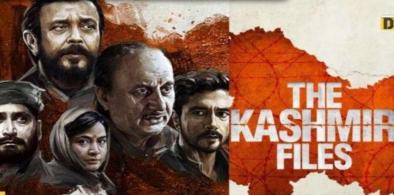
Why did the influential Purana Kashmiris not think of the 1990s Kashmir Pandit exodus as a personal issue and raise their voice? Why did they take part in the conspiracy of silence that seems to have cloaked the issue for 30 odd years?

Russia’s misadventure: Will it herald a setback for populists and return of liberal democracy?

One other unintended consequence of the potential failure of the Russian operation is that it could slow down - and possibly stop the triumphant march of the autocrats – or so-called strongmen - the world over, writes Frank Islam for South Asia Monitor

The aura of Bhagat Singh - and the neglected historiography of British colonial violence in India

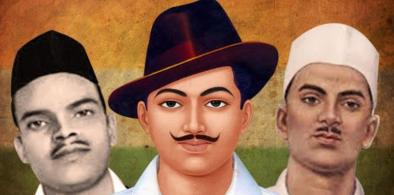
The manner in which Bhagat Singh, Sukhdev and Rajguru were, first, officially executed on March 23, 1931, and their bodies brutally chopped, marks one of the darkest chapters of British colonialism in India

Will the Ukraine war be a major inflection point for India?

In Washington, Price acknowledged Monday at a briefing that India developed defence ties with Russia because the US was not ready for such a relationship when the Soviet Union and India drew close

US showing some understanding of India's delicate balancing act

The Biden administration and India are evolving a delicate balance at the centre of which is China on how New Delhi reacts to the Russia invasion of Ukraine

A film on Kashmir reignites old wounds

Beyond the number of deaths and whether to define the Pandits’ barbaric displacement as genocide, this is a chapter of contemporary Indian history that has received woefully inadequate media and scholarly attention, writes Mayank Chhaya for South Asia Monitor