Constitution of India and Parliament

Constitutional Supremacy vs. Parliamentary Sovereignty Debate: Parliament is a Creature of the Constitution, not its Master

India’s constitutional design operates on the line of a fully functional parliamentary democracy anchored in constitutional supremacy rather than parliamentary sovereignty. In an era of evolving challenges, the supremacy of the Constitution continues to serve as the ultimate safeguard of Indian polity.

Born Together, Governed Apart: How India and Pakistan Became Two Different Political Civilizations

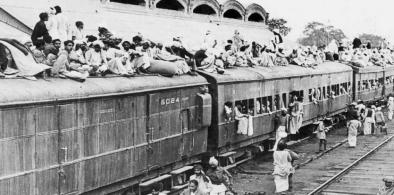
Eighty years after Partition, the overarching lesson of this comparative history of India and Pakistan is that national trajectories are not preordained by culture, talent, or geography. They are determined by the rules and values a state enshrines for itself in its formative years.

Re-engineering India's Grassroots Administration: A New Bottom-Up Development Model

It is time the Indian district administration’s focus shifts to economic development and prosperity-building through strategic planning, resource mobilisation, and effective resource allocation; productivity enhancement, competitiveness, skill-building, employment generation and ensuring the security of life and property.

Imran Khan, the Cricketing World and the Paradox Confronting Pakistan

The man who once led Pakistan to its only World Cup triumph has now become the subject of an international cricketing appeal for humane treatment. The more the authorities try to keep his story behind prison walls, the more the cricketing world appears determined to take it beyond them.

More on Governance, Public Policy and Law

IAF’s daring rescue of Indians from conflict zones

This approximately two-and-a-half-hour operation between Wadi Sayyidna and Jeddah, Saudi Arabia will go down in the annals of IAF history for its sheer audacity and flawless execution - akin to that carried out in Kabul, in which almost 400 Indians were brought back by the IAF in August 2021 in very challenging conditions following the Taliban takeover of Afghanistan.

Big tech or Big Talent, both need to be a force for good

The rise and fall of FTX’s co-founder Sam Bankman-Fried, a poster boy of the crypto world and seen as a genius, tells a story that has important learnings for all of us. A key learning is that, though talent or ingenuity can erect an empire of fame and riches in a short time, yet devoid of moral and ethical moorings, it can wreak havoc in the long run.

India must not hesitate to do cross-border strikes again to neutralise jihadi camps

Since the late 1970s, the Indian Army has been paying a heavy price of losing good soldiers in asymmetric warfare waged by Pakistan, which involves having large bodies of regular troops committed on the ground for dealing with a 'handful' of the enemy.

Bangladesh, Myanmar and food diplomacy: Can it lead to resolution of the Rohingya refugee crisis?

Analysts see the rice-potato trade between the two countries as an extension of their stepped-up bilateral diplomacy. Their expectation is that this incipient commercial relationship can play a major role in resolving the Rohingya humanitarian crisis

Bangladesh Army Chief's India visit is imbued with great strategic significance

India can assist Bangladesh in achieving the goal of Bangladesh’s military plan “Forces Goal 2030,” a modernization programme that aims to transform Bangladesh's army into a technologically advanced, multi-domain force by 2030.

India’s military spending rose by 6 per cent, ranks fourth in military expenditure; Pakistan's shrinks

Military spending calculated as a share of the Gross Domestic Product (GDP) was 2.4 per cent for India, an estimated 1.6 per cent for China, 2.6 per cent for Pakistan.

Cleaning up the police: Can extrajudicial killings in India be stopped?

On the one hand, India sees itself as the rising global power, the head of G20 today, and with an economy that is the fifth largest in the world by GDP. On the other hand, India is the story of flourishing gangsters who when they get too big must be taken to a secluded spot and shot.

A zero-tolerance policy has helped Bangladesh contain terrorism and militancy

Bangladesh's zero-tolerance policy against militancy is bearing fruit. So far, eight militant organizations, namely JMB, Shahadat-e-al-Hikma, JMJB, Hizbut Tahrir, Huji-B, ABT, Ansar Al Islam, and Allahr Dal, have been banned by the government. Prime Minister Sheikh Hasina's tough stance has made it possible to virtually dismantle the militant network in Bangladesh.

750 fisherfolk prisoners languish in Indian, and Pakistani jails: appeals for release falling on deaf ears?

Herman Kumara, the national convener of the National Fisheries Solidarity Organization (NAFSO) in Sri Lanka, strongly opposes the practice of keeping arrested fishermen in jail even after their punishment has been served.

Why India needs a caste census

Today, what is needed is a genuine assessment of the population of different marginalized sections and to modify the country's policies so that the uneven growth of society is brought on the path of equality. The deaths of the likes of Rohith Vemula and Darshan Solanki should awaken India to the need to combat the biases constructed against the socially marginalized sections and strive for a future where ‘annihilation of caste’ is the central credo of our society.

Vigilante justice and its celebration: Time to recall Ambedkar's ‘Grammar of Anarchy’ speech

This is surely not the first or the last of the fake encounters (extra-judicial killing) in our country. Are people, including the police, losing faith in constitutional methods so earnestly championed by Dr. Ambedkar? What would he have said, had he been alive today?

Institutional arbitration in India remains a non-starter

Four years after the passage of the law, the promised Arbitration Council of India to authorise and regulate arbitration institutions has yet to be operationalised. Save for a small number of arbitration institutions established and funded by well-known law firms,  some state governments do not support professionally established arbitration institutions.

The Bangladesh-Bhutan trade and transit agreement is a shot in the arm for regional cooperation

This transit agreement will pave the way for energy imports from Bhutan. A Free Trade Agreement (FTA) was signed between the two countries in 2009. After last month's agreement, the FTA will gain momentum. The agreement will enable Bhutan to use Bangladesh's air, railways, river ports, land and sea ports since Bhutan is a landlocked country and has no river or sea ports of its own.

The US Democracy Summit is an instrument of power politics: A Bangladeshi perspective

India, Pakistan, Nepal, and the Maldives are the four countries from South Asia among 120 countries at this year's Democracy Summit. Bangladesh, Sri Lanka, and Afghanistan were not invited, but Pakistan, one of the most authoritarian and corrupt countries in South Asia with scant respect for human rights, was invited.

A stress test for Indian democracy, a turning point for India?

India has some deep soul-searching to do as we explore the question: Are we truly a democratic nation? Or is democracy the story we sell to ourselves and the world when the nation and its people know that we are not what we think or claim to be?