Colombo Port City

China’s Criminal Footprint in Sri Lanka has Regional Security Implications

When a Chinese company won the contract to establish hybrid wind and solar energy projects on three islands off the northern Jaffna peninsula—just 45 km from Rameswaram in Tamil Nadu—the security implications extended far beyond economics. Against this backdrop, India’s concerns are entirely justifiable. Sri Lanka faces a pressing question: how will the nation confront the infiltration of Chinese global criminal networks? Since Mahinda Rajapaksa’s tenure, Chinese presence in Colombo has steadily increased, with Sri Lanka positioned as a partner state in Beijing’s Belt and Road Initiative.

Wolf World or a Multipolar World? How Major Powers Exercise Power Will Determine Emerging International Order

The growing role of middle powers adds another layer of complexity. Yet the term itself remains imprecise. Not every country outside the United States and China qualifies as a middle power, and many reject the label altogether. India, for example, increasingly sees itself as a leading power pursuing strategic autonomy rather than as a middle power seeking alignment with one bloc or another.

Is Northeast India's Permit System Inhibiting India-Japan Paradiplomacy? Colonial-Era System may be Stumbling Block to Subnational Exchanges

If India and Japan genuinely envision Northeast India as the gateway connecting South Asia with the Bay of Bengal and the Indo-Pacific, then the next chapter of the partnership cannot remain confined to New Delhi and Tokyo. It must also be written in Guwahati, Shillong, Aizawl, Imphal, Agartala, Kohima, Gangtok and Itanagar 

Bangladesh's Strategic Balancing and India's Neighbourhood Challenge: China Will Consolidate Influence if New Delhi Fails to Deliver

In several neighbouring countries, including Bangladesh, Sri Lanka and Nepal, China has demonstrated an ability to move from agreements to implementation far more rapidly than many competitors. India, despite enjoying unmatched geographic and cultural advantages, has often struggled with delays 

More on Geopolitics, Security and Strategic Affairs

Indian American Rashad Hussain’s nomination is Biden’s way of sending powerful message to the world

One can be optimistic that Biden’s selection will lead to a debate on freedom of religion and more interfaith dialogues in South Asia and other parts of the world, writes Frank F. Islam for South Asia Monitor


Pakistan’s geoeconomic strategy is riddled with self-inflicted challenges and policy contradictions

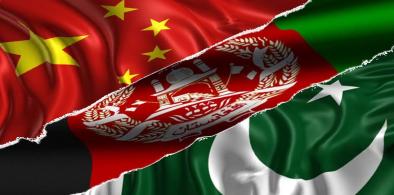
Instability in Afghanistan along with the discord with Pakistan does not augur well for South and Central Asian connectivity, writes Niranjan Marjani for South Asia Monitor

Jammu and Kashmir is now firmly on the path of development

With the historic revocation, the Indian government has finally applied salve on the festering anger in Kashmir: anger born out of chronic underdevelopment and misgovernance, writes Suchismita Panda for South Asia Monitor

Revive BCIM Economic Corridor for a sustainable techno-ecological trans-regional alliance

Cooperation among BCIM members is essential for the sustainable development of the Ganga-Brahmaputra-Meghna basin, writes Dipankar Dey for South Asia Monitor

Afghanistan's civil war is there to stay: Taming the Taliban is no easy task

US Secretary of Defense General Lloyd James Austin has said that the Afghan forces must slow the Taliban’s momentum. The question is how, writes Lt Gen P. C. Katoch (retd) for South Asia Monitor

West Bengal can play a critical role in the success of India’s Act East policy

With the ever-growing presence of China in Southeast Asia, it would be injudicious to keep the economic and strategic prospects that West Bengal has to offer underutilized, and hostage to petty internal politics, writes Anondeeta Chakraborty for South Asia Monitor

India needs to become drone-conscious to counter aerial cross-border threats

Not only was the use of a weaponized drone on the Jammu IAF base an act of war but a violation of the ceasefire agreement concluded by DGs, military operations, of India and Pakistan, effective from midnight, 24-25 February 2021, writes Col. Anil Bhat (Retd) for South Asia Monitor

Will China learn a lesson from the 'terror attack' in Pakistan on its workers?

The Pakistan incident against Chinese workers is all the more worrying as Chinese personnel and technicians are working on various projects not only in Pakistan, but in other South Asian countries like Sri Lanka, Bangladesh, Nepal, as well as many African nations, writes N S Venkataram for South Asia Monitor

Improved transport connectivity in South Asia must for boosting intra-regional and inter-regional trade

Better connectivity in this region would facilitate the establishment of trade linkages with other regions through platforms such as the BIMSTEC, SAARC, and ASEAN, writes Partha Pratim Mitra for South Asia Monitor

Nepal’s new government needs to do a balancing act amidst India-China rivalry

For Sher Bahadur Deuba’s government, the acid test of preserving Nepal’s core interests and increasing its bargaining capacity vis-à-vis India and China will depend on how the Nepalese leadership responds to the emerging geopolitical and geoeconomic imperatives in the region, writes Zahoor Ahmad Dar for South Asia Monitor

Economic and public health crises pushing Sri Lanka more and more towards China

Given Sri Lanka’s strategic location in the Indian Ocean, China has developed huge stakes in the island nation, writes N. Chandra Mohan for South Asia Monitor

Like its remarkable economic turnaround, Bangladesh has fought back against Islamist extremism

Fifty years after its liberation from Pakistan, Bangladesh is the reverse image of the country it broke away from -- a moderate Muslim majority nation anchored in its liberal syncretic Bengali culture that guided its 1971 secession from Pakistan, writes Subir Bhaumik for South Asia Monitor

Afghan war, and its spillover effect, will singe entire region, including Pakistan and India

In stark contrast with Pakistan, which relied on hard power tools to pursue its foreign policy goals in Afghanistan, India opted for the soft power strategy --winning hearts and minds of Afghans by investing in common people through culture, building state capacities, and training and educating a new young professional Afghan class, writes Shraddha Nand Bhatnagar for South Asia Monitor

Pandemic-hit South Asia must evolve a coordinated strategy to improve public health systems

Collectively the peacebuilders, physicians and public-health activists from across South Asia noted that inequity is the key challenge and asked their governments to address it properly so that the lessons of the past year are not forgotten, writes Rida Anwar for South Asia Monitor

India should leverage its enormous goodwill to begin peace diplomacy in conflict-ridden Myanmar

In Zoramthamga, a former rebel leader and now chief minister of India's northeastern state of Mizoram, India has a potential mediator who has close links with all stakeholders in Myanmar, including the Tatmadaw and Aung Saan Suu Kyi's NLD, writes Subir Bhaumik for South Asia Monitor