A credible, viable, and sustainable foreign and security policy needs to see relationship building, collaboration, and cooperation as part of its education policy and driven by an aspiration for global good and human welfare.



Abbottabad itself is symbolic. Just 30 miles north of Islamabad, along the historic Karakoram Highway, it is home to Pakistan’s premier military academy. For bin Laden to live there undetected is not simply a mystery—it is a reminder of the uncomfortable realities of counterterrorism

Amid strategic challenges from Beijing in Bangladesh, New Delhi cannot separate border management with foreign policy. New Delhi should hold high-level dialogue with Dhaka and develop a cooperative roadmap to facilitate the identification and repatriation of undocumented migrants from India.

The visit therefore should not be viewed simply as another bilateral defence engagement. It represents an attempt by New Delhi to institutionalise India's security relationship with Sri Lanka, while simultaneously reassuring Colombo that India's expanding security interests need not threaten Sri Lankan sovereignty.

Belgium views India as an opportunity to reduce its economic dependence on China and limit vulnerability to developments in the United States. India offers scale, growth, industrial capacity and ambition, while Belgium offers technology, specialised expertise, logistics and access to the European market.

A credible, viable, and sustainable foreign and security policy needs to see relationship building, collaboration, and cooperation as part of its education policy and driven by an aspiration for global good and human welfare.

Today, the lack of regional cooperation in South Asia impedes development and has long-term negative economic, social and security ramifications. Over-reliance on foreign powers for partnerships and financial support can have adverse economic effects as seen in Sri Lanka and Pakistan.
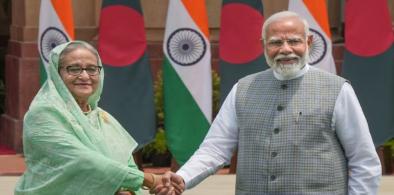
India was keen to welcome PM Hasina before her China trip to ensure bilateral consensus on sensitive issues. Over the last several years, strategic ties have grown, with cooperation in science and technology, defence and security, energy, trade, commerce, and maritime issues. The goal of the visit was to strengthen these bonds.

China, Russia and the US, however, give little value to international laws. They accept them only if they suit their own interests. They reject them if they conflict with their interests.
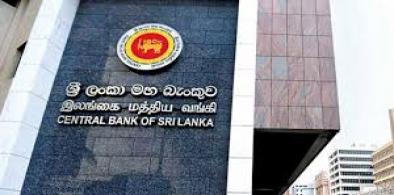
India and China have long been strategic rivals in South Asia. China's significant economic footprint in Sri Lanka, through investments in infrastructure projects like the Hambantota Port and the Colombo Port City, has raised concerns in New Delhi about Beijing’s growing influence. The debt deal, involving China, adds another layer to this complex relationship.

The AA’s control over large swathes of territory in Rakhine State, including strategic border areas, increases the risk of arms smuggling, human trafficking, and other illicit activities. Bangladesh's geography puts it at the heart of three major Asian drug trade routes - the Golden Wedge, the Golden Triangle and the Golden Crescent. This makes the country a lucrative transit for the region's drugs, especially from Myanmar and India, undermining Bangladesh’s internal security.

The arrest of four Sri Lanka nationals last month in Ahmedabad, India by Gujarat's Anti-Terrorism Squad caught the attention of Sri Lankan authorities. During interrogation, the four admitted to being closely involved with the banned NTJ and confessed they joined IS through Pakistani handler Abu Bakr Al Baghdadi.

Nearly 20 years Modi’s junior, Gandhi now has the opportunity to directly counterbalance a prime minister who for ten years since 2014 lorded over legislative actions because no opposition party had managed to win the required 10 per cent of the 543 parliamentary seats.

The judiciary in Pakistan is at a crossroads. The current trend, characterised by politicisation and inefficiency, jeopardises the basic foundations of justice and the rule of law.
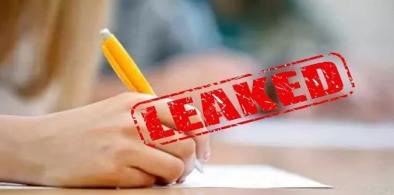
The Act does not sufficiently address the root causes of paper leaks, such as systemic corruption and the involvement of organized networks. Without tackling these underlying issues, the Act risks becoming a reactive tool rather than a proactive solution.

If the world is not to waste this opportunity to declare an all-out war on the looming climate crisis, climate negotiators need to ‘huddle together’ with urgency to save ourselves from the scorching temperatures, devastating wildfires, deadly floods and other climate extremes of the future.

Despite Pakistan’s repeated deniability of its proxy wars it conducts against India, it is a known fact that the State’s idea of counter terrorism is to selectively crack down on some terror outfits while overlooking the actions of the ones it nurtures and aligns with on similar strategic objectives. In an effort to mollify its "iron brother" China, Pakistan has carried out heavy-handed operations against its citizens who are not supportive of China and its growing presence in Pakistani affairs.

It would be helpful to understand the context and background behind support to the Khalistanis by five western governments that particularly stand out i.e. the US, Canada, the UK, Germany, and Australia.

The inclusion of merchants with evident vested interests in the EAC exemplifies the ethical quandary at the heart of Pakistan's economic administration. Their close financial links to the industries they are supposed to supervise and advise on are a typical example of putting the fox in charge of the henhouse.
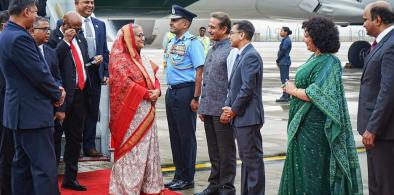
India may in principle approve the supply of electricity from Bhutan to Bangladesh using its power grid. Bangladesh will seek smooth supply of essentials like wheat, sugar and onions from India.