Most analysts agree that there is no clear-cut winner and the race to the presidency is a multiple-horse race



Abbottabad itself is symbolic. Just 30 miles north of Islamabad, along the historic Karakoram Highway, it is home to Pakistan’s premier military academy. For bin Laden to live there undetected is not simply a mystery—it is a reminder of the uncomfortable realities of counterterrorism

Amid strategic challenges from Beijing in Bangladesh, New Delhi cannot separate border management with foreign policy. New Delhi should hold high-level dialogue with Dhaka and develop a cooperative roadmap to facilitate the identification and repatriation of undocumented migrants from India.

The visit therefore should not be viewed simply as another bilateral defence engagement. It represents an attempt by New Delhi to institutionalise India's security relationship with Sri Lanka, while simultaneously reassuring Colombo that India's expanding security interests need not threaten Sri Lankan sovereignty.

Belgium views India as an opportunity to reduce its economic dependence on China and limit vulnerability to developments in the United States. India offers scale, growth, industrial capacity and ambition, while Belgium offers technology, specialised expertise, logistics and access to the European market.

Most analysts agree that there is no clear-cut winner and the race to the presidency is a multiple-horse race

What sets these protests apart was their apolitical nature, illustrating that regardless of how firmly a government may seem entrenched in power, movements grounded in just causes can expose the vulnerability of even the most resilient regimes, as recent events have clearly shown.
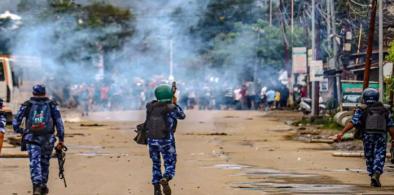
Cross-border arms and drug trafficking has always been there in the region, with recent reports suggesting large quantities of guns being shipped to Manipur from an illicit market located close to the border between China and Myanmar. Drugs are being used by the insurgent group to finance their procurement of arms and fund other illicit activities.

The Brussels-based think tank Egmont Institute, in a policy brief in April, said individual EU member States attach a lot of importance to their bilateral relationship with New Delhi and are interacting with the Indian government at the highest level. “However, visits of the leaders of the EU institutions to India are rare. One fails to see a real political interest in India from the Commission President and from the President of the European Council.”
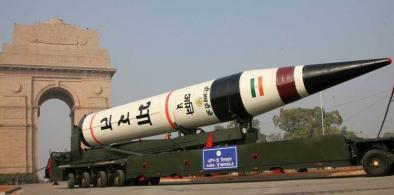
China, Pakistan and Russia have clearly and unequivocally declared that they will exercise ‘FIRST USE OF NUKES’ option under certain circumstances. For China and Pakistan, India is the target. Yet our Chief of Defence Staff and premier think tank viz Centre for Air Power Studies, IDSA, USI and many others continue to ‘sing’ the outdated NFU policy.
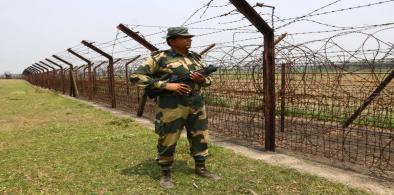
The recurrent border killings have been a source of tension between India and Bangladesh. The government of Bangladesh has consistently urged India to implement non-lethal measures and exercise restraint in border management. In response, India has underscored the challenge of securing a frontier that is both expansive and permeable while also committing to reducing the use of lethal force.
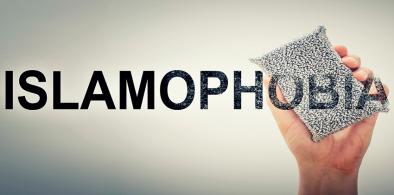
Is it not time for India to set up a committee like the one in the UK to ensure the implementation of norms which combat misconceptions about other religions? In India many misconceptions are prevailing and no impactful effort has been undertaken to counter these. These misconceptions have spread very dangerously in society.

Afghanistan has turned into fertile ground for terrorist groups from around the world. If the flow of terrorism continues unchecked in Afghanistan, there is little doubt that the world could face another incident similar to 9/11, or perhaps something even worse. Today, Afghanistan has become a security black hole for the regional countries and the world overall.

The irony is that Manipur is where the Chinese and American interests coincide against India. But the need is to look at ourselves in the mirror. If we provide a readymade asymmetric battlefield to overt or covert inimical forces, why would they not exploit it?

The combative rise of China has challenged US hegemony in global relations. In such a world, the crafting of a foreign policy that ensures national security requires vigilance, patience, caution, economic and military clout, and more importantly, constant risk management that enables India to maintain its strategic autonomy.

Many fear that the Balochistan situation could lead to a 1971-like crisis that split the country due to centralised power, military operations against civilians, and foreign overreach. Why, then, have these lessons not been learned?

The ethnic cleansing under Biren Singh’s watch broke all records – Kuki-Zo women paraded naked and subjected to mass rape publicly, with some token FIRs. This is also viewed as the reason why Prime Minister Narendra Modi has avoided visiting violence-stricken Manipur in the past 16 months.
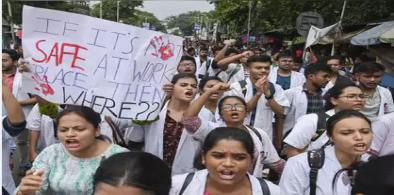
The Kolkata case is a stark reminder of the persistent failures of India's criminal justice system in addressing sexual violence against women. To truly address the issue of rape in India, there must be a holistic approach that includes legal reforms

South Asia’s quest for gold medals at the 2028 Olympics requires a strategic and collaborative effort. By learning from the successes of sports legends like Michael Phelps and Caeleb Dressel, and addressing key areas such as infrastructure, coaching, and talent development, South Asia can enhance its Olympic performance.
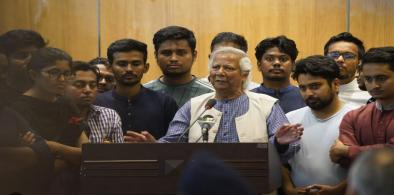
The lesson from the Bangladesh protests reaffirm the fact that governments and their agencies should handle grievances of citizens promptly, with sincerity and fairness, or retributive justice will follow that is unhealthy for democracy. Currently, it is imperative for internal peace along with cultural safety to be restored in Bangladesh, or the nation will drift miles away from democracy.