

India's BRICS Legacy: Did 2026 Produce Something More Durable?
India achieved this in a group that has changed a great deal. BRICS now has 11 members and 10 partner countries, with very different political systems and, at times, sharply different views. In May 2026, a meeting of BRICS foreign ministers in New Delhi ended without a joint statement because of differences among members over the conflict in West Asia.
 Nov 04, 2026
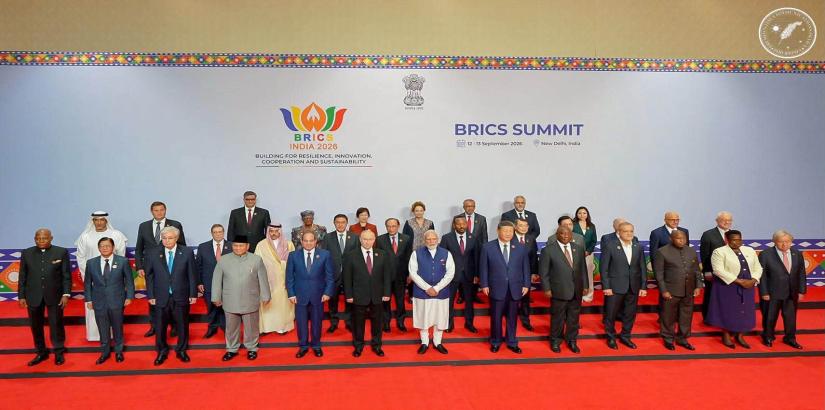
On December 31, 2026, India will hand over the chairship of BRICS to China. It has been a busy year. Since taking over from Brazil on January 1, India has hosted more than 400 meetings and engagements across 30 cities, from ministerial conferences to gatherings of young entrepreneurs and small businesses. All of it led up to the 18th BRICS Summit at Bharat Mandapam in New Delhi on September 12 and 13, where leaders adopted a 140-paragraph declaration.
Most of the coverage of that summit focused on who came and what they said. Chinese President Xi Jinping made his first visit to India in seven years. Commentators debated whether BRICS would move away from the dollar. Those stories mattered, but they are not the best way to judge a presidency. A better question is a simpler one: what has India built that will still be working a year from now?
What the Headlines Covered
India's theme for the year was Building for Resilience, Innovation, Cooperation and Sustainability, a phrase whose first letters spell out BRICS. Prime Minister Narendra Modi chaired a summit that, on several issues important to India, produced clear language.
The New Delhi Declaration condemned the terrorist attack in Jammu and Kashmir on April 22, 2025, in which 26 people were killed, and called for a Comprehensive Convention on International Terrorism, an idea India first proposed at the United Nations in 1996. China and Russia also restated their support for the wish of Brazil and India to play a greater role in the United Nations, including the Security Council.
These are meaningful outcomes. But they build on positions taken at earlier summits. The more original part of India's year lies further down the document.
What the Headlines Missed
Read the declaration closely, and a pattern appears. Many of its most concrete commitments came from India, and most of them are practical rather than grand.
On the economy, BRICS launched a Task Force on Growth and Development at India's initiative, and welcomed an India Centre for BRICS Industrial Competencies. India proposed a BRICS Risk Lab, to be hosted at the Gujarat International Finance Tec-City (GIFT City), India's international financial center, to study insurance and financial risks facing member economies. A BRICS forum for small and medium enterprises was held in Agra, and members agreed to hold a second one. New working groups on international taxation and transfer pricing were also set up during India's chairship.
On innovation, members welcomed a BRICS Incubator Network, agreed to consider a BRICS Startup Innovation Fund, and proposed a virtual platform for young entrepreneurs. A proposal for a shared repository of digital public infrastructure draws directly on India's experience with tools such as the Unified Payments Interface (UPI) and Aadhaar. Leaders also issued a separate statement on the global governance of artificial intelligence (AI), and the declaration welcomed India's AI Impact Summit, held at Bharat Mandapam in February 2026.
On people's welfare, BRICS endorsed a Mission for Healthy Lifestyle with a roadmap for 2026 to 2029, and agreed to build a network of centers of excellence on mental wellbeing, with the National Institute of Mental Health and Neuro-Sciences (NIMHANS) in Bengaluru as the coordinating centre. Members also adopted guidelines for sharing early-warning data on disasters and voluntary principles for climate-resilient urban infrastructure.
None of these will make front-page news. But they are exactly the kind of work that turns a summit forum into a functioning partnership. A startup founder in Nairobi, a disaster manager in Jakarta or a health researcher in São Paulo is more likely to feel the effect of these networks than of any communiqué on global order.
A Careful Balance
India achieved this in a group that has changed a great deal. BRICS now has 11 members and 10 partner countries, with very different political systems and, at times, sharply different views. In May 2026, a meeting of BRICS foreign ministers in New Delhi ended without a joint statement because of differences among members over the conflict in West Asia.
Against that background, reaching agreement on a 140-paragraph declaration was a real diplomatic achievement. India's approach on payments shows the same pragmatism. Rather than pushing for a common currency, which several members are wary of, the declaration supports the BRICS Payment Task Force and settlement in local currencies, while noting that there is no one-size-fits-all approach. This careful balance reflects India's wider foreign policy, which seeks closer ties with the Global South without turning BRICS into a bloc directed against any country.
The Handover Test
The final paragraph of the declaration extends full support to China for its chairship in 2027. This is where India's legacy will be tested. BRICS has no permanent secretariat. Each new chair sets its own priorities, and initiatives started by one presidency can quietly fade under the next.
Three steps could help India's work last.
First, India could publish a short public report on each initiative it launched, naming the agency responsible and the next milestone. This would make it easier for the incoming chair, and for the public, to track progress.
Second, the initiatives that India hosts, such as the Risk Lab at GIFT City and the industrial competencies centre, should receive multi-year funding and work plans from the Indian side, so that they continue regardless of who holds the chair.
Third, India could link the proposed startup fund and digital infrastructure repository to its existing platforms and institutions, giving them a working base from the start rather than leaving them as ideas on paper.
Beyond the Summit Photops
Presidencies are usually remembered for their summits. India's year at the head of BRICS deserves to be remembered for something more durable: a set of practical tools for trade, innovation, health and disaster preparedness that serve the people of member countries directly. If those tools are still working when India next takes the chair, that will be the clearest sign that 2026 was a year well spent.
(The writer is a Public Policy Researcher at the Policy, Politics and Governance Foundation (PPGF), Bengaluru and a postgraduate scholar in political science at Amity University. The views expressed are personal. She can be reached at komalkarwa41@gmail.com and LinkedIn: https://www.linkedin.com/in/komal-karwa-a115b122b.)







Post a Comment