

Wolf World or a Multipolar World? How Major Powers Exercise Power Will Determine Emerging International Order
The growing role of middle powers adds another layer of complexity. Yet the term itself remains imprecise. Not every country outside the United States and China qualifies as a middle power, and many reject the label altogether. India, for example, increasingly sees itself as a leading power pursuing strategic autonomy rather than as a middle power seeking alignment with one bloc or another.
 Jul 26, 2026
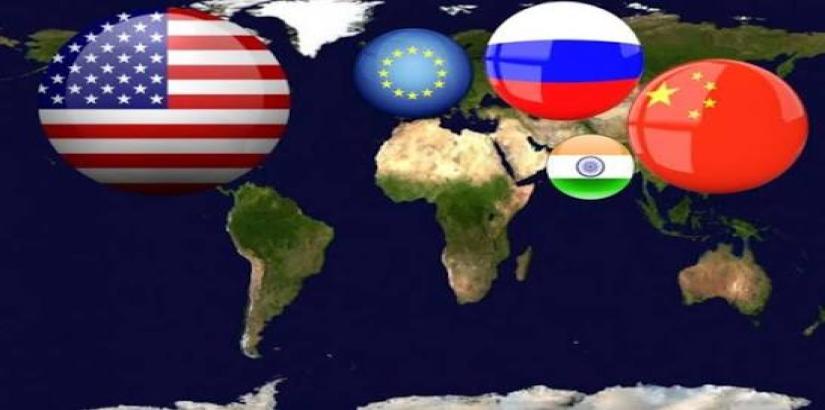
As the post-Cold War order weakens, an important question arises: Is the world moving towards a stable multipolar order, or are we entering a "wolf world", one where power increasingly trumps principle, rules give way to expediency, and might makes right?
A multipolar world is one in which several major powers share global influence, replacing the unipolar order that emerged after the Cold War under American predominance. Whether such a world evolves into a stable balance of power or descends into a "wolf world", where the law of the jungle prevails over the rule of law, remains one of the defining questions of our time.
The Liberal Order
The liberal international order was conceived in the aftermath of the Second World War and subsequently championed, both ideologically and institutionally, by the United States. It represented a framework of global governance based on structured, rule-based relations among states. Built on three broad pillars—ideological, economic and institutional—it promoted democracy, human rights and the rule of law, encouraged free trade and open markets, and relied upon multilateral institutions such as the United Nations, the World Bank, the International Monetary Fund and, later, the World Trade Organization to foster cooperation, prevent major conflicts and promote global stability.
Today, that order is under visible strain. The assumptions and institutions that sustained the post-Cold War international system are increasingly being questioned, while the United States appears less willing to underwrite the existing order through alliances and multilateral institutions. This has revived debates about whether the world is moving towards another era dominated by a single power, a bipolar contest between the United States and China, or a genuinely multipolar international order.
The Changing Balance of Power
Before answering that question, however, it is important to distinguish between the decline of American dominance and the decline of American power. The two are not synonymous.
The United States remains, militarily, technologically, economically, financially, culturally and ideologically, the single most powerful state in the international system. What has changed is not the extent of American power but its relative dominance. For nearly three decades after the Cold War, the United States occupied a position of such overwhelming superiority that the international system was often described as unipolar, with America functioning almost as an imperial power.
Over the past two decades, however, that dominance has gradually eroded. The United States has become structurally overstretched. Until recently, its defence doctrine envisaged the capability to fight and win two, and if necessary three, major wars simultaneously. Today, however, Washington confronts three principal theatres of strategic contestation: Russia in Europe, Iran in the Middle East and China in East Asia. It increasingly appears to lack the political, military and economic bandwidth to manage all three challenges simultaneously.
Strategic overstretch is compounded by mounting fiscal pressures. With public debt approaching US$39 trillion, concerns are growing about the long-term sustainability of American power. Equally significant is the growing domestic resistance to prolonged overseas military engagements. Opposition to intervention is no longer confined to the MAGA movement but increasingly cuts across the American political spectrum.
Yet describing the emerging order simply as a bipolar contest between the United States and China is equally misleading. The distribution of power differs not only between states but also across regions and sectors.
The Emerging Multipolarity
Geographically, Europe remains essentially bipolar, defined by the enduring strategic rivalry between Russia and the NATO alliance. East Asia is increasingly shaped by US-China competition. The Middle East, however, is unmistakably multipolar, where regional powers such as Iran, Türkiye, Saudi Arabia and Israel pursue overlapping, competing and often contradictory interests, making the region far less amenable to bloc politics.
Multipolarity is not confined to geography. Different domains of international relations also exhibit different distributions of power.
The energy sector, for example, is becoming increasingly multipolar as countries diversify both their sources of supply and the technologies they employ. China is investing aggressively in renewable energy, electric mobility and small modular nuclear reactors, while many nations seek greater energy security through diversified supply chains and indigenous capabilities. Here, influence is determined not merely by states but also by access to resources, technology and industrial capacity.
The financial domain presents a different picture. Western sanctions have encouraged countries to settle trade in local currencies and develop alternatives to payment systems such as SWIFT. However, these initiatives have yet to mount a serious challenge to the dominance of the US dollar. "De-dollarisation" remains an attractive political slogan, but the global financial system continues to revolve around the dollar because no credible alternative presently matches its liquidity, stability and institutional depth.
From Middle Powers to Multi-Alignment
The growing role of middle powers adds another layer of complexity. Yet the term itself remains imprecise. Not every country outside the United States and China qualifies as a middle power, and many reject the label altogether. India, for example, increasingly sees itself as a leading power pursuing strategic autonomy rather than as a middle power seeking alignment with one bloc or another.
Physics offers an instructive analogy. A system is said to be in stable equilibrium when any displacement from equilibrium generates restoring forces that oppose the displacement and move the system back towards balance. Stability, therefore, is not the absence of tension but the management of competing forces.
The emerging international order may increasingly resemble such a system. Rather than being organised around rigid military or ideological blocs, it is likely to be sustained through multi-alignment across different sectors. Nations will increasingly align differently in security, trade, technology, finance, energy, climate, supply chains and migration, according to their interests in each domain rather than through permanent political or military alliances.
These sectoral alignments will often appear contradictory. A country may be a strategic partner in defence, a competitor in technology, a trading partner in manufacturing and a collaborator on climate action—all with the same nation. Such apparently conflicting relationships are not necessarily a source of instability. On the contrary, they create overlapping interests that act as restoring forces, preventing disagreements in one domain from overwhelming the broader relationship.
International relations are already evolving in this direction. Security, trade, technology, finance, energy, migration, tourism and climate cooperation increasingly function as distinct domains, each with its own logic and constellation of partners. Countries cooperate in one sphere while competing in another, creating a constantly shifting diplomatic landscape. National interests, rather than ideological alignment or bloc membership, increasingly determine behaviour within each sector.
The Reality of Multi-Alignment
The contradictions are already evident. Iran and Türkiye find themselves aligned against Israel, yet support opposing sides in the South Caucasus. Despite President Erdoğan's harsh rhetoric against Israel, Türkiye has been reluctant to sever significant economic ties. China maintains a close strategic partnership with Russia while preserving extensive economic interdependence with the United States, even as Washington leads Western support for Ukraine.
India itself reflects this emerging pattern of multi-alignment. It is a member of the QUAD while simultaneously participating in BRICS and the Shanghai Cooperation Organisation (SCO), maintaining strategic engagement with the United States while continuing long-standing defence cooperation with Russia.
These are not anomalies but defining characteristics of an emerging international order in which cooperation and competition coexist across different domains. Multi-alignment, therefore, may not merely be a foreign policy strategy adopted by individual states; it may become the organising principle that allows a multipolar system to remain in equilibrium.
The international system is therefore unlikely to settle into either a rigid bipolar order or a neatly balanced multipolar one. Instead, it is evolving into a multidimensional order in which different configurations of power coexist across security, economics, finance, technology, energy and diplomacy. Flexible, issue-based partnerships are likely to replace permanent alignments as states increasingly pursue interests that vary from one domain to another.
Stability or the Wolf World
Whether this evolving order becomes a stable multipolar system or degenerates into a "wolf world" will depend less on the number of major powers than on the manner in which they exercise power. Multipolarity merely describes the distribution of power; multi-alignment provides the mechanism through which competing forces can remain in equilibrium; a wolf world describes the failure of that mechanism, where power operates without restraint.
If the major powers continue to recognise the value of institutions, international law and pragmatic cooperation, the restoring forces created by multi-alignment may produce a stable equilibrium despite persistent tensions. If those restraints weaken, however, the law of the jungle may well replace the rule of law, and the world may drift towards a wolf world.
(The author is an Indian Army veteran and a contemporary affairs commentator. The views are personal. He can be reached at kl.viswanathan@gmail.com )




Post a Comment