Pakistan has expressed “deep regret” over the United Nations Security Council (UNSC) president’s decision not to invite it on the Friday session on Afghanistan despite a request


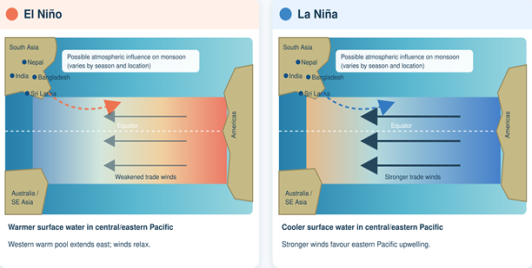
AI may genuinely extend the horizon over which seasonal climate risk can be estimated. For communities across South Asia living under the influence of the monsoon, a longer view could mean the difference between a farmer adjusting her planting in time and a family receiving a flood warning too late to act.
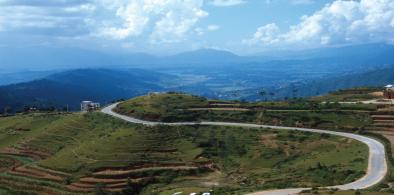
The broader lesson for South Asia is equally important. Hilly regions cannot be developed simply by transferring lowland infrastructure models into mountainous terrain. Investment has to respond to local economic systems, geography and environmental risks.

The UN's 2026 report warns that “long-term water use has exceeded renewable inflows and safe depletion limits,” leaving some water supplies beyond recovery. As the world’s largest groundwater extractor, India sits at the centre of this reckoning
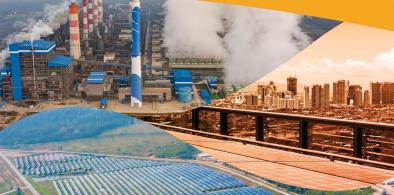
The larger economic choice for South Asia is therefore broader than whether to participate in carbon trading. The region can remain primarily a supplier of relatively inexpensive mitigation outcomes, or it can also develop the technology, professional capacity, financial products and verification systems that determine what those outcomes are worth.
Pakistan has expressed “deep regret” over the United Nations Security Council (UNSC) president’s decision not to invite it on the Friday session on Afghanistan despite a request
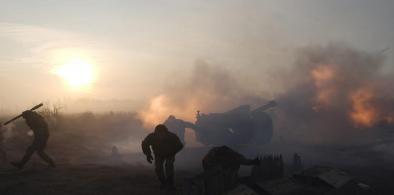
The US may continue to bomb the Taliban and keep asking them to reconcile but such a scenario is not going to unfold, especially when nothing has been done in 20 years to block the financial support and arms supplies to the Taliban, writes Lt Gen P. C. Katoch (retd) for South Asia Monitor
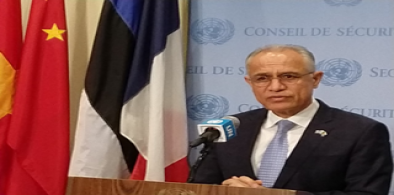
In a damning indictment of Islamabad in the world’s top global forum, Afghanistan once again accused Pakistan of assisting the “Taliban war machine” that has launched an all-out attack on the Afghanistan government as the United States is pulling out of the country, and warned about the activities of organisations like the Lashkar e Taiba (LeT) operating in conjunction with the Taliban
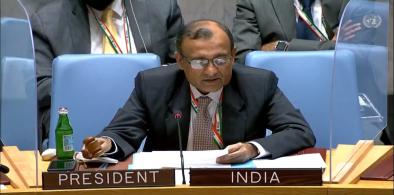
Presiding over an acrimonious Security Council session on Syria that pitted the United States and its allies against Russia and China, India's Permanent Representative T S Tirumurti warned against terrorists getting hold of chemical weapons
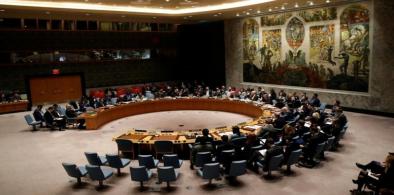
Notwithstanding Prime Minister Narendra Modi’s pledge that India will work for the entire humanity, and not only for those “who are on our side of the border," during its presidency of the United Nations Security Council, a jittery Pakistan has said it will watch carefully to ensure India does not hurt its core interests
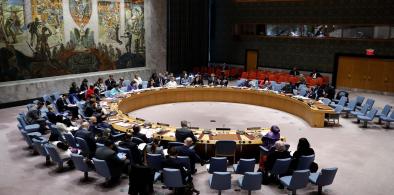
India took over the presidency of the Security Council on Sunday with a pledge from Prime Minister Narendra Modi to work for entire humanity, "and not only of those who are on our side of the border," while reminding the world of the continued challenges of terrorism, pandemic and climate change
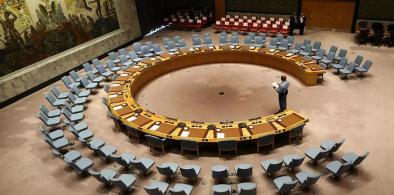
India Sunday assumed the rotating presidency of the United Nations Security Council for the month of August
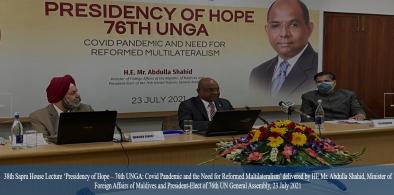
The pandemic may have put the world in crisis, but Shahid, the UNGA president-elect, felt it has also provided an opportunity for the governments and the UN to build a resilient and sustainable world, writes Sirshendu Panth for South Asia Monitor

India has appreciated the United Nations Security Council's role in countering transnational threats like terrorism along with preventive diplomacy and conflict prevention
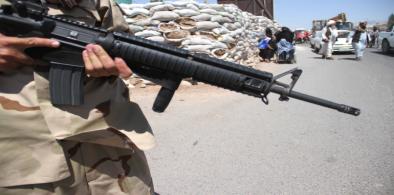
The United Nations Assistance Mission in Afganistan (UNAMA) said it was concerned about the increasing number of reports of killing, ill-treatment, persecution, and discrimination in communities living in and near the fighting zones in the war-torn countr
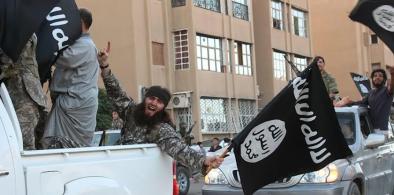
ISIS and al-Qaeda, the transnational terrorist organizations, are regrouping in Afghanistan, warned the United Nations, saying the groups may pose increased threats amid deteriorating security situation and the fragile peace process
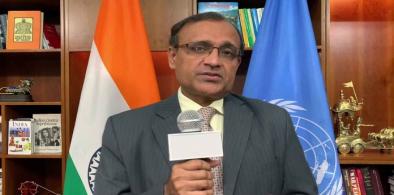
India's Permanent Representative TS Tirumurti, who will be presiding over the Security Council next month, has held discussions with General Assembly President Volkan Bozkir about India's plans for leading the UN's highest decision-making body
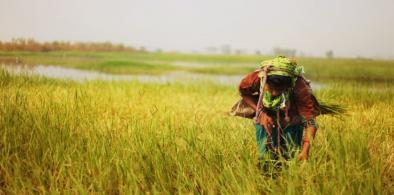
Bhutan, with support from the United Nations Development Program, has begun agriculture projects to increase winter vegetable production and also creating green jobs to boost the government’s food security initiatives
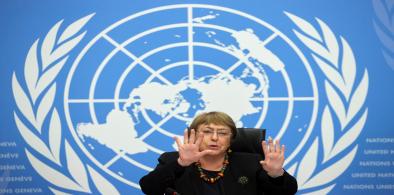
United Nations human rights experts have expressed deep concern over the lack of attention to the human rights violations perpetrated against the Ahmadiyya Muslim Community around the world, including three countries in South Asia – Pakistan, Bangladesh and Sri Lanka
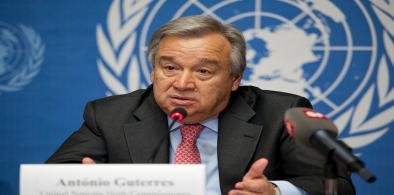
United Nations Secretary-General Antonio Guterres “grieves” the death of Reuters‘ Indian photographer Danish Siddiqui who was killed while covering the Afghanistan security forces operation against the Taliban, and is “concerned” about the “increasing threat to journalists” in Afghanistan, his spokesman said