Osama bin Laden's Compound

Never Forget Abbottabad: The Other Chapter of 9/11 Should not Fall Victim to Selective Memory

Abbottabad itself is symbolic. Just 30 miles north of Islamabad, along the historic Karakoram Highway, it is home to Pakistan’s premier military academy. For bin Laden to live there undetected is not simply a mystery—it is a reminder of the uncomfortable realities of counterterrorism

India’s Push-Ins Could Push Bangladesh Towards China

Amid strategic challenges from Beijing in Bangladesh, New Delhi cannot separate border management with foreign policy. New Delhi should hold high-level dialogue with Dhaka and develop a cooperative roadmap to facilitate the identification and repatriation of undocumented migrants from India. 

Growing Sri Lanka-India Defence Cooperation Throws Up Air-Defence Questions

The visit therefore should not be viewed simply as another bilateral defence engagement. It represents an attempt by New Delhi to institutionalise India's security relationship with Sri Lanka, while simultaneously reassuring Colombo that India's expanding security interests need not threaten Sri Lankan sovereignty.

Belgium and India: Building a Strategic Partnership Beyond Economics and Trade

Belgium views India as an opportunity to reduce its economic dependence on China and limit vulnerability to developments in the United States. India offers scale, growth, industrial capacity and ambition, while Belgium offers technology, specialised expertise, logistics and access to the European market.

More on Geopolitics, Security and Strategic Affairs

One Nation, One Election: Staggered electoral cycle important safeguard of India’s federal structure

The leitmotif of ‘One Nation’ is strongly aligned with the BJP’s policy and rhetoric; consider the 2017 introduction of the Goods and Services Tax (‘One Nation, One Tax’) and the abrogation of Article 370 in 2019 (‘One Nation, One Constitution’). The ONOE falls within this inherent paradigm: an overpowering centre under the guise of administrative cost-cutting and electoral efficiency.

Kolkata rape and murder case: Confronting our collective failures

The medic rape-murder case, which captured global attention in an era dominated by the attention economy, had the potential to ignite systemic reforms, given the brutality of the crime. The movement, like many before it, held the power to expose the moral failings of the ruling party in the state. Yet, as so often happens, it faltered within a couple of months—or perhaps was made to falter. Herein lies an uncomfortable reality: we, the aam aadmi (common man), must share the blame.

Why Pakistan needs to reform and regulate its madrassas

Many critics argue that madrassas are breeding grounds for extremism. While there are undoubtedly instances of some seminaries being linked to extremist ideologies, it is essential to recognize that the vast majority of mudarrassahs are not involved in such activities. However, the lack of regulation leaves these institutions vulnerable to misuse. 

Bangladesh's passport purge: Worrying signs of authoritarianism, undermining of democratic principles

The interim government's decision to cancel the passports of 22 military officials is a stark reminder of the dangers of unchecked executive power. It violates the Constitution of Bangladesh, contradicts international legal standards, and disregards judicial precedents. Moreover, it reflects a troubling disregard for due process and the rule of law.

Is Colombo seeking to terminate the Indo-Lanka Accord?

The question that arises now is what will happen to the future of the Indo-Sri Lanka Accord, signed on July 29, 1987 between Prime MInister Rajiv Gandhi and President J R Jayawardne, under JVP’s rule? Dismantling the Indo-Sri Lanka Accord has been a long-standing desire of ultra-Sinhala nationalists in the deep south of the country. 

Will Bangladesh transition from Bengali identity to Islamic nationalism?

Bangladesh is one of the larger and populous countries in South Asia, with its geostrategic location in the Bay of Bengal and an impressive economic growth from its booming textile industry.  So restoring political stability and defeating the rise of Islamist forces is of utmost importance not only for Bangladesh but the whole region.  

Destructive protests damaging to Pakistan’s economy, governance and social harmony

Perhaps the most significant damage inflicted by PTI's recent protests has been the toll on Pakistan's fragile economy. Pakistan's economy is already struggling with inflation, unemployment and a mounting fiscal deficit. PTI's protests, which have led to mass shutdowns in key cities like Islamabad, Rawalpindi, and Lahore, have worsened the economic crisis.

Five years of change in Jammu & Kashmir: Challenges of sustaining the peace and economic growth

The repeal of Article 370 not only changed the political map of Jammu and Kashmir, but also introduced a new wave of promising economic growth. While challenges remain, the steps taken by the Indian government to increase investment and improve infrastructure indicate great potential for J&K to become one of the hubs of economic development in India.

Germany and India: Need for more soft-power engagement

Germany  is not just about holocaust, beer, football, cars or high-end technology. There are lots of things to explore and exploit, in the good sense of the term. Similarly, India has moved way beyond Bollywood, chicken curry or Holi and Diwali. There is much more to explore. By shying away from doing so, the myths will persist, the stereotypes will continue, the fears will enhance. 

Political violence in Pakistan: A nation on the brink of division?

Pakistan’s struggle for peace and stability is far from over. As the government seeks accountability for those responsible for this violent protest, the need for healing has never been more pressing. PTI’s leadership must be held accountable for their role in inciting violence, spreading misinformation, and damaging the country’s social fabric. 

US-India dynamics could influence ties with Bangladesh, redefine regional politics

The sensationalized reports from Indian media about attacks on minorities could further complicate this dynamic, potentially shaping Trump's perceptions and policies toward Bangladesh. The fear is that these narratives could lead to a skewed understanding of the situation in Bangladesh, undermining Yunus’s efforts to establish legitimacy and garner international support.

Marx, Mao or Modi? Sri Lanka's delicate balancing act

Things changed overnight and within hours after the presidential election results were announced, India’s High Commissioner in Colombo Santosh Jha turned up at the JVP office in capital Sri Jayawardenepura        with a bouquet of red roses. Interestingly, Dissanayake in his brief conversation with the Indian envoy, recalled his visit to India and said that too was a contributory factor in his victory.

Sharing stories and voices of South Asia: Can a Kathmandu film festival act as a catalyst for regional collaboration?

Film Southasia is more than just a film festival. It brings together creative voices from across the region, establishing Kathmandu as a regional hub where South Asian storytellers connect across borders. It has become a special space where artists can share their stories and break down the barriers that often keep South Asian countries apart. Over the years, the festival has welcomed many iconic cultural figures, including poet-filmmaker Gulzar, actor Shabana Azmi, and directors Shyam Benegal and Goutam Ghose.

Sustaining democracy and development in Jammu & Kashmir: Looking beyond the 2024 elections

The thrust cannot simply lay on maintaining security in the region, but also a complete transformation of relations. This requires a reconciliation between the Hindus and Muslims of the region who have suffered through communal violence. The de-essentialization of religious identity is crucial in building fraternity and retaining long term internal peace in the region, while at the same time limiting Pakistani intervention

Bangladesh’s security crisis threatens regional equilibrium in South Asia

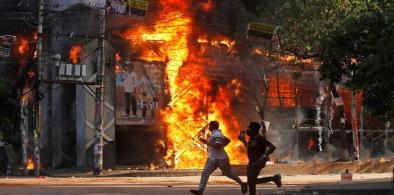
Bangladesh stands at a perilous juncture, grappling with an unprecedented security crisis in the aftermath of the July 19 jailbreak. The escape of over 2,241 inmates, including militants and top criminals, has exposed deep vulnerabilities in the nation’s security apparatus and highlighted the urgent need for action.