As Pakistan enters its winter of discontent, yet again, Maryam Nawaz has emerged as a front-ranking leader in a male bastion, writes Mahendra Ved for South Asia Monitor



When a Chinese company won the contract to establish hybrid wind and solar energy projects on three islands off the northern Jaffna peninsula—just 45 km from Rameswaram in Tamil Nadu—the security implications extended far beyond economics. Against this backdrop, India’s concerns are entirely justifiable. Sri Lanka faces a pressing question: how will the nation confront the infiltration of Chinese global criminal networks? Since Mahinda Rajapaksa’s tenure, Chinese presence in Colombo has steadily increased, with Sri Lanka positioned as a partner state in Beijing’s Belt and Road Initiative.
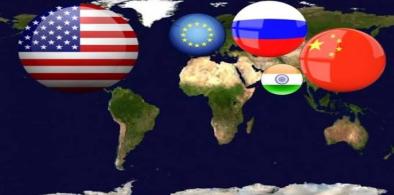
The growing role of middle powers adds another layer of complexity. Yet the term itself remains imprecise. Not every country outside the United States and China qualifies as a middle power, and many reject the label altogether. India, for example, increasingly sees itself as a leading power pursuing strategic autonomy rather than as a middle power seeking alignment with one bloc or another.
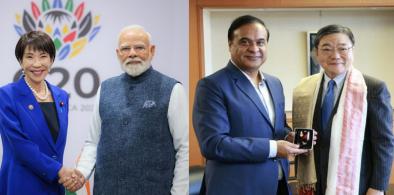
If India and Japan genuinely envision Northeast India as the gateway connecting South Asia with the Bay of Bengal and the Indo-Pacific, then the next chapter of the partnership cannot remain confined to New Delhi and Tokyo. It must also be written in Guwahati, Shillong, Aizawl, Imphal, Agartala, Kohima, Gangtok and Itanagar
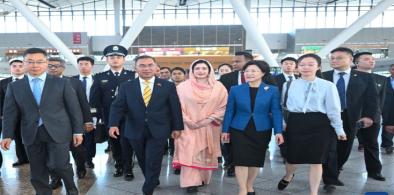
In several neighbouring countries, including Bangladesh, Sri Lanka and Nepal, China has demonstrated an ability to move from agreements to implementation far more rapidly than many competitors. India, despite enjoying unmatched geographic and cultural advantages, has often struggled with delays

As Pakistan enters its winter of discontent, yet again, Maryam Nawaz has emerged as a front-ranking leader in a male bastion, writes Mahendra Ved for South Asia Monitor

China is enabling Pakistan to set up a network-enabled warfare capability with satellite feeds to monitor the Indian Ocean Regions (IOR) like the Indian Navy employs Centrix provided by the US Navy, writes Cmde Ranjit B. Rai (retd) for South Asia Monitor

In the BJP’s case, the arrogance bred by two successive general election victories convinced the party that it was now in a position to do more or less whatever it wanted, of which the first and foremost was the implementation of its longstanding desire to abolish Article 370, writes Amulya Ganguli for South Asia Monitor
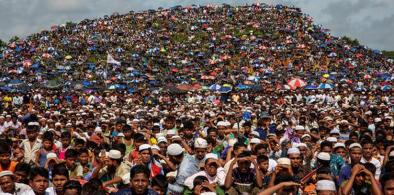
Shringla also assured Myanmar of India’s support for the safe repatriation of displaced Rohingya Muslims from Bangladesh. About 40,000 or more Rohingya live in Indian cities, including Kolkata and Delhi, so India has its own reasons to push for a solution to the Rohingya problem, writes Subir Bhaumik for South Asia Monitor
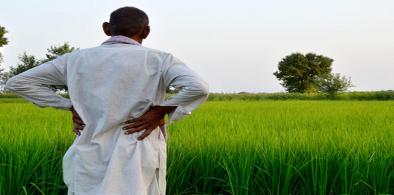
Given that around 86.2 percent of farmers in India are small or marginal, all the activities require capital that they cannot afford without the middlemen. The bills in no way tries to create alternate credit mechanisms to aid farmers, writes Akshat Singh for South Asia Monitor
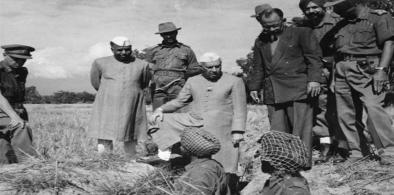
October 1962 is a sad chapter of Indian history and greater the pity that it remains under wraps, writes Cmde C Uday Bhaskar (retd) for South Asia Monitor

The Indian American community is sophisticated, knows and understands the domestic political compulsions and will not allow themselves to be led around by short term promises, writes Dr. Sridhar Krishnaswami for South Asia Monitor
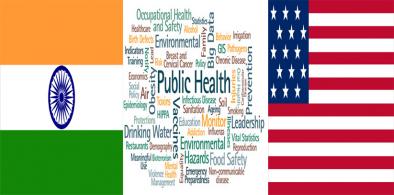
Both the US and India are remarkable democratic experiments and their ability to champion democratic norms and freedoms - rather than weaken them - will prove critical to global peace and prosperity in the years ahead, write Sohini Chatterjee & Swadesh Chatterjee for South Asia Monitor
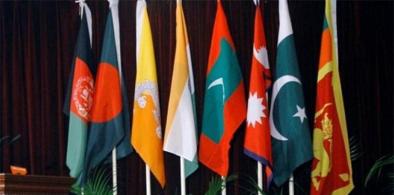
South Asian nations need to work together to cope with COVID-19 and unlock new opportunities to build economic resilience, connectivity, and human capital, writes Partha Pratim Mitra for South Asia Monitor
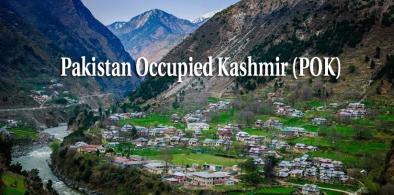
The Pakistan army has never won any war but they are also aware that the political hierarchy in India is apprehensive of waging war on Pakistan with the Chinese presence in POK-Pakistan, writes Lt Gen Prakash Katoch (retd) for South Asia Monitor
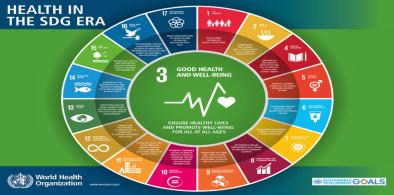
The pandemic has laid bare some fault lines and vulnerabilities in the domains of education and health, and the lessons need to reflect in the SDGs as fresh strategies, writes Ram Krishna Sinha for South Asia Monitor
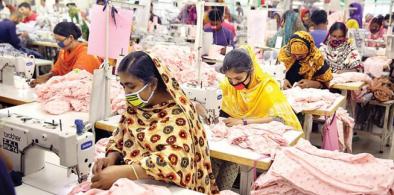
Bangladesh’s export-led model of development is the major factor behind its growth dynamism and has altered its status from being a bottomless basket case to an Asian tiger in the making writes N Chandra Mohan for South Asia Monitor
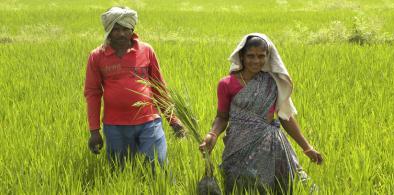
The wealth of a country comes from its land. Around 55 percent of India’s population is connected with farming, writes Anil K Rajvanshi for South Asia Monitor

An Indo-US Charter with a lend-lease clause on the lines of the Atlantic Charter in 1941 is the need of the hour, writes Cmde Ranjit B Rai (retd) for South Asia Monitor

Till such time that mothers, as well as families in India, don’t cease to feel a little less obsessed about that beloved male child, or they don’t bring an end to that entitled treatment showered on him more than he deserves, daughters of India will never be safe within the domestic boundaries or beyond, writes Anuja Saha for South Asia Monitor