
Amid Changing Geopolitics and Internal Turmoil, South Asia may Paradoxically get more European Attention
Some observers wrongly assume Europe's current crises will lead to a retreat from Asia. The opposite may occur. The EU's internal turmoil is accelerating a fundamental redefinition of its external priorities. South Asia is becoming increasingly important
 Oct 21, 2026
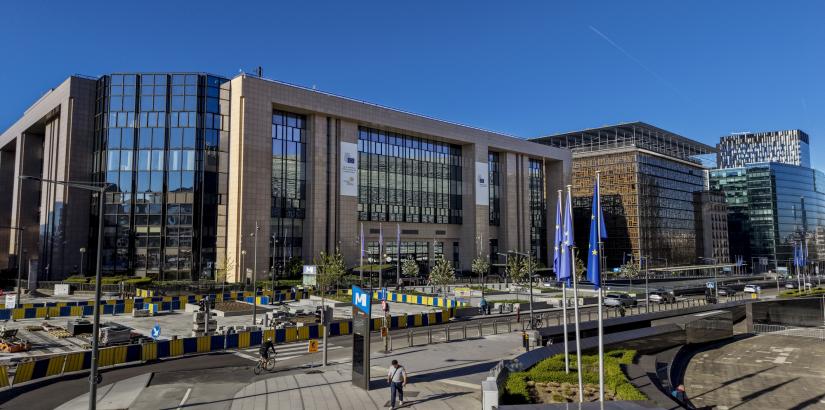
Europe is undergoing one of its most turbulent geopolitical periods since the end of the Cold War. The war in Ukraine, heightened tensions with Russia, doubts about long-term US security guarantees, economic competitiveness challenges, migration pressures, and internal political fragmentation have pushed the European Union (EU) to refocus significant political and financial resources on its immediate neighbourhood.
At the same time, the EU remains committed to maintaining its role as a global actor. This raises an important question: how will Europe's strategic turbulence affect its engagement with South Asia?
Political turbulence in France, Germany and Italy matters to the European Union's foreign policy because these three countries are the ones that shape the 27-member European bloc’s foreign agenda.
The most immediate consequence of the current crisis is the prioritisation of European security. Defence spending among EU member states has risen dramatically, with collective expenditure projected to reach approximately 454 billion euro in 2026, reflecting the Union's growing focus on defence readiness and strategic resilience.
Growing Cooperation With India
This shift inevitably diverts diplomatic energy and resources toward Eastern Europe and the broader European security architecture. South Asia, traditionally not at the centre of EU geopolitical priorities, may therefore receive comparatively less political attention. Brussels' foreign policy agenda is increasingly dominated by Ukraine, European defence integration, energy security, and relations with Russia and China.
However, reduced political attention does not necessarily mean diminished importance. Rather, South Asia is likely to be viewed through a more strategic lens linked to Europe's broader geopolitical competition.
For South Asia—principally India, Pakistan, Bangladesh, Sri Lanka, Nepal, Bhutan—the implications extend beyond bilateral relations. They concern the EU's ability to act as a geopolitical actor in a region marked by China's growing influence, India's strategic autonomy, the US security presence, and competition over trade, connectivity, maritime security and technology
Among South Asian states, India stands to benefit the most from the EU's evolving scenario. The EU increasingly views India as a counterweight to China's growing influence, a major economic partner and alternative manufacturing hub, a significant actor in Indo-Pacific security, a crucial source of technological and supply-chain diversification.
As Europe seeks to reduce strategic dependencies, particularly on China, cooperation with India in areas such as semiconductors, renewable energy, digital governance, critical raw materials, and maritime security is likely to intensify.
Indeed, the current geopolitical climate may accelerate EU-India cooperation far beyond traditional trade relations.
Heightened Focus on Indo-Pacific
Paradoxically, Europe's security crisis may increase its interest in South Asia. The EU has increasingly embraced the Indo-Pacific as a core strategic theatre. While Ukraine remains the immediate challenge, EU policymakers recognise that long-term global power competition is increasingly centred in Asia.
This means greater naval cooperation in the Indian Ocean, increased engagement with regional organisations, stronger partnerships on maritime security, Enhanced cooperation on cyber security and critical infrastructure.
The EU's approach is not only military, but it seeks to blend diplomacy, trade, development assistance, and regulatory influence.
This could mean greater continuity in trade and economic diplomacy alongside and less engagement on security, democracy, human rights, and relations with China.
Pakistan, Bangladesh, Sri Lanka
The EU remains an important trade partner and development donor for Pakistan. Nevertheless, political instability, economic vulnerabilities, democratic governance concerns, and Islamabad's balancing act between China, the Gulf states, and Western partners create major challenges for EU policymakers.
Europe's growing security focus may produce two outcomes. Less political investment in Pakistan's domestic affairs but continued engagement where migration, counterterrorism, climate resilience, and economic stability are concerned.
One area where South Asia's importance for Europe will rise rather than fall is climate policy. Bangladesh, one of the world's most climate-vulnerable countries, offers the EU an opportunity to project global leadership on sustainability and green development.
As the EU seeks to strengthen its international profile beyond hard security issues, climate cooperation with South Asian partners is likely to expand through green finance, renewable energy projects, and disaster preparedness programmes. Climate diplomacy may hence become one of the most durable pillars of EU engagement in South Asia.
South Asia offers Europe alternatives in manufacturing, digital services, pharmaceutical production, supply-chain resilience.
As a result, EU engagement with countries such as India, Bangladesh and Sri Lanka, is likely to deepen for economic as well as geopolitical reasons.
However, despite growing interests, the EU faces significant constraints. Unlike the United States or China, the EU lacks a unified military presence and often struggles to speak with one voice on major geopolitical issues. Analysts note that the Ukraine war has highlighted both the EU's growing geopolitical ambitions and persistent institutional limitations.
Furthermore, South Asian states prioritise bilateral relations with individual European countries, rather than engagement with the EU as a strategic actor. This reduces Europe's ability to shape hard-security developments in the region. Smaller South Asian states may face a greater risk of reduced diplomatic attention and competition for European funding.
More Selective Foreign Policy
Europe's current turmoil is reshaping rather than diminishing its engagement with South Asia. The EU is becoming more security-conscious, more focused on strategic autonomy, and more determined to diversify partnerships beyond traditional alliances. While immediate crises in Europe may absorb political attention, South Asia's geopolitical relevance is increasing.
The likely outcome is a more selective and interest-driven EU policy. Deeper strategic cooperation with India, continued but cautious engagement with Pakistan, expanded climate and development partnerships with Bangladesh.
In short, Europe's crises are not going to pull the EU away from South Asia. Rather, these are likely to transform South Asia from a peripheral concern into a region increasingly viewed as essential to Europe's long-term geopolitical and economic strategy.
Some observers wrongly assume Europe's current crises will lead to a retreat from Asia. The opposite may occur. The EU's internal turmoil is accelerating a fundamental redefinition of its external priorities. South Asia is becoming increasingly important not because Europe has solved its problems, but because its problems, namely security, economic resilience, supply-chain diversification, energy transition, and managing China's rise, are pushing it towards deeper engagement with the region.
In the long term, South Asia could emerge as one of the principal arenas where Europe seeks to demonstrate geopolitical relevance beyond its immediate neighbourhood.
(The author is Brussels-based Non Resident Fellow of the New Delhi-based Society for Policy Studies who has been tracking and reporting on EU and European affairs and NATO for the past four decades. The views expressed are personal. He can be reached at nawab_khan@hotmail.com. X: @NawabKhan10)







Post a Comment