The Maldives case is a vivid example that Beijing is not going to stop its power play in India's neighboring countries. China's aim is crystal clear: to question India's bid for regional leadership.


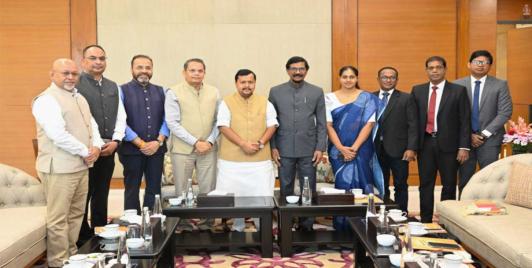
For Sri Lankan politics, this is more than diplomatic sightseeing. It raises a fundamental question whether the JVP is developing a sophisticated strategy of balancing relations with India and China or is it gradually adapting itself to the organisational models of powerful one-party or dominant-party systems in China and India respectively?

The ongoing civil war in Myanmar has caused an influx of armed cadres (Meitei, Naga and Kuki) into Manipur's border tracts like Kamjong district, further squeezing finite land resources and aggravating historical territorial disputes. What began as a localized dispute under the state's newly elected government in February 2026 has escalated into intense, multi-district armed warfare.
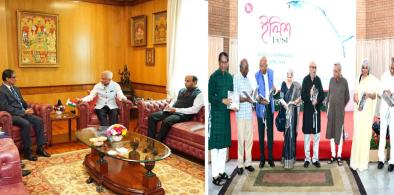
Hamidullah’s tenure has been marked by promotion of Bangladesh's soft power, with the envoy going around the country underlining the deep roots of people-to-people ties.

India must also recognise that Pakistan's internal security crisis has wider regional implications. Escalating Pakistan–Afghanistan tensions could create additional uncertainty along the western frontier, while attacks on Chinese projects could affect regional connectivity and investment.
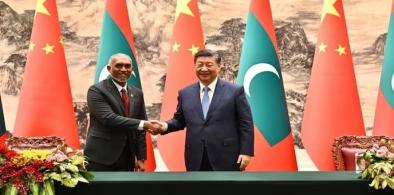
The Maldives case is a vivid example that Beijing is not going to stop its power play in India's neighboring countries. China's aim is crystal clear: to question India's bid for regional leadership.

If India and China are changing, so are many other countries who realise the futility of trying to persuade a bunch of religious fundamentalists, now enjoying absolute power, to change their way of treating their people.

Besides youth, efforts have also been made to increase women’s inclusion in electoral politics. Section 206 of the Elections Act 2017 mandates at least 5 per cent women's representation in general seats. However, major political parties often award tickets to women for unwinnable seats and focus on swing constituencies.
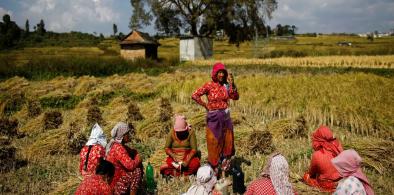
Nobel Prize-winning economist Amartya Sen is a vehement supporter of granting land access to women and argues that economic empowerment is a critical step to realise the goal of gender equality and women’s empowerment.
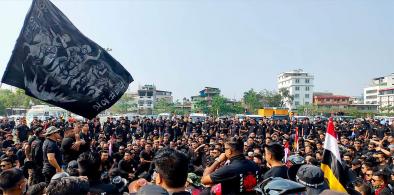
Ironically, recent actions will be playing into the hands of China which has a lien on many insurgent groups in Myanmar, including Meitei and Kuki-Naga groups, which it would use to destabilize northeast India.
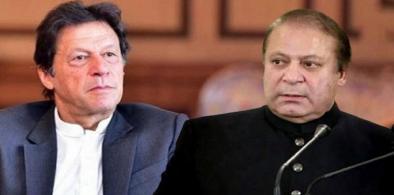
It is a risible state of affairs in Pakistan where a three-time prime minister, who could have been in prison for ten years without going into exile returns, even as another one, Khan, is sentenced to ten
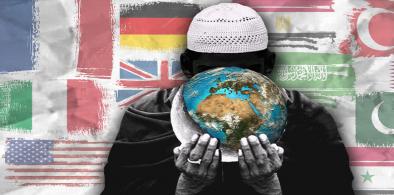
Though a vast majority of Muslims oppose violent extremism, it is a reality that most extremist and terrorist violence does occur in largely Muslim states, although it mostly consists of attacks by Muslim extremists on fellow Muslims and not some clash between civilizations.
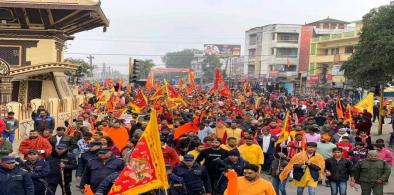
The way this was done raises questions about whether Hindus have been spiritually awakened and also what this means for India as an avowedly secular, democratic country.
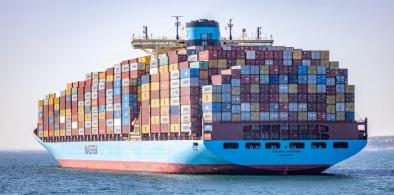
The protracted Red Sea crisis may hurt Bangladesh's exports, stoke inflationary pressures, and delay the recovery of the economy. Bangladesh’s apparel sector is highly dependent on the route, as nearly 70 percent of the country's clothes are exported to European countries

Worldwide sorghum is the fifth highest-produced grain crop and fourth in India. Nutritionally it is better than rice as it contains beta-carotene, folic acid, fiber, thiamine, and riboflavin.
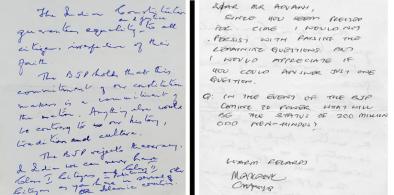
Advani was gracious enough to handwrite his answer in which he said, “The Indian Constitution guarantees equality and justice to all citizens, irrespective of their faith. The BJP holds that this commitment of our constitution makers is a commitment of the nation. Anything else would be contrary to our history, tradition and culture. The BJP rejects theocracy. In India, we can never have Class I citizens and Class II citizens as you have in Pakistan and several Islamic countries.”
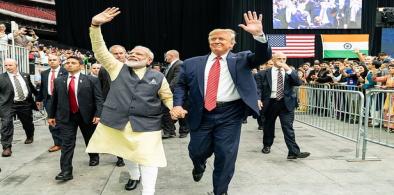
Trump took a broader view of the Indo-Pacific region and its role that aligned with India’s in a world where China assumes an increasingly aggressive posture towards neighbours and vies for global dominance. In his tenure, he extended the Pacific remit to the Indian Ocean, embracing India in the strategy for the region.

While the real issue of Ram temple is social, it is also a political play at its zenith. In a politically charged nation, what we see are distorted views of the developments in Ayodhya.

The adverse influence of uncontrolled social media in the relations between India and Maldives is a case in point. Social media poses an existential threat to the conventional methods of conducting governance, diplomacy, and warfare.
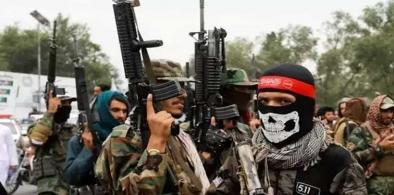
Al-Qaeda's strategic plan involves aiding "persecuted" Kashmiri Muslims once their objectives in Pakistan are achieved. Shifting the jihadist threat toward Kashmir will also align with the ambitions of the Pakistani military.