As India prepares for anti-Indianism 2.0 it will eventually have to also address the deeper Nepalese yearning for a sense of equality and mutual respect, writes Amb K V Rajan (retd) for South Asia Monitor


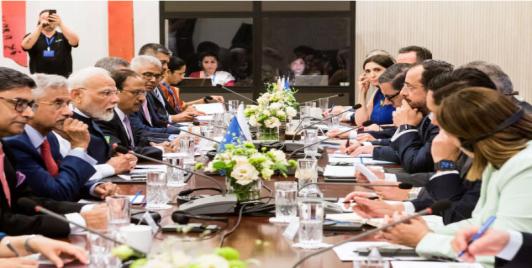
EU and India could establish a regular EU–India-Middle East Consultative Mechanism involving foreign-policy officials and experts. Its purpose would be to coordinate positions before major international gatherings and meetings.

For Sri Lankan politics, this is more than diplomatic sightseeing. It raises a fundamental question whether the JVP is developing a sophisticated strategy of balancing relations with India and China or is it gradually adapting itself to the organisational models of powerful one-party or dominant-party systems in China and India respectively?

The ongoing civil war in Myanmar has caused an influx of armed cadres (Meitei, Naga and Kuki) into Manipur's border tracts like Kamjong district, further squeezing finite land resources and aggravating historical territorial disputes. What began as a localized dispute under the state's newly elected government in February 2026 has escalated into intense, multi-district armed warfare.
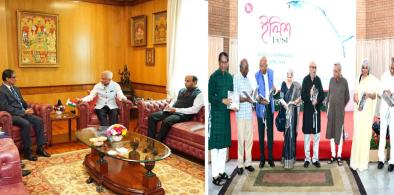
Hamidullah’s tenure has been marked by promotion of Bangladesh's soft power, with the envoy going around the country underlining the deep roots of people-to-people ties.
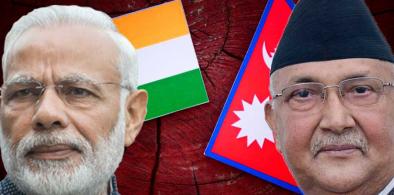
As India prepares for anti-Indianism 2.0 it will eventually have to also address the deeper Nepalese yearning for a sense of equality and mutual respect, writes Amb K V Rajan (retd) for South Asia Monitor
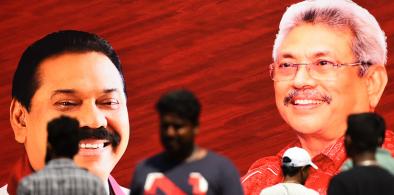
Two major national political parties that took turns in ruling the country for seven decades are about bite the dust, perhaps ending a healthy democratic system in which these two parties ensured a stable government and a strong opposition in parliament most of the times, writes Sugeeswara Senadhira for South Asia Monitor
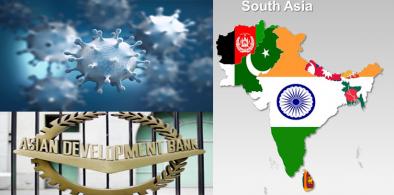
In terms of a more vulnerable population which is less well paid, Afghanistan, India, Bangladesh and Nepal are more vulnerable as compared to the rest of the countries of the region, writes Partha Pratim Mitra for South Asia Monitor
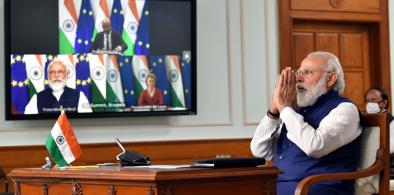
The signing of the India-EURATOM Agreement on research and development cooperation in the peaceful uses of nuclear energy will cover all aspects of research and technological development, writes Amb Bhaswati Mukherjee (retd) for South Asia Monitor
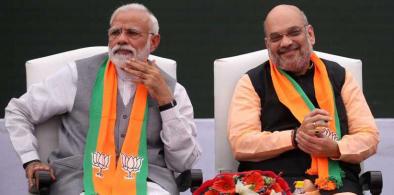
There is little doubt, therefore, that the opportunism of Indian politicians is a reason for the BJP’s success, writes Amulya Ganguli for South Asia Monitor
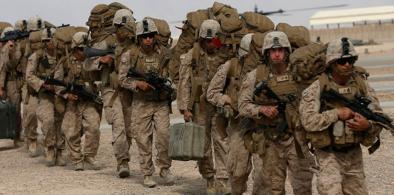
China will use its increased presence and influence in Iran and Afghanistan to target Indian interests, writes Lt Gen P. C. Katoch (retd) for South Asia Monitor
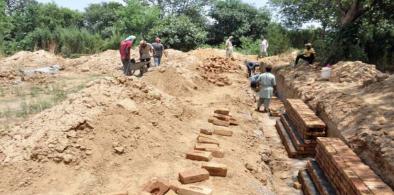
The government’s move on the temple, some media commentators suggest, is to show Pakistan in a better light in comparison with India, which is seen as being driven by Hindutva forces that are against India's religious minorities, writes Mahendra Ved for South Asia Monitor
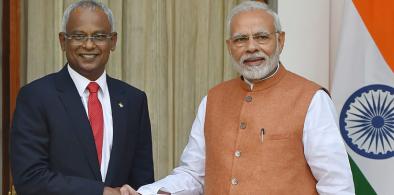
The Maldivian open support against Pakistan in OIC is a victory of Indian diplomacy, writes Jai Kumar Verma for South Asia Monitor
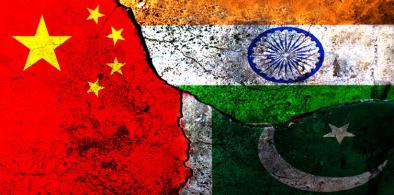
Taking into consideration the zero-sum nature of Pakistan-India relations, Islamabad maybe compelled to acquire arms in a tit-for-tat response to New Delhi, writes Maham S. Gillani for South Asia Monitor
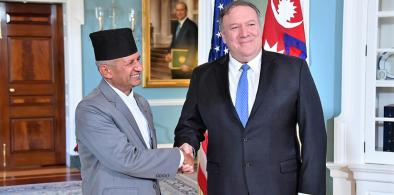
The US aid under MCC is a golden opportunity for Nepal to look beyond India and China and seek greater engagement with other powers and to derive economic benefit and relinquish meaningless geopolitical adventures, writes Vikash Kumar for South Asia Monitor
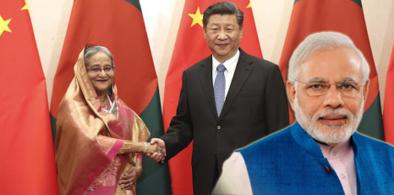
Bangladesh is a very important neighbour for India. The fulcrum of India’s Act East policy and vital for development of India’s North East, it has a major role in the success of BIMSTEC, writes Maj Gen Alok Deb (retd) for South Asia Monitor
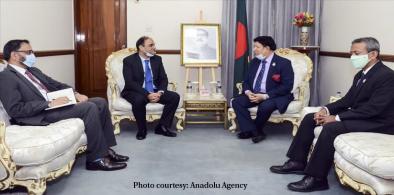
Bangladesh Foreign Minister A K Abdul Momen met Pakistan’s High Commissioner Imran Ahmed Siddiqui in Dhaka on July 1. According to a media report, the meeting indicates a possible thaw in bilateral relations, writes Mahendra Ved for South Asia Monitor

Given the doctor-dependent, top-heavy nature of our healthcare system, creating a functional telemedicine network in rural areas by leveraging the vast spread of Community Health Centre (CHC) and PHCs will help increase access to quality medical care, writes Vikram Thaploo for South Asia Monitor
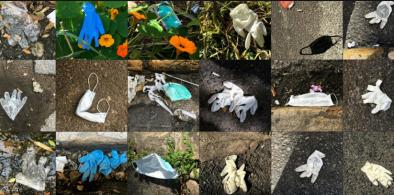
The COVID-19 crisis has slowly generated a new kind of waste made up of disposable masks, gloves and other personal protective equipment (PPE) items, writes Mahmuda Amir Eva for South Asia Monitor
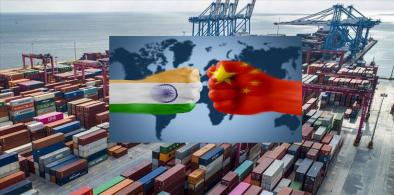
The dragon’s shadow has lengthened over the South Asian region as it has rapidly developed port and transport infrastructure, some of it as part of its Belt and Road Initiative, writes N Chandra Mohan for South Asia Monitor