
EU and India meeting

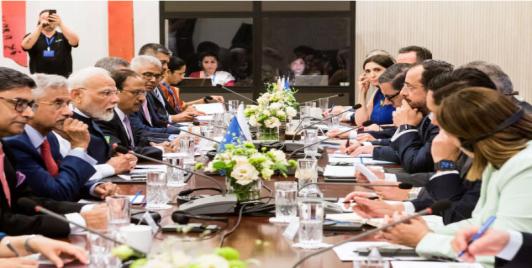
EU and India Should Cooperate Strategically on Middle East Stability

EU and India could establish a regular EU–India-Middle East Consultative Mechanism involving foreign-policy officials and experts. Its purpose would be to coordinate positions before major international gatherings and meetings. 

Sri Lanka’s Ruling Marxists-Leninists on Delhi, Beijing Visits: Embracing Diplomatic Pragmatism?

For Sri Lankan politics, this is more than diplomatic sightseeing. It raises a fundamental question whether the JVP is developing a sophisticated strategy of balancing relations with India and China or is it gradually adapting itself to the organisational models of powerful one-party or dominant-party systems in China and India respectively?

Continuing Kuki-Naga Conflict is a Threat to Northeast India's Security

The ongoing civil war in Myanmar has caused an influx of armed cadres (Meitei, Naga and Kuki) into Manipur's border tracts like Kamjong district, further squeezing finite land resources and aggravating historical territorial disputes. What began as a localized dispute under the state's newly elected government in February 2026 has escalated into intense, multi-district armed warfare. 

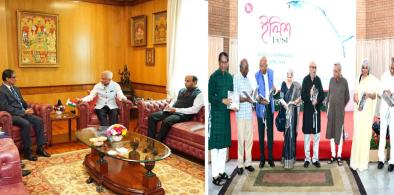
An Ilish Fest Becomes a Test of Diplomacy in Strained India-Bangladesh Ties

Hamidullah’s tenure has been marked by promotion of Bangladesh's soft power, with the envoy going around the country underlining the deep roots of people-to-people ties. 

More on Geopolitics, Security and Strategic Affairs

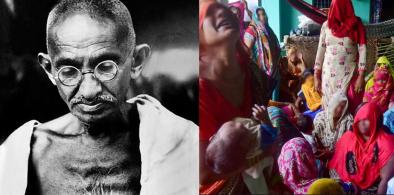
A city known for its humour is now city of horror: Politics of rape in India

What now appears pretty loud and clear is that the tables have turned in the manner most foul, and the official guns are trained on the victim and her family instead of perpetrators of the monstrous crime, writes Sharat Pradhan for South Asia Monitor 

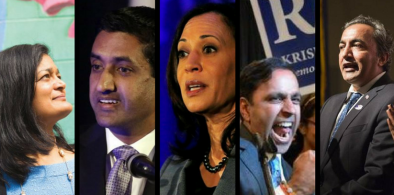
A record number of Indian Americans look to expand influence in US administration

The Indian American community has propelled its way to relevance in American politics over the past two decades. The representation of the community has increased at every level with each election cycle, writes Frank F. Islam for South Asia Monitor

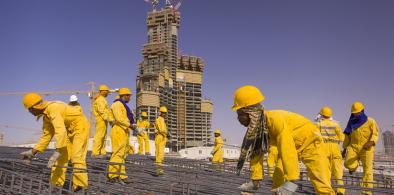
Gulf remittances to South Asia likely to be hit: Diaspora must be made a stakeholder

South Asians account for 15 million workers in these countries. The prospect now is for return migration back to India, Pakistan, Bangladesh, Nepal, and Sri Lanka which can only deepen the existing economic gloom in the region, writes N Chandra Mohan for South Asia Monitor

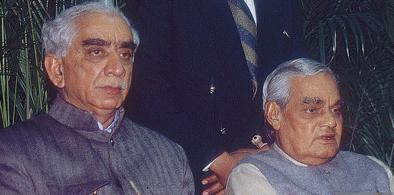
Jaswant Singh, a personal remembrance: Recounting a little-known story from the Kargil days

One of Jaswant Singh's finest meetings was with the New York Times editorial board, where members extensively asked about the Indian nuclear programme and why India wasn’t signing the Non-Proliferation Treaty. He patiently and firmly placed India’s position, writes Sanjoy Hazarika for South Asia Monitor

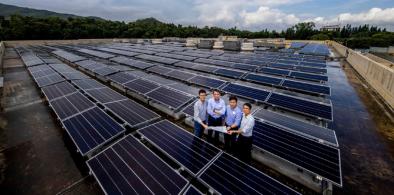
Harnessing renewable energy: Onus on South Asia

The energy situation in South Asia has been that it is primarily energy fuel deficient as all countries in the region are dependent on substantial imports of fuel, including coal, oil, and natural gas, to meet their growing energy needs, writes Partha Pratim Mitra for South Asia Monitor

India @70 has moved very far away from Bapu@150

Even as India has marked 70 years of the Republic in January,  the closure of the 150th birth anniversary  of Bapu reveals the degree to which the nation has moved away from the Gandhian spirit and ethos, writes C Uday Bhaskar for South Asia Monitor 

Building Mahatma Gandhi’s legacy: We must be the change we wish to see in the world

In the past few years, radical extremists have countered Mahatma Gandhi and his teaching and his preaching with acts of ‘war,’ ‘hate,’ and ‘violence,’ writes Frank F. Islam for South Asia Monitor

Understanding Mahatma Gandhi's philosophy of ends and means

Gandhi said, means are foreseeable, ends are not. Thus, means can be controlled, managed and guaranteed, writes Ram Krishna Sinha for South Asia Monitor

Churails: A tale of unapologetic Pakistani women in a patriarchal society

Churails reflects the voice of Pakistani women against the repressive traditional patriarchal societal norms, writes Azeemah Saleem for South Asia Monitor

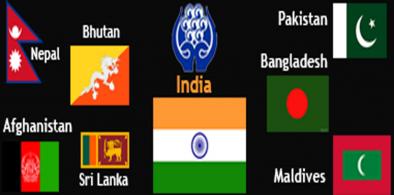
India and SAARC: Need to re-set engagement with key partners

If India is to defend its turf against China in the SAARC region, it must contribute to greater flows of intra-regional trade and investments by accepting “asymmetrical responsibilities” in opening its market to neighbours without insisting on reciprocity, writes N Chandra Mohan for South Asia Monitor

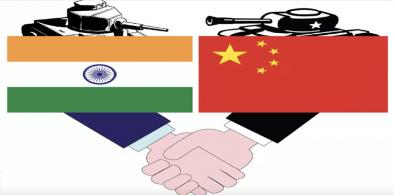
India’s tactics against China: A game theory perspective

While there is a common belief that the tit-for-tat game that India is playing with China is petty and self-destructive, this strategy has been proven to be pretty useful in the  current  faceoff, writes Akshat MIttal for South Asia Monitor

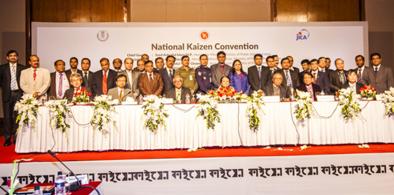
Japan-Bangladesh joint project brings paradigm shift in public delivery services

The Cabinet Division of Bangladesh, the executive office of the Prime Minister, has included kaizen in the annual performance agreement (APA) with the allocation of some weightage, writes Dr. Mohammad Rezaul Karim for South Asia Monitor 

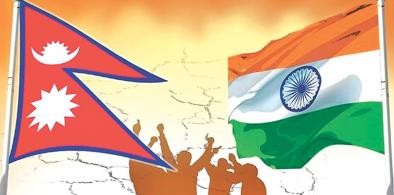
Determinants in Nepal-India affiliation: Time for redefining special relationship

What is needed between the two countries is close cooperation and not a competition – this is obligatory in the Nepal-India relationship – and of course, no confrontation both at political and people-to-people relations, as this will lead to a catastrophic, writes Maj. Gen. Binoj Basnyat (retd) for South Asia Monitor

South Asia: An assessment for a post-COVID economic recovery

The dilemma of growing COVID-19 cases and reviving economic activity is crucial at this juncture which the leadership in the South Asia region will have to resolve and, herein, lies the challenge for it, writes Partha Pratim Mitra for South Asia Monitor

Does revival of Pak cinema depend upon India?

Pakistani cinema industry, even as it fears being swamped by Bollywood, realises the need for films from India that, given the common culture, resonate well with the cinegoers, writes Mahendra Ved for South Asia Monitor