Pakistani audiences seem unwilling to discard the supposedly "vulgar" stuff they are addicted to, given the common socio-cultural ethos of the subcontinent, writes Mahendra Ved for South Asia Monitor


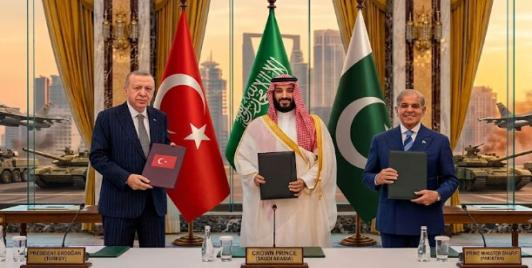
It would also explain why Pakistan is trying to preserve a distinction between supporting Saudi Arabia and fighting the Houthis. Pakistan has every reason to avoid another open-ended conflict in the Middle East. Its military is heavily committed to its own security challenges. Its economy cannot easily absorb the political and financial consequences
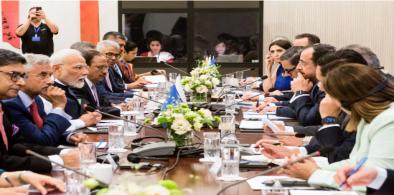
EU and India could establish a regular EU–India-Middle East Consultative Mechanism involving foreign-policy officials and experts. Its purpose would be to coordinate positions before major international gatherings and meetings.

For Sri Lankan politics, this is more than diplomatic sightseeing. It raises a fundamental question whether the JVP is developing a sophisticated strategy of balancing relations with India and China or is it gradually adapting itself to the organisational models of powerful one-party or dominant-party systems in China and India respectively?

The ongoing civil war in Myanmar has caused an influx of armed cadres (Meitei, Naga and Kuki) into Manipur's border tracts like Kamjong district, further squeezing finite land resources and aggravating historical territorial disputes. What began as a localized dispute under the state's newly elected government in February 2026 has escalated into intense, multi-district armed warfare.

Pakistani audiences seem unwilling to discard the supposedly "vulgar" stuff they are addicted to, given the common socio-cultural ethos of the subcontinent, writes Mahendra Ved for South Asia Monitor
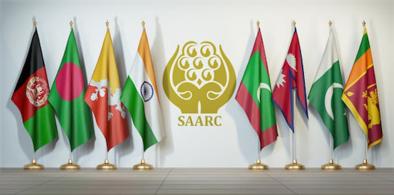
The spread of COVID-19 infections in South Asia has not been uniform across countries; while some countries were successful in controlling the pandemic, others were not, writes Partho Pratim Mitra for South Asia Monitor

The BJP governments in these states, in their quest to criminalize interfaith marriages, are going ahead with coming out with this law, despite not even a single case of ‘love jihad’ having been detected by the central investigative teams to date, writes Reeti Prakash for South Asia Monitor
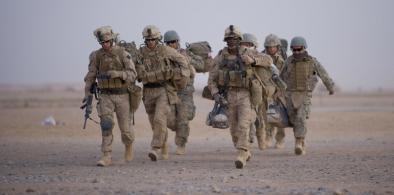
Till the Afghan National Security Forces (ANSF) are confident and sufficiently armed to stabilize the country, it would be prudent for the US to retain troop strength between 5000-8000 in Afghanistan, writes Lt Gen Prakash Katoch (retd) for South Asia Monitor

The Malabar naval exercises could be seen as an obvious manifestation of the desire among members of the Quad to keep trade routes open, military confrontations in check and keep the Indo-Pacific Region open for legitimate rules-based economic activity, writes Raghbendra Jha for South Asia Monitor
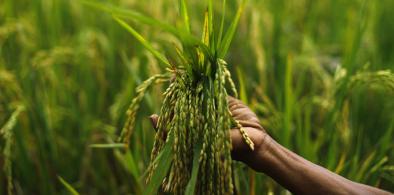
COVID-19 has brought into focus supply chain issues and with it a fundamental change in the way food availability and access is viewed, one that goes beyond the conventional focus on weather, area, production, and yield (APY) paradigm of crops, writes Partha Pratim Mitra for South Asia Monitor

These are challenging times with rising majoritarianism and nationalism and, with a large Muslim population, India must watch events in Europe closely, and ensure its secular fabric remains intact, writes Lt Gen P R Kumar (retd) for South Asia Monitor
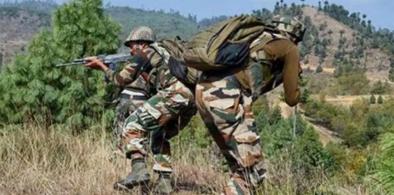
The number of ceasefire violations by Pakistan troops from January till November along the J & K border has broken all records of the past 17 years, writes Col Anil Bhat (retd) for South Asia Monitor
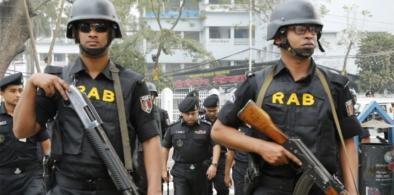
The police in Bangladesh have taken the role of judge, jury, and executioner, writes Aashish Kiphayet for South Asia Monitor

People in Umerkot live in communal harmony. While the Hindus arrange Iftari in the month of Ramazan and Niaz in the month of Muharram, the Muslims come forward to attend Hindu festivals, thus sending a message of love, peace, and harmony, writes Furqan Hyder Shaikh for South Asia Monitor
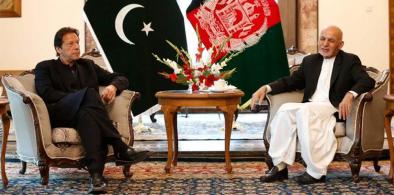
As the patron of the Taliban, Pakistan will wield more direct influence over Afghanistan as Washington winds down its involvement, writes Arul Louis for South Asia Monitor
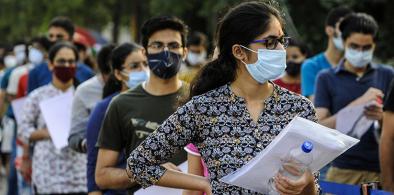
India faces a grave challenge that has been accentuated by the pandemic. The crisis needs to be seen as a national imperative and addressed through a collective stakeholder approach with a sense of extreme urgency, writes Amit Dasgupta for South Asia Monitor
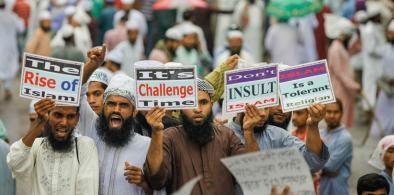
Conceding to the Islamist demand for stopping the installation of the Mujib statue at Dholaipar will be a huge political defeat for the Awami League, especially during the birth centenary of the founding father and a year before the Golden Jubilee of Bangladesh's independence, writes Subir Bhaumik for South Asia Monitor
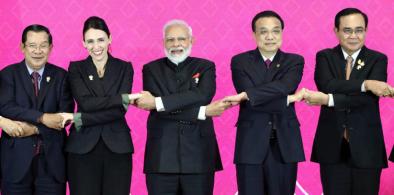
On the face of it, exiting RCEP definitely represents a setback to India’s economic ambitions of engaging with the Indo-Pacific, including attracting supply chains away from China, writes N Chandra Mohan for South Asia Monitor
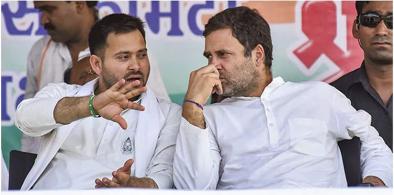
There is little doubt that the Congress will have to pay a heavy price for its blunder in Bihar, writes Amulya Ganguli for South Asia Monitor