

Is Hamas Expanding Footprint into South Asian Nations, Including Pakistan and Bangladesh?
The presence of Hamas in Bangladesh should not be ignored by security agencies across the region, including those in Bangladesh, India, and Myanmar, as such a presence may ultimately have serious consequences.
 Jul 10, 2026
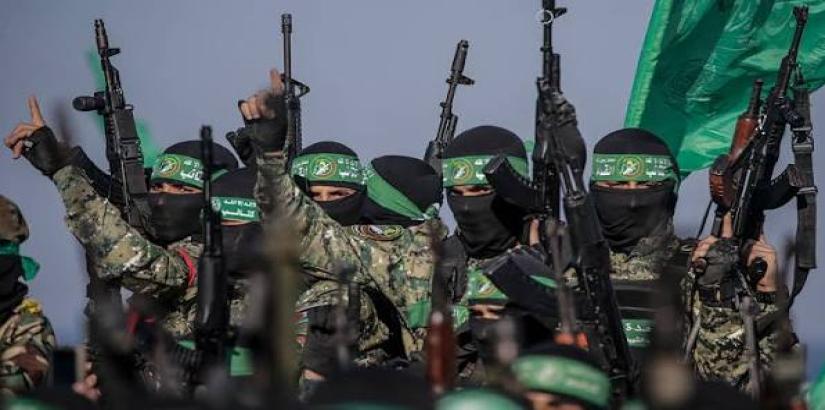
Warnings from Israel regarding the possible expansion of Hamas activities into South Asia have triggered fresh concerns among security analysts. Recent remarks by Israeli Ambassador to India Reuven Azar suggest that the Gaza-based organization may be seeking to establish links and influence in countries such as Pakistan and Bangladesh, raising questions about the emergence of new extremist networks far beyond the Middle East.
According to Ambassador Azar, Israel has been monitoring what it believes to be Hamas activity in Pakistan and Bangladesh since the October 7 attacks carried out by the Palestinian group against Israel. While acknowledging that some reports are based on publicly available information, he suggested there could be additional activities that remain outside public view.
Within hours of the Israeli ambassador's interview, Al-Qaeda, ISIS, and Hamas-affiliated Islamist and jihadist groups in Bangladesh began flexing their muscles by waving jihadist flags in a number of locations across Dhaka and holding processions. They chanted slogans denouncing democracy and calling for the transformation of Bangladesh into a Caliphate.
Increasing Operational Reach
Earlier, on February 6, 2026, while replying to a question about the presence of Hamas in Bangladesh, Ambassador Azar told Dhaka's Blitz, “From Israel’s security perspective, Hamas’s engagement in countries like Bangladesh is part of a broader strategy to expand its regional and global network. By establishing contacts and operations beyond Gaza, including through senior Hamas leaders such as Sheikh Khaled Quddumi and Khaled Mashal, Hamas aims to secure funding, ideological support, and logistical channels for its activities. This expansion also allows it to cultivate alliances with local Islamist groups, increasing its influence and operational reach across South Asia.
“For regional security, this development is concerning. It creates new avenues for radicalization, cross-border coordination, and the movement of resources, which could directly or indirectly affect various countries”.
It may be mentioned here that following the 2024 regime change, Hamas has made high-profile visits to Bangladesh, receiving open support from pro-Islamist groups. On September 7, 2024, the group Al Markazul Islami hosted a major event attended by senior Hamas figures, including Sheikh Khaled Quddumi and Khaled Mashal, along with Pakistani Islamist leaders such as Mufti Taqi Usmani and Maulana Fazlur Rahman. The presence of such figures on Bangladeshi soil is deeply concerning to regional security analysts, particularly in India.
While Hamas kingpin Khaled Mashal does not reside in Bangladesh, his activities have generated notable news coverage and interest in the country. Because of the ongoing Israel-Palestine conflict, his statements and the actions of Hamas are frequently reported by Bangladeshi media outlets.
Sympathy with Palestinian Cause
It may be mentioned here that during the 1980s, and following a 1987 visit by Yasser Arafat, the Bangladeshi government reported that up to 8,000 youths volunteered to support Palestinian forces. The volunteers included students, retired soldiers, and veterans of Bangladesh’s 1971 Liberation War.
Hundreds of Bangladeshis were captured, wounded, or killed during the 1982 Lebanon War. The bodies of fallen fighters were later repatriated in a 2004 prisoner swap. Meanwhile, Bangladesh continues to provide formal military education to Palestinian defense personnel.
It may also be mentioned here that Bangladesh was the only non-Arab Muslim country whose president, Major General Ziaur Rahman—a freedom fighter in the 1971 War of Independence and founder of the Bangladesh Nationalist Party (BNP)—became a member of the Al-Quds Committee. He used this platform to support the Palestinian cause diplomatically and symbolically.
Saiful Azam, the pilot who shot down four Israeli jets during the 1967 Arab-Israeli War, later became a Member of Parliament from the Bangladesh Nationalist Party.
Most media outlets in Bangladesh are extremely biased toward the Palestinians, including Hamas.
Suspected Pakistani Connection
Following the August 2024 regime change in Bangladesh, the administration of Nobel laureate Muhammad Yunus established significantly closer relations with Pakistan and even went further by allowing cargo arriving from Pakistan to be released by customs authorities at Bangladeshi air and sea ports without scanning or post-landing inspection. Taking advantage of this arrangement, cargo containing contraband items, including drugs, reportedly began entering Bangladesh through Chittagong Port.
The Yunus administration also lifted the 2019 provision requiring security clearance for Pakistani nationals before obtaining visas and entering Bangladesh.
As Pakistan maintains close relations with Palestinian groups, including Hamas, and continues to deny the existence of the State of Israel, it is suspected that the Gaza-based terrorist group may have found opportunities to infiltrate Bangladesh as well as other South Asian nations, including Sri Lanka, Nepal, and the Maldives, under numerous guises, including Tablighi Jamaat and religious delegations.
In such a scenario, Pakistan’s military establishment—especially its intelligence agency, the Inter-Services Intelligence (ISI)—may seek to use Hamas operatives in Bangladesh and other South Asian nations in implementing terrorist plots against India.
Wake-Up Call
The presence and movement of Hamas, and its proxies, in Bangladesh therefore pose potential security threats not only to India but also to other non-Muslim South Asian nations such as Nepal and Sri Lanka.
The presence of Hamas in Bangladesh should not be ignored by security agencies across the region, including those in Bangladesh, India, and Myanmar, as such a presence may ultimately have serious consequences.
What makes this issue particularly alarming is that extremist organizations rarely expand their influence overnight. They first establish ideological footholds, build local alliances, secure logistical networks, and gradually normalize their presence before evolving into a more organized threat.
If reports of Hamas-linked activities in Bangladesh and other South Asian nations continue to surface, regional governments must respond with vigilance, enhanced intelligence cooperation, and proactive counterterrorism measures. Failure to address these warning signs today may result in far greater security challenges for the region tomorrow.
(The writer is an award-winning journalist, columnist, editor and publisher of the Bangladesh-based publication Blitz, and a commentator on Islamist extremism, terrorism and South Asian geopolitics. The views expressed represent the author's views and have not been independently verified. He can be reached at salahuddinshoaibchoudhury@yahoo.com and on X: @Salah_Shoaib.)







Post a Comment