

EU and India Deepen Strategic Partnership, but Contentious Issues Remain Unresolved
It also demonstrated that the EU increasingly sees India as a strategic alternative to excessive dependence on China and India increasingly sees the EU as an important technology and investment partner amid a more fragmented global trading system.
 Jul 18, 2026

The European Union and India have signalled a new phase in their strategic partnership, with both sides stressing that growing mutual trust is laying the foundation for closer cooperation on trade, technology and security.
The message emerged after the third meeting of the EU–India Trade and Technology Council (TTC) in Brussels on Wednesday 15 July , where three senior Indian ministers and three European Commissioners reaffirmed the Council's role as the key platform for advancing cooperation in critical sectors against the backdrop of an increasingly uncertain geopolitical environment.
Reflecting the growing ambition of the partnership, both sides agreed to strengthen strategic value chains and deepen business engagement, while accelerating cooperation in emerging and critical technologies.
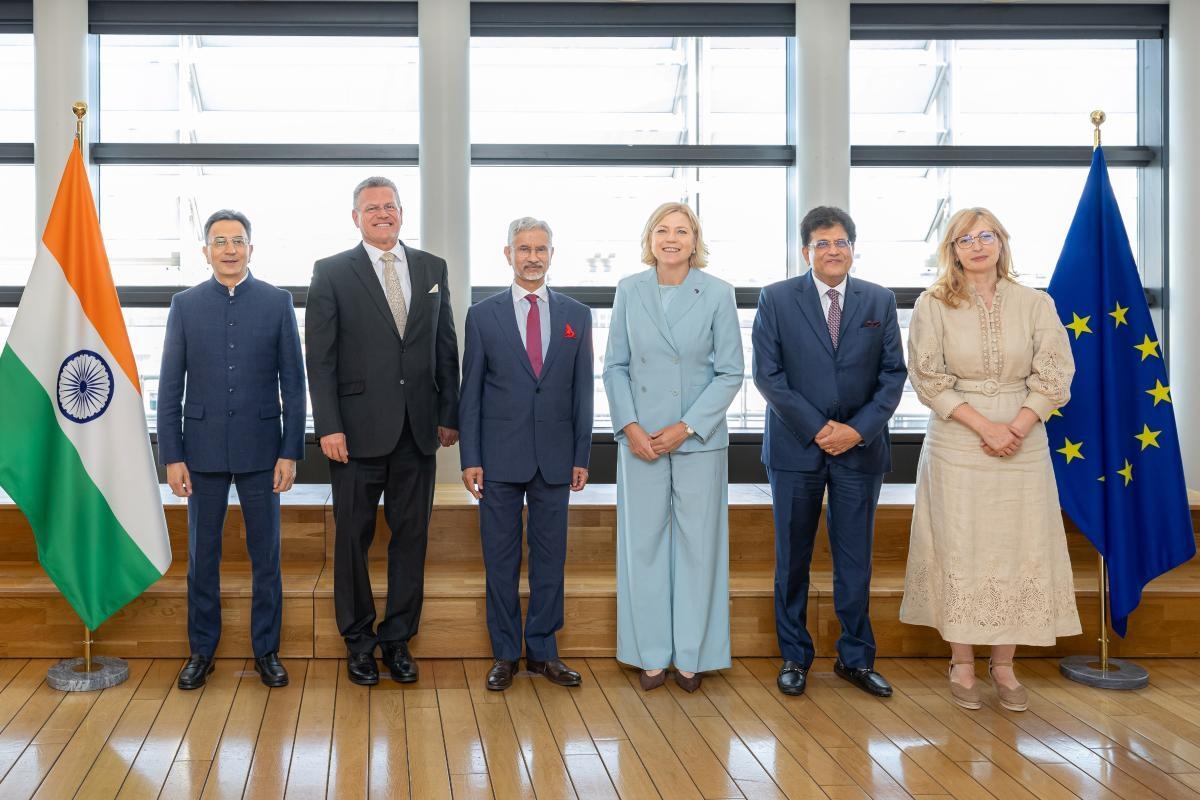
Dialogue to Tangible Cooperation
"As open societies and market economies, India and the EU have a natural affinity. The rule of law and the sanctity of contracts are central to our thinking. When it comes to sensitive technologies, this is all the more important," India's External Affairs Minister S. Jaishankar told a news conference after the meeting.
He said the rapid evolution of emerging technologies underscored the importance of trusted partnerships. "The fact is that emerging technologies literally hold the potential to shape our lifestyle and future. India and the European Union have developed this trust," Jaishankar said.
The EU echoed that assessment, highlighting the shift from dialogue to tangible cooperation. "We have become key partners for one another, working together across strategic technologies, digital governance and connectivity," said Henna Virkkunen, EU Commissioner for Tech Sovereignty, Security and Democracy.
"The EU and India are moving from dialogue to practical cooperation with concrete follow-up actions across a wide range of topics—from artificial intelligence and semiconductors to quantum technologies, digital skills, trust services and 6G," she added.
One of the meeting's most significant outcomes was the decision to launch formal negotiations on India's association with Horizon Europe, the EU's flagship research and innovation programme. Both sides aim to conclude the negotiations before the end of 2026, a move expected to significantly expand collaboration between Indian and European researchers, universities and technology innovators.
EU-India Innovation Hub
The TTC, established in 2022, has emerged as the central mechanism for coordinating EU-India cooperation on trade, resilient supply chains, digital transformation and critical technologies, reflecting the growing strategic convergence between the two partners.
The EU and India agreed to deepen their strategic technology partnership by establishing the first EU–India Innovation Hub for electric vehicle charging technologies and testing.
Startup Partnership
The two sides also agreed to launch an EU–India Startup Partnership focused on deep-tech clean technologies, expand cooperation in strategic sectors including semiconductors, high-performance computing, quantum technologies, artificial intelligence (AI) and 6G, and strengthen collaboration to build more resilient value chains in agri-food, active pharmaceutical ingredients and clean energy technologies.
"We are not just talking about cooperation; we are delivering it through concrete projects and concrete investments, step by step," Ekaterina Zaharieva, EU Commissioner for Startups, Research and Innovation, told the joint press conference.
On digital and strategic technologies, the EU and India agreed to deepen cooperation on AI, including by exchanging best practices for AI innovation in areas such as healthcare. They also committed to strengthening collaboration on semiconductors, with a focus on building resilient, secure and trusted supply chains, advancing cooperation in semiconductor manufacturing, and facilitating investments across the semiconductor and electronics ecosystems.
Interconnected Digital Economy
Jitin Prasada, India's Minister of State for Electronics and Information Technology, said the EU–India technology partnership is entering "an important new phase."
"We want to translate our shared priorities into joint initiatives, research partnerships, industry collaboration and technology solutions that strengthen our economies and contribute to global technological progress," he said.
"The complementarities between India and the EU provide a strong foundation for such a partnership. We've also taken important steps towards building a more trusted and interconnected digital economy," Prasada added.
Commenting on EU–India trade relations, Maros Sefcovic, the EU Commissioner for Trade, said the two sides had discussed the progress made toward the swift ratification of the Free Trade Agreement (FTA), which was finalized at the EU–India Summit last February.
"We both see it in the same way: the EU–India Free Trade Agreement is indeed a game changer. We are creating a market of almost two billion people," he said.
The FTA would open the door to tremendous opportunities by establishing a secure and stable commercial framework, helping both partners mitigate the risks associated with the current geopolitical volatility, he added.
'TTC and FTA Mutually Reinforcing'
India's Minister of Commerce and Industry Piyush Goyal said the EU–India FTA would significantly strengthen the economic relationship between the two partners.
"This Free Trade Agreement is fair, equitable and balanced — truly a win-win agreement for businesses in the European Union, businesses in India, and the people of India. The partnership between the EU and India has come of age," he said.
The Trade and Technology Council and the free trade agreement are actually mutually reinforcing, he said, adding that both sides look forward to signing the EU–India FTA later this year.
Concluding his remarks at the press conference, Goyal quoted Indian Prime Minister Narendra Modi, describing India's growth story: "Along with being a rising power, India is also a reliable power. India is not only fast-growing, but also a credible economy."
More Concrete Deliverables
The third EU–India Trade and Technology Council is generally viewed as a successful step forward institutionally and politically. The meeting said to be the most successful between the EU and India in recent years showed that both sides are increasingly treating one another as strategic partners in response to geopolitical uncertainty and supply-chain risks, but many of the hardest trade issues remain outside the TTC itself.
The meeting produced more concrete deliverables than the previous TTC meetings. The biggest achievement was probably political rather than commercial. The TTC has evolved from a dialogue platform into one producing concrete projects.
Compared with the second meeting in 2025—which focused largely on work plans and cooperation frameworks—the third meeting announced new institutions, research integration, and technology partnerships.
It also demonstrated that the EU increasingly sees India as a strategic alternative to excessive dependence on China and India increasingly sees the EU as an important technology and investment partner amid a more fragmented global trading system.
The most contentious issues—market access, tariffs, investment protection, regulatory differences, and sustainability commitments—remain unresolved and continue to be negotiated primarily through the broader EU–India trade and investment talks rather than the TTC itself.
(The author is Brussels-based Non Resident Fellow of the New Delhi-based Society for Policy Studies who has been tracking and reporting on EU and European affairs and NATO for the past four decades. The views expressed are personal. He can be reached at nawab_khan@hotmail.com. X: @NawabKhan10)






Post a Comment