The Expatriate Card will be a source of recognition to millions of Bangladeshi remittance warriors and a sign of gratitude from the State for their support to the nation's development.


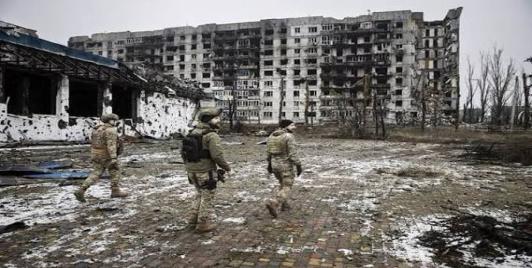
Fortify Rights and Truth Hounds documented more than 100 Bangladeshis recruited into the Russian military and reported at least 34 deaths in their March 2026 investigation. Separately, Prothom Alo reported on October 21 that at least 54 Bangladeshis had reportedly died after travelling to Russia for work and becoming involved in the war over the preceding three years.
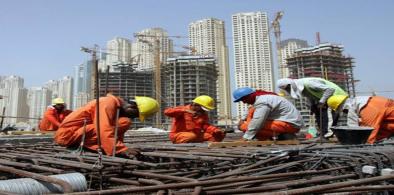
Regional cooperation could begin with practical comparisons. Nepal, Bangladesh, Sri Lanka, India and other labour-sending countries can exchange working solutions without pretending their systems or bilateral agreements are identical.

South Asia, for all its faults and constraints, is the fastest-growing economic region in the world this year. It is also home to the Commonwealth’s largest three countries in terms of population, India, Pakistan, and Bangladesh, representing just under two billion citizens, the majority under 30-years old.

Overseas Indians possess both the financial capacity and the desire to invest, yet many promising projects are abandoned because of fragmented procedures, multiple government approvals and the absence of a single accountable institution to guide investors from concept to completion.
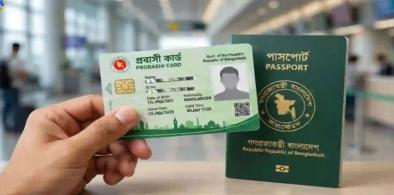
The Expatriate Card will be a source of recognition to millions of Bangladeshi remittance warriors and a sign of gratitude from the State for their support to the nation's development.

We have become an aggressive and divisive society which is becoming intolerant of others' ideas and points of view. For a pluralistic society like India, all the people who live there are important and we need to work together to take the country forward and to great heights. Unless we change our present thinking, we have the danger of becoming an extremist state

For decades, Bangladeshi governments referred to their overseas workers as remittance warriors—a formulation that was generous in one respect and quietly limiting in another. It honored their economic contribution while bracketing their political identity. The July Uprising may have ended that bracketing for good. What is now taking shape, imperfectly and without clear resolution, is a constituency that earns its living abroad but has not surrendered its stake in what Bangladesh becomes.

The policy could have particularly significant consequences for employment-based Green Card applicants, many of whom have traditionally relied on adjustment of status (AOS) while continuing to live and work legally in the U.S. There is a large number of Indian immigrants who stand to face significant disruption and delay because of this policy shift.

It is not just Indian professionals, but this bill could result in a further drop in Indian students - the largest foreign student cohort in the US - showing interest in higher studies in the US. It is not just the H-1B visa by itself, but the proposal for ending the OPT which prospective students would be paying attention to. OPT helps students in drawing employment, gaining experience and potentially transferring to H-1B Visa status. In 2024-2025, over 140,000 Indian students were participating in the OPT program.

Le-Huu calls the Red EP “a bright exemplar of world fusion music… -- a folk duo blending South Asian and American traditions” layering “original Urdu, Hindi, and English lyrics over classical Indian ragas and beats borrowed from rock, reggae, and American roots music.”

In the end, the need to remember our war dead transcends borders, alliances, and eras. These disturbed graves — British, Australian, Indian, Pakistani, Bangladeshi in origin — call us to a solemn duty: To honour all who fell with dignity. Forgetting them, or allowing their memory to be selectively bulldozed, diminishes us all.
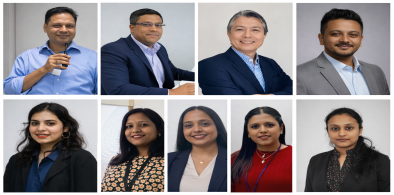
Together, the team conducts collaborative research and policy development initiatives across four South Asian countries - Sri Lanka, India, Nepal and Bangladesh. Their work aims to strengthen national preparedness, improve crisis response systems, and support governments in building resilient, technology-enabled public safety infrastructure. Together, these researchers represent a growing national capability in applying Artificial Intelligence to real-world challenges.

When South Asians organise across faith, class, and national origin lines, standing with Black, Latino, white working-class, and other allies, they help fracture the divide-and-rule strategies that sustain far-right growth. This is the deeper truth of “the people united will never be defeated.” Elites and far-right forces rely on division: Pitting workers against immigrants, Hindu against Muslim, citizens against refugees.

Countries such as Australia and Canada will continue to rely on immigration, much of it from South Asia. That reality carries responsibility not only for governments, but also for migrant communities themselves. South Asians—many of whom are highly visible beneficiaries of these migration systems—have a stake in strengthening social cohesion, engaging in national conversations and demonstrating, through civic participation and leadership, that demographic change can reinforce rather than fragment the societies they now call home.

South Asians in the diaspora are facing heightened racism, from online hate to detentions and deportations. But too often, the instinct is to treat these crises as uniquely South Asian, disconnected from the very systems that have long harmed Black communities. A few people will gesture toward broader solidarity, but the structural analysis stops at the border of identity.

India’s strength lies in its civilizational diversity, its age-old tradition of ‘Vasudhaiva Kutumbakam’ (where the world is seen as one family) and no attempt to paint with a monochromatic brush can bring the real Indian canvas to life. Zohran Mamdani’s ideas – plural, liberal and invaluable – resonate with the core of a new India and make him stand out as a leader worth celebrating.

As friends, colleagues, mentees, and admirers gathered in Cambridge, Massachusetts, to celebrate her 80th birthday in November 2025, what became clear was that the accolades tell only part of the story and don’t explain why a roomful of people from across the world came to honour her.

The exhibition also sits in conversation with an earlier project co-curated by Hashmi and Walia, exploring the creative and political possibilities of South Asia through art and film. That curatorial lineage expands the meaning of this library project, situating it within a broader feminist and regional tradition of asking uncomfortable questions.

Mamdani represents a different era — one less interested in fitting in, and more in standing firm. Obama deflected when his middle name became a slur in the mouths of opponents. Mamdani pronounces his own name slowly until others get it right. Obama avoided being read through a Muslim lens. Mamdani says being Muslim, African-born, and South Asian is the story — not a liability.