

Islamabad

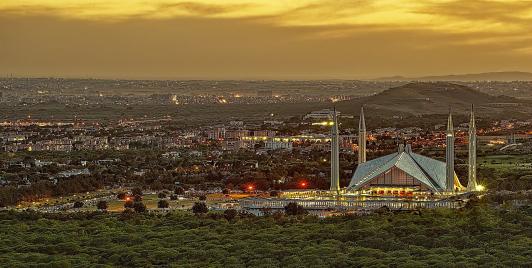
Who Governs Islamabad? A Capital Without its Governance

This raises the issue not whether Islamabad has surpassed its outmoded and fragmented administrative structure but whether governance would keep pace with its growth. Islamabad has to evolve from being administered as a capital city into being governed as a metropolis.
 

Whither Constitutional Equality and Laws Against Discrimination? A Manipuri Musician's Murder Raises Governance Questions Anew

The inhabitants of Manipur have had long-standing experiences of living insecurely in their own homeland, even as migrants from the Northeast have encountered prejudice in metropolitan India....India has produced a paradox where communities that belong formally to India can also face exclusion from the social mainstream.

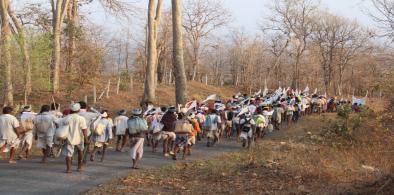
When Development Uproots the Roots: Reimagining India's Development Policy

Before asking how quickly a project can be implemented, policymakers should ask whether it can be redesigned to reduce displacement. Before acquiring new land, can existing degraded land be used? Can infrastructure be built around communities rather than communities being moved around infrastructure?

The Forensic-Security Convergence: Mitigating Cross-Border Identity Fraud and Financial Subversion

Identity and financial crimes that occur across India's borders never begin with anything overtly fraudulent. They generally begin with a small breach in routine authentication processes. Biometrics, forensic document examination, and audit trails can each 

More on Governance, Public Policy and Law

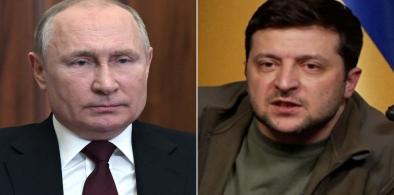
Russia’s misadventure: Will it herald a setback for populists and return of liberal democracy?

One other unintended consequence of the potential failure of the Russian operation is that it could slow down - and possibly stop the triumphant march of the autocrats – or so-called strongmen - the world over, writes Frank Islam for South Asia Monitor

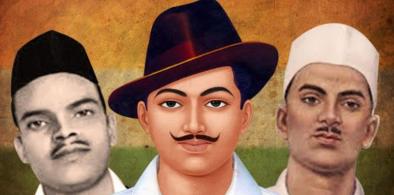
The aura of Bhagat Singh - and the neglected historiography of British colonial violence in India

The manner in which Bhagat Singh, Sukhdev and Rajguru were, first, officially executed on March 23, 1931, and their bodies brutally chopped, marks one of the darkest chapters of British colonialism in India

Will the Ukraine war be a major inflection point for India?

In Washington, Price acknowledged Monday at a briefing that India developed defence ties with Russia because the US was not ready for such a relationship when the Soviet Union and India drew close

US showing some understanding of India's delicate balancing act

The Biden administration and India are evolving a delicate balance at the centre of which is China on how New Delhi reacts to the Russia invasion of Ukraine

A film on Kashmir reignites old wounds

Beyond the number of deaths and whether to define the Pandits’ barbaric displacement as genocide, this is a chapter of contemporary Indian history that has received woefully inadequate media and scholarly attention, writes Mayank Chhaya for South Asia Monitor

The medicalisation of death: Isolation of the dying is cruel

"The unbalanced and contradictory picture of death and dying,” tells the tale of a society lost in modern medicine and unmindful of where this is taking us, write M.R. Rajagopal and Jagdish Rattanani for South Asia Monitor

Rahul Bajaj was a visionary, an industrialist who promoted Gandhian values

He used his annual presence in Davos to make a convincing tour de horizon of the great strengths and resilience of the Indian economy, writes Amb Bhaswati Mukherjee (retd) for South Asia Monitor

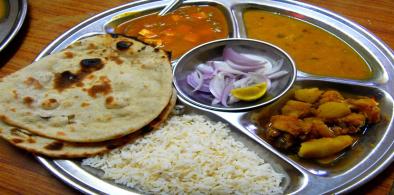
Cooked meals for the poor in India: An idea whose time has come

If the rural poor can be given a basic ‘thali’ at subsidized price, they will not only get proper food but do away with the drudgery of cooking, writes Anil K. Rajvanshi for South Asia Monitor

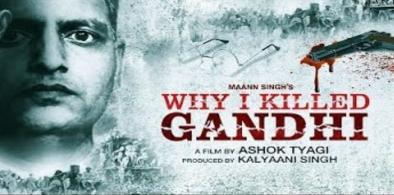
Film on Godse’s killing of Gandhi: Falsehoods galore

The real motive behind murdering Gandhi was that he was for inclusive nationalism, the dream of revolutionaries, and for his attempts to work against untouchability and caste inequality, writes Ram Puniyani for South Asia Monitor

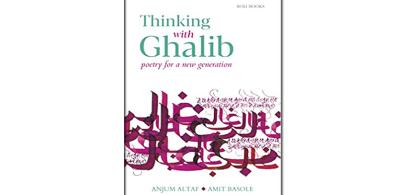
'Learning from Ghalib about the world we live in': Cross-border collaboration around shared couplets

This unique India-Pakistan collaboration developed into this latest venture, “Thinking with Ghalib: Poetry for a New Generation”, a collection of 30 couplets with translation and commentary, write Anjum Altaf and Amit Basole for South Asia Monitor

Can the subcontinental deadlock be broken?

If the meeting of Indian and Pakistani officials—expected to take place next week as per a report in The Hindu– comes through, it will be a departure from the recent past as formal dialogue has remained frozen for almost two years, writes Shraddha Nand Bhatnagar for South Asia Monitor

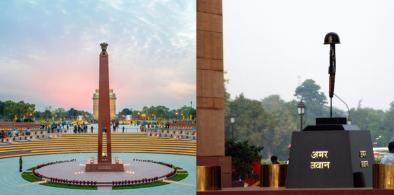
Historic changes at India Gate and their significance

The Amar Jawan Jyoti -- an upturned rifle with a helmet customarily marking a battlefield grave -- amounted to nothing short of a poor apology for a war memorial at India Gate 

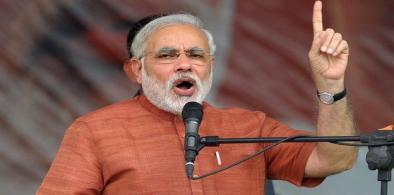
South Asia's divisive politics: Modi election speech stirs up an 'artificial' boundary issue between India and Nepal

India’s position on the boundary issue is “well known, consistent and unambiguous”, the Indian Embassy in Kathmandu said, days after political parties in Nepal stoked a simmering territorial dispute in Lipulekh, Limpiyadhura and Kalapani, especially after Prime Minister Narendra Modi mentioned road construction in Lipulekh at an election rally in Uttarakhand state

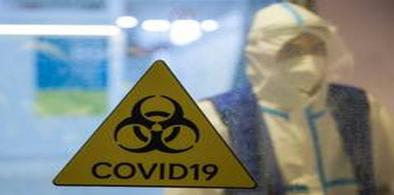
No travel ban; instead India offers vaccines, life-saving drugs to Africa

Even as most countries began slapping travel bans on African countries, India has offered support for Africa to combat the newly-emerged Omicron variant of the Covid-19 pandemic, including through supply of vaccines, life-saving drugs, PPE kits, gloves and ventilators

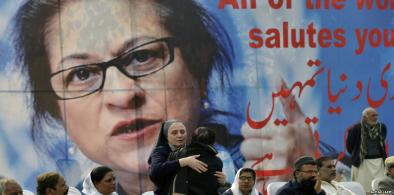
Cross red lines at your own peril in Pakistan: Message to opposition and media

The Asma Jahangir Conference in Pakistan last week sparked a somewhat balanced and much-needed discussion on the issues concerning the country