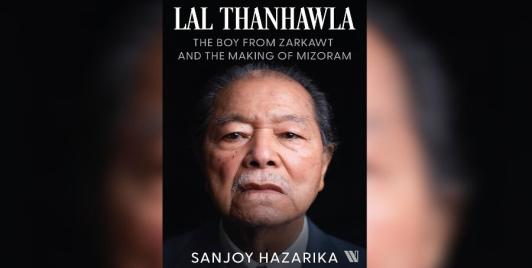
Sanjoy Hazarika’s Lal Thanhawla: The Boy from Zarkawt, and the Making of Mizoram

The Political Biography of a Former Chief Minister: A Life That Mirrors Mizoram

The enduring lesson of Mizoram is not that the state won and the insurgents lost. It is that both sides eventually found a political space in which neither needed to win everything. That is the essence of accommodation and perhaps the most enduring lesson Lal Thanhawla’s life offers India.

The Empty Chair at Islamabad: When Taliban Saw Women's Rights Subordinated by Islamic Law

The Taliban, therefore, is not challenging whether Islam should shape women’s rights. Both the OIC and the Taliban begin from that premise. The disagreement is over what Islamic rights mean and, more importantly, who has the authority to define them. 

Who Defines Where Home is? Confronting Partition Trauma and its Aftermath Eight Decades Later

As of January this year, at least 296 Bangladeshis have died in border areas over the past decade, as India’s Border Security Forces (BSF) pushes “illegal Bangladeshis” across the border in the dead of night.

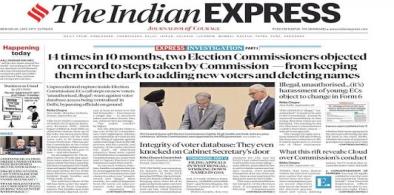
'The Election Commission Expose': A Seminal Moment for Indian Journalism

It is true that only a handful of newspapers have the resources and persistence to pursue big stories of the kind that came alive in the EC exposé. Nevertheless, to the extent that it inspires others to pursue even smaller news stories with steadfastness this could potentially redeem the otherwise sordid state of affairs in the Indian media.

More on Soft Power, Culture, Society and Gender

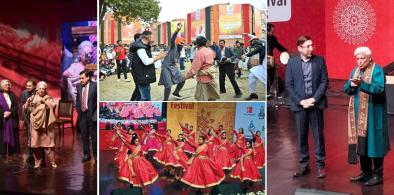
When the magic of Faiz got overshadowed by the Javed Akhtar controversy

But it was Akhtar’s few brief comments about the Mumbai attacks that spread rapidly on social media, picked up by mainstream media in Pakistan and India. Back home Akhtar had to defend his visit to Pakistan but his hosts. Faiz Festival organisers, have refused to comment on the controversy.

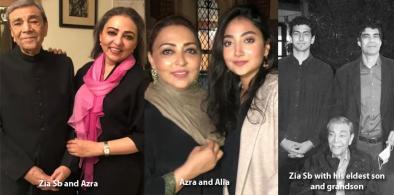
Zia Mohyeddin: Mourning the passing away of a progressive Pakistani poet and theatre artiste

Pakistan’s progressive movement revolved largely around the great poet Faiz Ahmed Faiz, whose work Zia Mohyeddin so eloquently recited in his signature style, his distinctive, gravelly voice set him apart from others. 

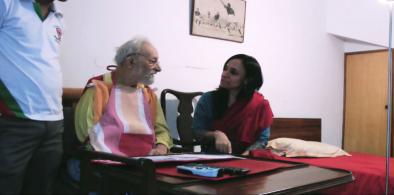
A legendary Indian songwriter, a daughter married in Pakistan - and a family torn apart

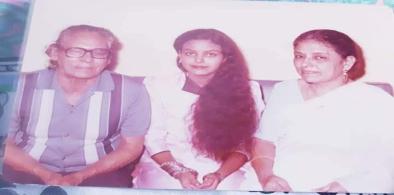
Before moving to Pakistan, Kishwar often accompanied her father to recordings after school hours in Mumbai. After marriage, with relations between the two countries deteriorating, she found herself progressively isolated from her family and the world. 

Salman Rushdie returns, vibrating with literary energy

If there ever were a perfect literary candidate for the Nobel Prize in Literature, it would be Salman Rushdie this year.

Filial piety and elderly-children relationships: Common narratives in regional folklore and popular culture

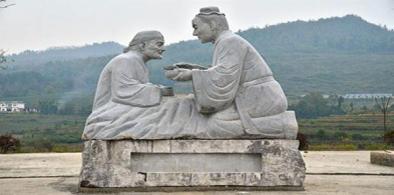
Several folktales from across the Indian sub-continent also speak about respect and honour of one’s elderly parents. The concept is also seen in Theravada Buddhism, often referred as 'the doctrine of the elders' (of the senior Buddhist monks). Thus, reverberations of the concept of filial piety are seen in spiritualism and folklore of South, Southeast and East Asia.

‘Serendipity’ and its travelling tale - across Persia, Sri Lanka and India

This story is often said to have encouraged the introduction of the word ‘serendip’ into the English dictionary, marking January 28 to be remembered as the day when the word entered the dictionary. 

Rediscovering Suchitra Sen in Bangladesh: Tracing the portrait of a glamorous actress on an easel of the past

As busy evenings of youngsters flock over to Roopkawthar Kabbo, the narrative of the legend from yesteryears reverberates through each cup served and, for the uninitiated, these cups are the connecting dots of time when an answer comes with the query of “Who is this?”.

The poet who never gave up: Is Tagore relevant today?

And yet, it is perhaps the reminder of these unfulfilled dreams, a never-ending quest, that is most relevant today, as we struggle through challenges that are at once global and personal, intricately and inextricably intertwined.

Music without borders: Dama Dam Mast Qalandar and a qawwali night at Boston

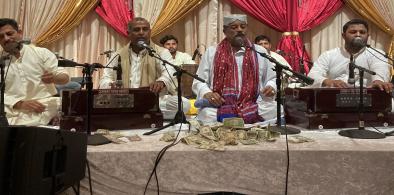
“Between the first Pakistani win at the Grammys, the first Pakistani film to be selected at the Cannes Film Festival, a Pakistani song topping the most-searched list on Google, local actors featured in international series, and the highest-grossing film in the history of Pakistani cinema, 2022 has been a banner year for Pakistani art,’ observes Surbhi Gupta, South Asia Editor at New Lines magazine.

Traditional Chinese medicine demand fuels illegal orchid trade in Nepal

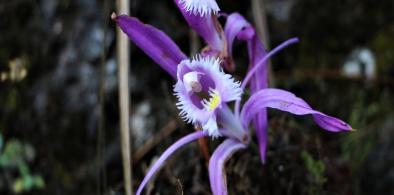
According to a policy brief prepared by the Kathmandu-based NGO Greenhood Nepal, which is spearheading a project focused on illegal trade and sustainable use of medicinal orchids in Nepal, the decline in their numbers has been attributed to unsustainable harvesting and international trade of the plants used in ayurvedic as well as traditional Chinese medicine.

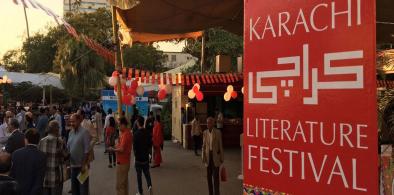
Literary festivals are flourishing in Pakistan; interest in native literature waning

Pakistani writers are not only writing about love and romance, but also on feminism, religion, culture, socio-political, ethnic, and identity issues.

Hockey, friendship, Partition, and the pangs of separation: Old Lahore remembered through a documentary

Every scene in this intimately filmed documentary tugs at the heartstrings. The pain of separation felt so palpable to me that I wept with the characters.

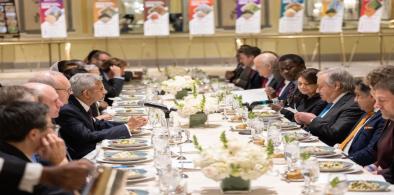
Millets in gastronomic glory at five-course UN luncheon to promote 'humble foodgrain'

Jaishankar told reporters before the luncheon that he hoped to “familiarise the members of the Security Council” with “all the virtues of millets”.

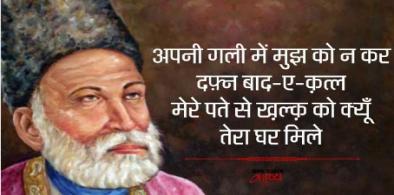
Illuminating forgotten pasts: English translations of Ghalib’s Chirag-e-Dair

The rediscovery of Ghalib in the English translation of Chirag-e-Dair as a modern cosmopolitan man who can appreciate the port town of Calcutta, find spirituality in the Hindu temple town of Banaras, and firmly situate himself in Persianate traditions of West Asia opens up a history of cultural exchange to the contemporary South Asian reader

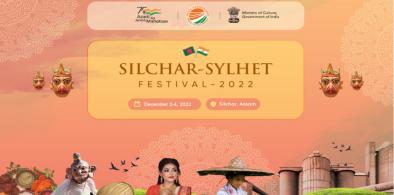
India, Bangladesh bolstering ties through Silchar-Sylhet Festival

The Silchar-Sylhet festival aimed at strengthening the longstanding bonds of friendship between the two neighboring nations, which share a wide range of complementary traditions, cultures, and other things.  The festival once again demonstrated the closeness between India and Bangladesh, and improved mutual understanding.