

PLA’s Partial Pullbacks from Arunachal Pradesh Frontier: More Tactical Than Operational Move by China
The Indian military views no disengagement in Arunachal Pradesh as part of a wider strategic recalibration, prompting India to match Chinese force rebalancing by shifting strike corps and resources equally across both northern and eastern fronts.
 Sep 26, 2026
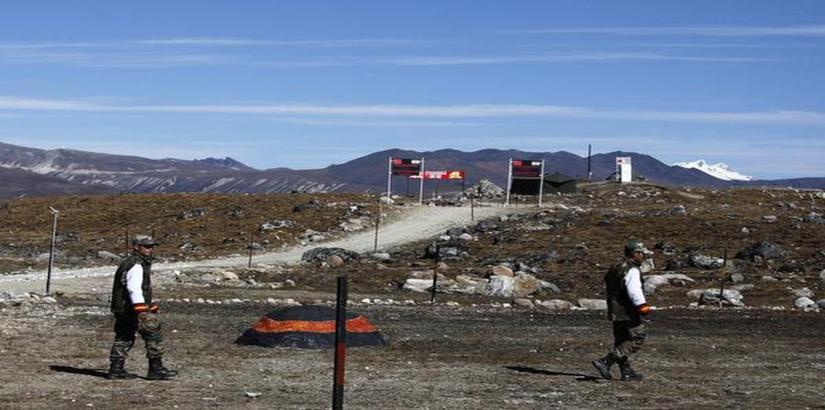
Following the Chinese People’s Liberation Army’s (PLA) attacks on the Indian Army in Eastern Ladakh along the Line of Actual Control (LAC), using crude weapons such as spiked/barbed-wire-wrapped clubs in May-June 2020, and the Indian Army’s fierce response at Galwan without firearms or crude weapons, the PLA substantially beefed up its deployment in Ladakh and Arunachal Pradesh.
Just after the September 2026 BRICS Summit in New Delhi, preceded by the Special Representatives Talks on the India-China Boundary Question held in Beijing on August 25, 2026, India’s Ministry of Defence (MoD) publicly released its 2025–26 Annual Report, stating that the PLA had scaled down its deployments opposite India’s northern borders. Specifically, it noted that the PLA had 10 Combined Arms Brigade-sized forces deployed along the LAC and another 10 in “traditional training areas” — established, deep-hinterland military bases and designated exercise grounds of the PLA, distinct from immediate forward deployment zones directly situated along the LAC.
Because the MoD report was publicised shortly after Chinese President Xi Jinping visited New Delhi for the BRICS Summit, viral social media claims and news summaries inadvertently framed the troop pullback as an immediate, direct result of the 2026 summit. However, the MoD report specifically referred to the reduction during 2025. This reported troop reduction should neither be interpreted nor presented as a pullback caused by the 2026 BRICS Summit.
In October 2024, the PLA pulled back and completed disengagement from the last two major friction points in Eastern Ladakh. The breakthrough agreement on October 21, 2024, focused specifically on Depsang and Demchok. These were the final two of the six areas along the LAC in eastern Ladakh where the armies had remained in standoffs. The agreement led to the withdrawal of troops and equipment from the immediate face-off areas and the resumption of patrolling in Depsang and Demchok under mutually agreed arrangements.
This 2024 agreement paved the way for some further military reduction. Following the localised pullbacks, India’s MoD confirmed a notable reduction in Chinese forces in 2025. The 10 Combined Arms Brigade-sized forces deployed along the LAC, along with another 10 in traditional training areas, reportedly represented a significant reduction from the peak deployment during the post-2020 crisis. Some reports have estimated the deployment along the LAC at around 45,000–50,000 Chinese troops, with another comparable number in traditional training areas.
The remaining Chinese force still amounts to a substantial presence, with significant deployments of troops, tanks, missiles and air-defence systems. The Indian Army maintains robust and high-level combat readiness across all sectors of the 3,488-km LAC.
Calculated Recalculation, Not Retreat
The pullbacks are a direct result of ongoing political, diplomatic and military engagement, which included multiple rounds of the Working Mechanism for Consultation and Coordination (WMCC) and meetings between top leaders at international summits. These are prime examples of the prolonged and meticulous negotiation tactics favoured by Chinese diplomats, which can involve what may be described as “administrative and bureaucratic stalling”.
Chinese negotiators frequently prolong foundational talks by focusing on administrative steps. For instance, when establishing expert panels or working groups under the WMCC, months or even years can be spent finalising the “Terms of Reference” or definitions of specific vocabulary before actual issue-based negotiations can begin.
By extending WMCC rounds across numerous meetings, China can employ a strategy of exhaustion, in which the slow pace tests the patience of its counterparts, allowing Beijing to maintain the status quo on the ground or engage in low-intensity “grey-zone” shifts while diplomatic talks remain in progress. Beijing also prefers compartmentalising negotiations, treating different sectors of the 3,488-km LAC independently, based on where it holds tactical leverage or logistical advantage.
While the PLA has moved portions of its forces back to “traditional training areas” deeper inside Tibet, it continues to consolidate permanent infrastructure, missile systems and dual-use logistics bases in depth areas such as Nyingchi and Golmud.
The series of phased disengagements, which culminated in agreements covering friction points such as Depsang and Demchok, were the result of calculated strategic recalculation, mutual diplomatic negotiations and sustained military pressure from India.
The primary reasons driving the PLA’s pullbacks include:
(a) Robust counter-mobilisation by India: When the PLA initially intruded past the LAC in 2020, Beijing did not expect the swiftness and scale of India’s military response. The Indian Army rapidly enacted a “mirror deployment”, rushing 50,000 to 60,000 highly trained high-altitude troops, along with heavy armour, artillery and advanced air support, into the sector.
(b) The Kailash Range operation: In August 2020, Indian troops seized dominant heights on the southern bank of Pangong Tso in the Kailash Range, catching the PLA off guard. This tactical leverage demonstrated to the Chinese military that maintaining its advanced positions could incur significant military costs.
Following the initial clashes in the Galwan Valley, India fundamentally changed its economic policy towards Beijing. India froze or restricted Chinese investments, banned hundreds of popular Chinese applications, including TikTok, and sought to diversify global supply chains away from China. It also made clear that broader bilateral relations could not normalise without peace and tranquillity on the border. For Beijing, the economic fallout and the risk of permanently pushing India towards a formal Western military alignment may have outweighed the utility of holding onto small pockets of disputed territory.
Many defence analysts point out that the PLA’s “pullbacks” were not a retreat in the traditional sense, but rather a structural shift. In several sectors, such as Galwan, Gogra-Hot Springs and Pangong Tso, disengagement resulted in the creation of temporary buffer zones. In some instances, these buffer zones were created in areas where Indian troops had historically patrolled, effectively restricting India’s forward infrastructure expansion and patrolling rights.
While the PLA reduced its immediate frontline troop presence during the multi-year disengagement process, it simultaneously constructed massive, permanent military infrastructure behind the friction points. China built permanent habitats, winter-proof encampments, roads, runways and air-defence sites in its depth areas. This infrastructure allowed the PLA to rotate or pull back troops to ease the immediate operational burden of high-altitude deployments while maintaining the capacity to surge back rapidly if needed.
The pullbacks, therefore, represented an intentional diplomatic and tactical trade-off rather than a concession forced by military or resource exhaustion.
Arunachal Pradesh Remains Sensitive
There has not been any verified operational pullback from forward areas in Arunachal Pradesh in the same manner as was undertaken in Ladakh. In fact, the Eastern Sector remains highly sensitive, with reports of fresh localised tensions in areas such as Taksing in Upper Subansiri district.
In response, the Indian and Chinese armies held their first senior military commander-level flag meetings in the Eastern Sector at the Wacha-Damai border meeting points in Arunachal Pradesh on September 6-7, 2026, to stabilise the zone and prevent escalation. The meetings followed the August 25 Special Representatives talks and subsequent discussions under the WMCC.
China’s posture opposite Arunachal Pradesh has focused on continuous infrastructure expansion, building dual-use border villages, upgrading airbases and deploying advanced missile and surveillance systems in depth territory, including near Nyingchi. China claims the entirety of Arunachal Pradesh as “South Tibet”.
Unlike Ladakh, where the events of 2020 created new tactical friction points, the frontier in the east is largely anchored along the McMahon Line, where both militaries have long-established operational infrastructure and permanent deployments in depth areas.
The Indian military views the absence of disengagement in Arunachal Pradesh as part of a wider strategic challenge, prompting India to match Chinese force rebalancing by maintaining strike corps and resources across both the northern and eastern fronts.
The Indian Army maintains a robust, well-poised and alert deployment across all sectors of the LAC to handle contingencies, because the PLA’s pullbacks are no guarantee of any permanent “peace and tranquillity”.
The author, a strategic affairs analyst, is a former Defence Ministry and Indian Army spokesperson. The views expressed are personal. He can be contacted at wordsword02@gmail.com.)





Post a Comment