There are multiple reasons why the MEA doesn’t dare to say “no one except Dalai Lama can decide his successor”, some of which could include External Affairs Minister S Jaishankar fears getting snubbed during his coming visit to Beijing


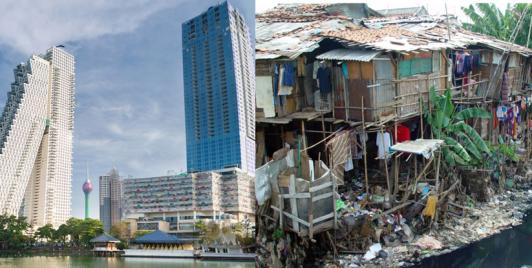
In 2025, Sri Lanka was ranked as the second most expensive housing market in the world based on rentals compared to average income. It is possible that market distortions caused by black economy and corruption have contributed to this.
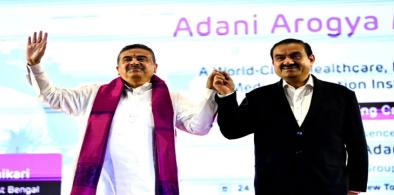
The larger opportunity before West Bengal is therefore not another round of infrastructure creation in isolation. It is the creation of an ecosystem in which infrastructure, private capital, local enterprise and skilled labour reinforce one another.
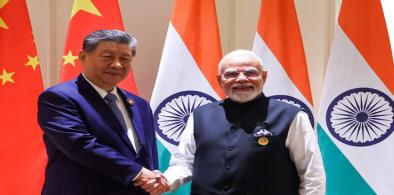
Why not begin by reopening serious discussions with Chinese conglomerate BYD about an Indian factory? BYD is now one of the world’s dominant EV manufacturers. Its Indian ambitions were caught in the post-Galwan investment freeze. Invite it back to the table—but on Indian terms
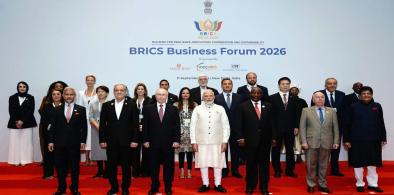
But the choice test applies to India as much as to the countries it hopes will follow its lead. If BRICS genuinely widens India's menu of markets, technology partners and financing sources without deepening its dependence on any one of them, it becomes a credible model for the rest of the Global South.
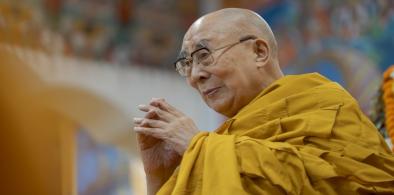
There are multiple reasons why the MEA doesn’t dare to say “no one except Dalai Lama can decide his successor”, some of which could include External Affairs Minister S Jaishankar fears getting snubbed during his coming visit to Beijing
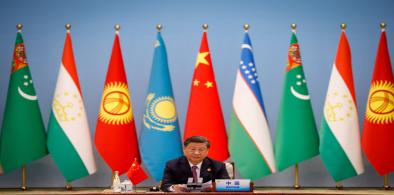
China’s strategy for building a regional order in Central Asia converges with its playbook in sub-regions across the Global South, like Latin America, Africa and South Asia. The substance and optics of its Latin America Summit and Xi Jinping’s tour of Southeast Asia in the last few months reflect this strategy.

Contrary to the longstanding popular expectation that the Dalai Lama could announce an interim successor until a reincarnation is determined after his death, he has chosen the option that sets the stage for a long-term conflict between Beijing and the institution of the Dalai Lama. It is clear now that the next Dalai Lama will be from outside China and Tibet.

While SCO saw ministers invoke "mutual trust" and “overall development” in public, Chinese actions reveal a twin-track approach toward India—maintaining diplomatic channels and economic engagement in public, while simultaneously tightening its grip on sectors where India remains dependent.

China's geographic proximity and growing power remain the core reasons ASEAN clings to its long-standing hedging and neutrality strategy. Fear of retaliation—whether economic or military—has deterred ASEAN from adopting a firm position against Beijing, which could compromise the region’s economic survival.

The Chinese making inroads into Pakistan for a while now may also be a significant factor behind President Donald Trump not taking an unambiguously supportive position towards India. Trump’s comments have been calibrated to achieve equivalence between India and Pakistan and quite strikingly handed Islamabad some bragging rights by offering to intervene in resolving the Kashmir issue.
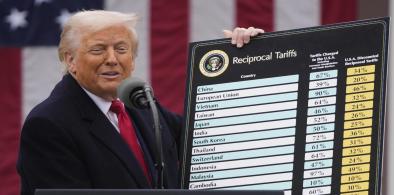
Over the past 40 years, the U.S. has transitioned from an industrial to a consumption-driven economy. Manufacturing, which contributed about 25% to GDP in 1970, now accounts for just 10%. The outsourcing of production to China, Mexico, Vietnam, and others has led to the loss of nearly 5 million factory jobs between 2000 and 2020 alone.
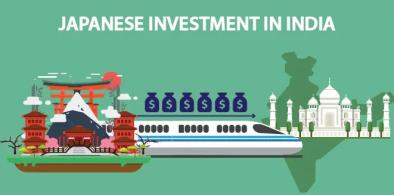
A landmark event in 2023 was the MoU with Japan’s Rapidus Corporation to establish semiconductor manufacturing in India. Backed by Japanese giants like Sony, Toyota, Kioxia, NEC, NTT, and MUFG Bank, this move could be a game-changer for India’s electronics ecosystem, which currently lacks indigenous chip production.
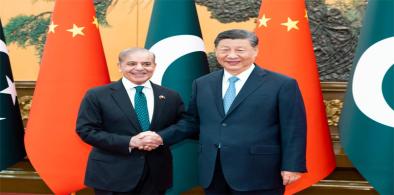
The Pahalgam tragedy, coupled with Pakistan’s public admission of its role in fostering terrorism, presents such a moment. China must rise to the occasion—not by choosing sides, but by choosing peace. It must move from silence to strategy, and from passive balancing to active peace-building.

In this context—marked by fresh US scrutiny of tariff offenders—India has a unique opportunity to step in as a more reliable and less controversial partner for the US in supply chain manufacturing. A complementary—not adversarial—partnership with China could also benefit India in tapping the US market, especially since India has incurred a relatively lower tariff increase of 27 percent
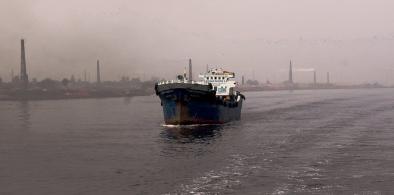
While the opportunity is vast, the risks are real. Without transparency, environmental safeguards, and strong domestic ownership, the Dhaka-Beijing river cooperation could backfire. A 50-year master plan must be rooted in Bangladesh’s ecological realities, ensuring local participation, sustainable practices, and equitable governance. Otherwise, well-intended cooperation could become a boomerang, undermining long-term water security.

A multilateral maritime engagement with African countries, AIKEYME, is an initiative to enhance interoperability with the region's navies. The maiden edition of the six-day exercise being co-hosted by Indian Navy and Tanzania Peoples’ Defence Force (TPDF) will be conducted off Dar-es-Salaam in mid-April 2025 and will include participation from Comoros, Djibouti, Eritrea, Kenya, Madagascar, Mauritius, Mozambique, Seychelles and South Africa.

Although much has been said and perceived about China’s growing military competition in closing the power gap, this move to unveil the ruthless and fearful F-47 and the other assets is meant to checkmate Beijing’s ambitions in the Indo Pacific and demoralise other enemies who still doubt America’s long-term military and economic resilience.

The elephant is not just an animal, it is a symbol of power, royalty, and diplomacy in the pages of history. Myanmar’s gift of six elephants to Russia is not just a simple gift, but an important strategic move in regional and global politics.

Beijing - and therefore Xi - by virtue of his being in complete control of all affairs in the country have long been known to be determined to pick their own successor to the Dalai Lama, a portent that is profoundly troubling for some six million Tibetans inside Tibet and over 100,000 in exile outside, mainly in India.