Constitution of India and Parliament

Constitutional Supremacy vs. Parliamentary Sovereignty Debate: Parliament is a Creature of the Constitution, not its Master

India’s constitutional design operates on the line of a fully functional parliamentary democracy anchored in constitutional supremacy rather than parliamentary sovereignty. In an era of evolving challenges, the supremacy of the Constitution continues to serve as the ultimate safeguard of Indian polity.

Born Together, Governed Apart: How India and Pakistan Became Two Different Political Civilizations

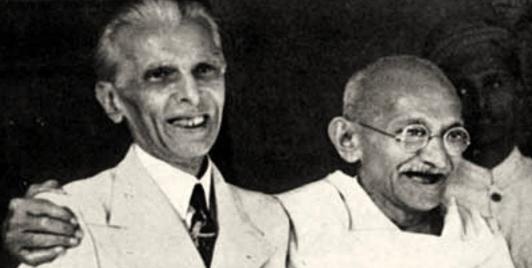
Eighty years after Partition, the overarching lesson of this comparative history of India and Pakistan is that national trajectories are not preordained by culture, talent, or geography. They are determined by the rules and values a state enshrines for itself in its formative years.

Re-engineering India's Grassroots Administration: A New Bottom-Up Development Model

It is time the Indian district administration’s focus shifts to economic development and prosperity-building through strategic planning, resource mobilisation, and effective resource allocation; productivity enhancement, competitiveness, skill-building, employment generation and ensuring the security of life and property.

Imran Khan, the Cricketing World and the Paradox Confronting Pakistan

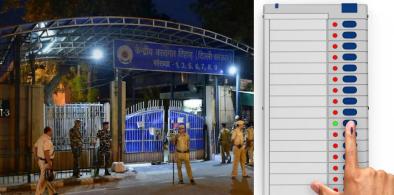
The man who once led Pakistan to its only World Cup triumph has now become the subject of an international cricketing appeal for humane treatment. The more the authorities try to keep his story behind prison walls, the more the cricketing world appears determined to take it beyond them.

More on Governance, Public Policy and Law

Shifting Perceptions in a Multipolar World

In a world moving toward multipolarity, information itself has become contested terrain. Events are no longer just events; they are immediately absorbed into competing narratives. The same incident is read differently depending on where one stands and what one is inclined to believe. 

Geopolitical Uncertainties and the International Student:Need for Transformational Shift in Thinking for Education Providers

For parents of Indian and South Asian students, who are risk-averse, going to the US for an overseas education was fraught with too many imponderables. It was better to travel to a more reliable destination, such as, Australia. Germany and Ireland also featured as potential destinations but in terms of scale, Australia was the preferred beneficiary.

Ghost Murmur: How AI Rescued a Lost US Pilot in the Iran War

The Ghost Murmur AI rescue of a U.S. pilot in Iran is an epochal event in the history of warfare. It shows how new technologies can be used to go around old restrictions and can allow carrying out operations that were not possible a decade ago.

Indian Navy’s Stellar Role in Securing India’s Energy Supplies During Gulf Crisis

India is managing intense US pressure about its involvement in the Chabahar port, with Washington providing only a six-month sanctions waiver set to expire in April 2026. While India has officially stated that exiting the project is "not an option" due to strategic interests in connecting with Afghanistan and Central Asia, it is actively negotiating for a long-term waiver to the sanctions. 

Technology and War: Shaping Future Wars, Battles, and Conflicts

The battlefield is no longer defined by geography alone. It extends into space, into networks, into supply chains, and into the human mind. Conflict today is as much about disruption as it is about destruction; as much about perception as it is about position. Lines are blurred, between soldier and system, between civilian and combatant, between war and peace.

Human Control and India’s Nuclear Doctrine in Age of AI: Significance of UNGA Resolution 80/23

The relationship between Resolution 80/23 and India’s 2026 CD statement illustrates a recurring challenge in contemporary arms control: how to build durable global norms in a world of divergent security contexts. Both documents share a foundational conviction — that human judgment must remain at the core of nuclear decision-making, and that AI introduces risks that demand urgent, coordinated attention.

How Communities Behave or Respond: The Architecture of Religious Identity in a Plural World

Across all these traditions, a small minority of extremists sometimes distort religious teachings to justify violence. This is not unique to any one faith. In recent decades, for example, some fringe groups have invoked highly selective interpretations of jihad to justify suicide attacks, claiming spiritual reward. Mainstream Islamic scholars overwhelmingly reject these interpretations. Similar distortions have appeared in other traditions as well

Myanmar Transition: Opportunity for India

Myanmar links India with ASEAN and BIMSTEC. The Asian Highway is to run to Thailand through Myanmar and much can be done to enhance linkages and cooperation with these organisations through stronger links with Myanmar. Proximity and first mover advantage should not be lost.

What is the West Asia Conflict Really About?

There are also questions being raised, quietly in some quarters - more openly in others - about whether broader strategic objectives are at play, including the possibility of regional influence being exercised through existing alignments. Whether such perceptions are accurate or not, they exist and they shape how actions are interpreted.

Why Workers Are Leaving Delhi: When Policy Needs to Align With Ground Reality

What emerges from this moment is not a singular crisis but a layered one, shaped by global disruptions, local cost pressures, and structural vulnerabilities. Workers are leaving Delhi not because the city has stopped offering work, but because it has become increasingly difficult to live sustainably in the capital city while working.

Where the World Drifts into a Grey Twilight

Conflicts today often lack clearly stated aims, making end states difficult to define. The ongoing engagements involving Russia, Israel, and the United States illustrate this ambiguity. In such situations, conflicts risk being driven more by national ego than by achievable objectives, prolonging destruction and human suffering.

Ethanol as Cooking Fuel: India can Become Self-Sufficient

Nevertheless, ethanol is a homegrown, renewable fuel which can being great advantage to the country, increase the remuneration to the farmers and help in expanding industrial crop production base in India.

Empowering Women of South Asia: India Can Play a Generous Role

India, for one, can offer to create - if required - segregated facilities for education, IT services and upskilling training centres in those communities as there are both kinds of establishments in the country and the economic capacity to be generous to neighbours in need without expectation of a quid pro quo.
 

Security for Whom? Needed a Human-Centred Approach to ‘National Security’

If “security” is to have real meaning, it must be grounded in the lived experiences of those it is intended to protect. This requires a shift from state‑centred metrics to civilian‑centred measures of stability; where continuity of daily life, equitable protection, and psychological well‑being are integral to how we define security.

Amid Global Turmoil, India Must Seize the Moment to Play a Defining Role

Assuming leadership requires both inherent strength and ideological positioning. While the world covets India as a market, India should also become a market leader in strategic areas where it needs to be self-reliant and has export potential. These include space, defence, aeronautics, AI, semiconductors, and skilled manpower. India must leverage economic diplomacy and soft power