Representational Photo

PLA’s Border Intrusions Make a Mockery of All Meets and Agreements With India

The face-offs in Arunachal Pradesh—specifically around areas like Asaphila, Taksing, and Maza—have reignited intense debate regarding Beijing's commitment to bilateral border agreements. That China signs agreements it has no intention of following on the ground is a perception shared by many Indian diplomatic and security experts.

Before the Ganga Treaty Lapses: Bangladesh and India Need Prudent Water Diplomacy

Progress on the Ganga could also build the trust needed for wider cooperation among Bangladesh, Bhutan, India and Nepal in electricity trade, connectivity and climate adaptation. Both governments should act now.

China’s 'Quiet State' from Tibet to Hong Kong: How Chinese Statecraft Weaponizes Surveillance and Development

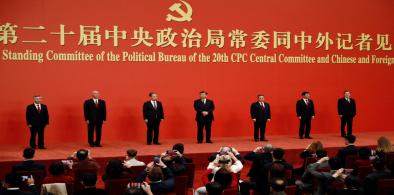
Border settlements, transportation networks, surveillance grids, and civilian administration now work alongside conventional defense planning to strengthen Beijing’s claims. Understanding China’s rise requires attention not just to military power projection but also to these quiet instruments of authority.

Odd Summit : Why Shenzhen Should Matter for India

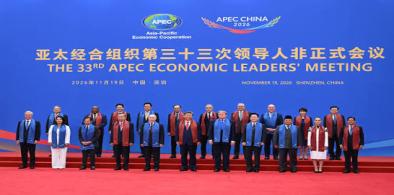
That is the paradox of Shenzhen. An odd summit, convened by three leaders with different compulsions, produced an anodyne declaration that nevertheless impinges  onto India's core concerns:  UN reform without India, ICC impunity versus UNCLOS, and energy through Hormuz.

More on Geopolitics, Security and Strategic Affairs

Hasina’s legacy: Stellar growth marred by political stagnation, stalled democracy

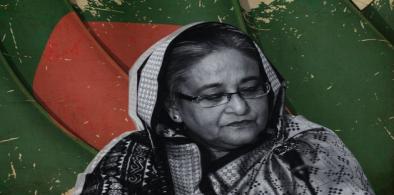
The considerable economic progress under Hasina's governance starkly contrasts with the stagnation in political reforms. Persistent issues such as limited press freedom, corruption, and inadequate improvements in democracy, rule of law, and human rights have marred her administration’s record

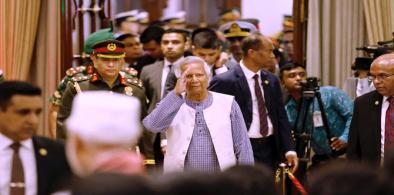
Bangladesh at crossroads: Expectations high from interim government on restoration of democracy

The interim government is led by civilian leadership. However, the extent of military control in this government remains unclear. According to some political observers, even if not officially present, the military will have a significant influence on this government. 

After Olympian rivalry, a lesson in civility from Indian and Pakistani mothers

At a time when unvarnished animus for one another is often the norm in India and Pakistan, not to mention Bangladesh now, the two simple women have offered a lesson in decency, dignity and civility.

The unending agony of Afghan women: Caught in the stranglehold of a deeply patriarchal society

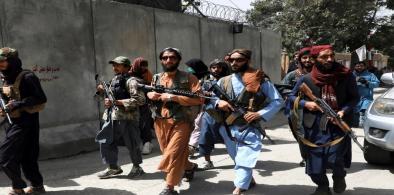
Rural women have said that the physical and sexual security of women was strongly protected under the Taliban regime. The women in Afghanistan are caught in a conundrum. While they resent systemic social repression and denial of gender rights under the Taliban regime, the return of political instability in the country they fear can increase their physical and sexual insecurity.

Rampant smuggling across Afghan-Pak border jeopardising regional security

Smuggling activities along the Afghan border are often linked with militant groups and organized crime. The illegal trade of arms has contributed to the proliferation of the "Kalashnikov culture" across the length and breadth of Pakistan. 

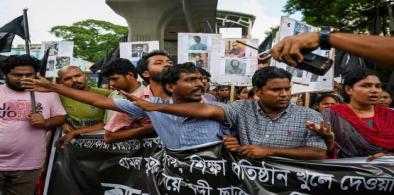
Nightmare returns in Bangladesh: Extremists aim to destabilise country under guise of student protest

Given the nature of these 'student' demonstrations, it is apparent that Bangladesh faces serious danger from a network of underground political activists and extremists aiming to destabilise the country. These issues are putting Prime Minister Sheikh Hasina's leadership to the test

Securing the digital frontier: India needs to adopt a holistic strategy to strengthen cybersecurity

Google and Facebook, which collect vast amounts of user data, will be required to overhaul their data-handling practices to meet the stringent requirements of the bill. Critics argue that certain provisions grant excessive power to the government, potentially undermining the very privacy protections the bill seeks to establish.

The growing salience of India’s state governments in expansion of India-UAE ties

A growing area of cooperation between India and the UAE is agriculture. UAE has committed to setting up three food parks in India - in the states of Haryana, Gujarat and Madhya Pradesh - at an estimated cost of $2 billion to address the issue of food security as both countries had also agreed to set up a food corridor. 

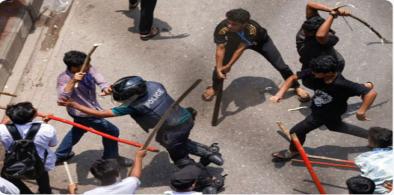
Bangladesh's quota movement: From peaceful protests to attempt at 'Bengali Spring'?

It is undeniable that although the movement was initially for quota reform, it later took the shape of a movement to overthrow the government. It was an attempt to taste power through undemocratic, back-alley, violent means. An attempt was made to create a "Bengali Spring: in Bangladesh in the style of the Arab Spring.

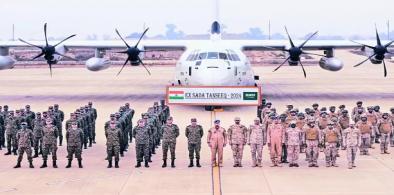
Exponential growth in India-Saudi Arabia relations: Moving past the Pakistan factor

The inclusion of the military dimension in India-Saudi Arabia relations is of great strategic significance which is expected to gain more momentum in the future.

Bangladesh's Solar Home Systems are an exemplar in energy access and climate resilience

Bangladesh's triumph in off-grid renewable energy, epitomized by the SHS program, serves as a global benchmark. The collaborative efforts of government, private sector, and public entities have ushered in a new era of sustainable energy. 

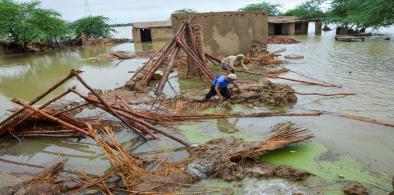
Pakistan's climate emergency cries for timely action and international support

Pakistan's climatic catastrophe requires a global response. Developed countries must fulfill their pledges to provide financial and technological assistance to developing countries like Pakistan so that they can effectively mitigate and adapt to climate change.

Gratuitous advice amid global disorder: US needs to smell the roses

Quite unequivocally, strategic autonomy would be a hallmark of India’s foreign and security policy allowing it to oscillate between strategic proximity and strategic distancing depending on the circumstances and need of the hour. New Delhi would certainly not be guided by the script the US, or its Western allies prescribe.

Can Afghanistan transcend its dubious legacy of terrorism?

Madrassas in Pakistan and Afghanistan, often funded by Gulf states, have spread extremist ideologies. Saudi-financed madrasas in Pakistan taught Wahhabism, fostering a transnational network of militants using Afghanistan as a base. The U.S. and Saudi Arabia provided substantial aid and funding to these madrassas and the Mujahideen, promoting jihad against the Soviets. 

Pakistan’s economic recovery contingent on political stability

Pakistan's continuous political turbulence, characterised by infighting and power rivalries, poses a serious threat to the country's economic development.

Newsletter Subscription

The subscriber's email address.
Stay informed - subscribe to our newsletter.