Md. Saiful Islam Shanto

Md. Saiful Islam Shanto

About Md. Saiful Islam Shanto

Md. Saiful Islam Shanto is a Research Assistant at the Centre for Governance Studies (CGS) and a  distinguished Research Scholar in International Relations based in Dhaka, Bangladesh. He completed his M.S.S. (Research) and B.S.S. (Honors) in International Relations from Jahangirnagar University, securing top merit positions in both degrees. His research focuses on Security Studies, Peace and Conflict Studies, South Asian Politics, Chinese Foreign Policy, Regional Cooperation, Migration and Border Studies, and Environmental Politics. His academic work includes research on terrorism and South Asian politics, radicalization among youth, China’s role in global conflicts, migration governance, and China-Africa economic relations. He has published in peer-reviewed journals and regularly contributes analytical pieces on foreign policy, regional security, and diplomacy to national and regional platforms. He has also participated in international academic forums in Turkey, the Maldives, India, and Sri Lanka, reflecting his commitment to research, dialogue, and evidence-based policy engagement. He can be reached at md.saiful.stu2018@juniv.edu, and his personal website is https://mdsaifulislamshanto.com/.

More From Md. Saiful Islam Shanto

Why India and Pakistan Must Move From Rivalry to Responsibility: In Fragmenting Global Order, South Asia Cannot Afford Internal Paralysis

The central lesson is simple: unresolved India-Pakistan hostility weakens South Asia from within. It prevents trade, blocks institutions, raises nuclear risk, politicizes water, militarizes borders, and diverts attention from human development. Both countries will continue to disagree on major issues. But disagreement does not require permanent…

China’s Soft Power Test in South Asia: It has Growing Influence and Dependency, but can it Build Trust?

The real question for South Asia is not whether to engage with China. That question is already settled. Every country in the region engages with China in some way. The real question is how to engage wisely. South Asian governments need transparency in project contracts, stronger debt management, competitive bidding, parliamentary oversight,…

In Fragmenting Global Order, South Asia Needs Strategic Balancing, Regional Cooperation

South Asia’s problem is not that it lacks importance. Its problem is that it lacks collective strategy. Each country is trying to survive the new order separately. India seeks global-power status. Pakistan seeks strategic relevance and economic stability. Bangladesh seeks balanced partnerships and export security. Sri Lanka seeks recovery.…

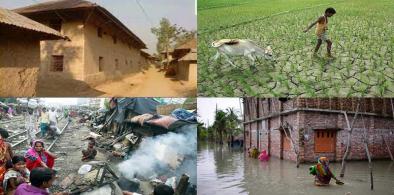
Climate Refugees Are Rising: Is South Asia Prepared for a Looming Climate Disaster?

South Asia is therefore not facing one climate migration crisis. It is facing many at once. Coastal displacement in Bangladesh and the Maldives is different from mountain displacement in Nepal and Bhutan. Flood displacement in Pakistan is different from drought-linked distress in Afghanistan. India contains almost every version of the crisis…

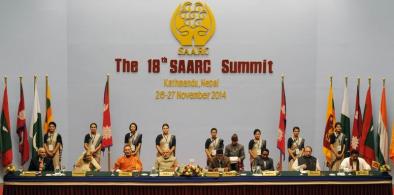
SAARC vs BIMSTEC: Why Regional Integration is Failing in South Asia

South Asia cannot remain an archipelago of isolated economies connected only by shared history and mutual suspicion. Changing acronyms does not change reality. Summit declarations will not achieve true economic integration. True integration requires the political courage to dismantle physical and bureaucratic walls. Only then will the region…

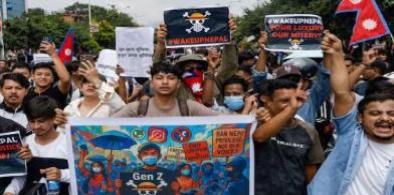
Nepal at a Crossroads: Will the Elections Usher in a Generational Shift in Country's Murky Politics?

A prominent feature of this election is the massive influx of youth participation. Approximately 800,000 first-time voters are preparing to cast their ballots, and over 1,000 candidates under the age of 40 are contesting, signaling a profound generational shift. The political landscape is witnessing fierce competition between established…

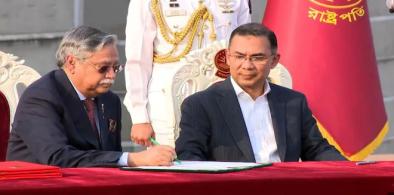
Rethinking Bangladesh’s Foreign Policy: Test For a More Assertive "Bangladesh First" Doctrine

The most immediate and delicate challenge for the new government lies in its relationship with India. Following the events of August 2024 and the subsequent transitional period, the bilateral bond has faced unprecedented strain. The presence of former prime minister Sheikh Hasina in India remains a friction point, yet the early signs of 2026…

China's New Great Game: How Beijing is Redrawing South Asian Geopolitics

China's rise has, in the consensus view of most international relations scholars, fundamentally changed South Asia. The old, India-centric region is gone. Pakistan has tied its future to Beijing, seeing China as its ultimate guarantor. Bangladesh has played a smart game, using Chinese money for national development while maintaining its "…

Global Geopolitics Is BlindIng South Asia to Its Real Security Threats

We are, in effect, meticulously polishing our guns while the floodwaters rise around our feet. It is time for a profound strategic recalibration. We must pivot from a security doctrine based on state-centric containment to one based on region-wide, human-centric resilience.

50 Years Of Bangladesh-China Ties: Trade, Infrastructure Investment Underpin The Relationship

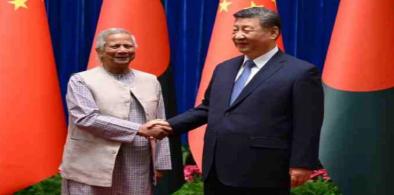
China has become Bangladesh’s top development partner, providing the capital and engineering expertise. It provided funding and construction for the $4.63 billion Padma Bridge Rail Link. This project connects the underdeveloped south to the capital. China also built the $2.48 billion Payra Thermal Power Plant, a critical piece of energy…