

India-Mongolia Buddhist Partnership: A Civilisational Bridge Linking India’s Buddhist Heritage with Mongolia’s Contemporary Revival
The profound emotional connection was vividly evident in 2022 when, as the Indian delegation accompanying the relics entered the Gandan monastery, members of the crowd reached out to touch them, expressing their reverence for those who had come "from the land of the Buddha".
 Sep 22, 2026

For centuries, Mongolia has evoked the image of a distant and enigmatic land, its history shaped by conflict, conquest and the rise of extraordinary leaders - foremost among them Genghis Khan, revered by the Mongolians as the founding father of their nation. Mongolian rulers, beginning with Genghis Khan, developed a formidable military machine distinguished by extraordinary mobility, highly disciplined cavalry, innovative battlefield tactics, exceptional horsemanship and a remarkable ability to adapt to different forms of warfare. These strengths enabled the Mongols to move with unprecedented speed across vast distances and, within a remarkably short period, establish one of the largest contiguous empires in history.
Significantly, Genghis Khan expanded the empire into Central Asia and China. At the time of his passing away in 1227, Mongol power extended from China and Mongolia across Central Asia to Persia and the approaches to Eastern Europe. While Genghis Khan opened the door to China, by conquering much of northern China controlled by the Jin dynasty, his successors - particularly Ogedei Khan and Kublai Khan - completed the conquest of the whole of China. Kublai Khan conquered Southern China and transformed the Mongol conquest into a Chinese imperial dynasty.
Instead of declaring himself the Mongolian ruler of China, Kublai Khan made a fundamental political transformation by becoming the emperor of China. In 1271, he proclaimed the Yuan dynasty, presenting himself within the Chinese imperial traditions. He moved the political centre of the Mongol empire to northern China and established his capital at Khanbaliq (Dadu), essentially present-day Beijing. This gave Mongol rule a Chinese political and administrative identity while retaining Mongol supremacy.
The Arc of Mongol Empire
At its greatest extent in the late 13th century, the Mongol Empire stretched from the Pacific Ocean and Korea in the East across China, Central Asia and Persia to the Middle East and eastern Europe in the West. The stretch covered around 24 million square kms, making it the largest contiguous land empire in history. In today’s term, it covered modern-day China, Mongolia, Russia, Kazakhstan, Central Asia, Iran, Iraq, the Caucasus and Ukraine reaching into Eastern Europe. Genghis Khan is thus regarded as the founder of the Mongolian nation and state.
One of the enduring challenges faced by Mongolian rulers was the deeply fragmented nature of Mongolian society, comprising numerous tribes, clans and sub-clans, each seeking to preserve and assert its own power and authority. The Mongols, Kereit, Naiman, Merkit and Tatars, among others, were frequently engaged in rivalry and warfare. Genghis Khan’s extraordinary achievement lay in transcending these divisions.
Through a combination of military victories, personal alliances, diplomacy and the skillful redistribution of tribal loyalties, he transformed a fragmented tribal society into a remarkably cohesive, disciplined and powerful political and military organisation.
Created the Space for Buddhism
An equally important quality of Genghis Khan was his pragmatism and openness towards different belief systems, religious practices and cultural traditions. Rather than allowing religious differences to become sources of division, he generally accommodated and respected diverse traditions. This broad-minded approach created the political and social space in which Buddhism could, over time, find a place within Mongolia’s ruling establishment.
Initially, however, Buddhism remained largely confined to sections of the population, without developing a deep and broad-based connection with Mongolian society.
As the Mongolian elite became more familiar with the philosophy and ethical values of Buddhism, its emphasis on compassion, wisdom, inner discipline and peace began to acquire greater relevance in a society that had experienced prolonged periods of conflict and violence. Contacts with Tibetan Buddhist masters and monks consequently increased, facilitating a sustained exchange of religious knowledge, philosophical thought and monastic traditions. This interaction enabled Buddhism to gradually establish a place within Mongolia’s complex politico-social and religious landscape.
In a society where warfare, death and destruction had often been accepted as part of political life, Buddhist teachings offered an alternative moral and philosophical framework centred on compassion, wisdom and the pursuit of peace.
Patronage of Ruling Establishment
The decisive transformation came in the 16th century, during the reign of Altan Khan (1507 – 1582), when Buddhism, particularly in its Tibetan form, gained strong patronage and acceptance of the Mongolian ruling establishment and began to emerge as a major religious and cultural force. It subsequently played an important role in integrating diverse tribes, clans and sub-clans, providing them with a broader spiritual and cultural identity that transcended older intra-tribal divisions.
Monasteries evolved far beyond being places of worship, and emerged as centres of learning, education, culture, scholarship and social organisation. Buddhist monks, by virtue of their moral authority and relative distance from tribal rivalries, were able to create bridges across ethnic and clan divisions and held moderate antagonisms within Mongolian society.
Altan Khan was also responsible for leveraging the popularity of Buddhism in creating an effective politico-religious mechanism to oversee the functioning of the state. His historic encounter with Sonam Gyatso, the 3rd Dalai Lama, in 1578 marked a decisive turning point. Altan Khan bestowed upon Sonam Gyatso the title “Dalai Lama”, meaning “Ocean Lama”, a title that was subsequently applied retrospectively to his two predecessors, thereby establishing Sonam Gyatso as the 3rd Dalai Lama.
The relationship between the two went beyond a conventional association between a ruler and a religious teacher. It created a mutually reinforcing bond wherein the Dalai Lama offered spiritual authority and religious legitimacy to Altan Khan’s rule, while Altan Khan provided powerful political patronage to the Gelug tradition.
This alliance gave the Gelug school a formidable Mongol patron and opened the way for systematic expansion of Tibetan Buddhism across Mongolia.
Centre of Buddhist Civilisation
During the 17th and 18th centuries, Buddhism became increasingly institutionalised and deeply embedded in Mongolian social and political life. The establishment of the Jebtsumdumba Khutuktu lineage provided Mongolians with their own enduring spiritual institution and a distinctive indigenous expression of Tibetan Buddhist leadership. Over the following centuries, an extensive network of monasteries and monastic institutions emerged, making Mongolia one of the great centres of Buddhist civilisation in Inner Asia. By the 18th and 19th centuries, the scale and influence of the monastic establishment were remarkable.
More importantly, Buddhism gradually transcended its purely religious role and became a repository of learning, culture, art, literature, and collective memory, and provided a shared spiritual identity that could rise above older tribal and ethnic divisions.
Decline and Revival of Buddhism
By the beginning of the 20th century Buddhism had become inseparable from Mongolia’s cultural and national identity. However, Buddhism entered one of the darkest chapters of its history in Mongolia during the 1920s and 1930s, following the establishment of the communist regime. The Buddhist establishment came under severe state persecution with thousands of monks arrested, executed, imprisoned or forced to abandon monastic life, while hundreds of monasteries were closed, dismantled or destroyed. From the 1940s until 1989, Buddhist faith and practice survived, often quietly and away from public view. A limited number of religious institutions were permitted to function under strict state supervision, most notably the Gandan monastery in Ulaanbaatar, which became an important custodian of Mongolia’s Buddhist tradition.
The collapse of communism and Mongolia’s transition to democracy in 1990 opened the way for an extraordinary revival of Buddhism. Monasteries were restored or re-established, monastic life began to flourish again, and Buddhist scholarship and practice regained a visible place in Mongolian society.
Role of Amb Kushok Bakula
Among the most influential figures in this revival was Ven. Kushok Bakula Rinpoche, the distinguished Ladakhi Buddhist monk who served as India’s Ambassador to Mongolia from 1990 to 2000. His unique position both as a senior Buddhist leader and a diplomat enabled him to build a remarkable bridge between India and Mongolia. He played an important role in the revival and institutional strengthening of Buddhism in post-Communist Mongolia, while simultaneously reconnecting Mongolian Buddhists with India. His contribution, especially in guiding and supervising the process of construction of several monasteries across Mongolia, remains an important chapter in the contemporary India-Mongolia Buddhist relationship.
Ven Kushok Bakula Rinpoche also established the Pethub monastery in Ulaanbaatar which is a symbol of relations between India and Mongolia as far as Buddhism is concerned. Today, around 400 Mongolian monks study in different monasteries in India and form the modern-day bridge between the two countries. Many of those having studied in India, over a period of time, have moved up the ladder in the Buddhist eco-system in Mongolia and have contributed significantly towards advancement and evolution of Buddhism in Mongolia. Today there is a strong bond also between Mongolian Buddhist intellectual institutions and their counterparts in India.
India's Contribution to Buddhism Revival
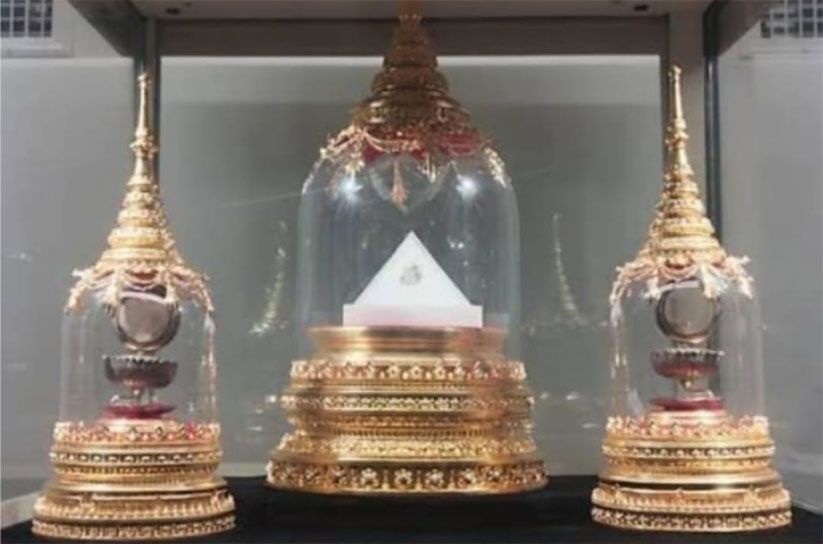
India regards Mongolia not merely as close friend but as a valued civilizational partner, with whom it shares a profound Buddhist heritage and a relationship built on mutual respect, trust and good will. In keeping with this enduring spirit of cooperation, India brought the sacred relics of the Buddha to Mongolia in 2022, followed by the sacred relics of Arahat Sariputta and Arahat Mahamogallana in May-June 2026. On both occasions, the relics were placed at Gandan monastery in Ulaanbaatar for public veneration. The extraordinary response from the public revealed the depth of Buddhist faith that continues to live in the hearts of the Mongolian people.
The profound emotional connection was vividly evident in 2022 when, as the Indian delegation accompanying the relics entered the Gandan monastery, members of the crowd reached out to touch them, expressing their reverence for those who had come "from the land of the Buddha".
India’s contribution to Mongolia’s Buddhist revival extends beyond the exposition of sacred relics. It has also sought to help preserve and reconnect Mongolia with its rich textual and intellectual heritage.
India has undertaken the reprinting of the 108 volumes of the Mongolian Kanjur, the monumental collection of Buddhist scriptures, with a set presented to Gandan Monastery in 2025 and additional sets to be provided in due course. India has also continued to support Mongolia’s Buddhist resurgence, building upon the pioneering contribution of Ven. Kushok Bakula Rinpoche, in reconnecting the two countries after Mongolia’s democratic transition.
More broadly, India offers Mongolia access to the philosophical, academic and monastic traditions from which Mongolian Buddhism ultimately evolved - including the intellectual heritage associated with Nalanda and the wider Indian Buddhist tradition.
For Mongolia, therefore, India can be a spiritual source, a trusted guide, a knowledge partner and a custodian of the civilisational heritage that binds the two countries together. For India, Mongolia offers an important and uniquely receptive partner through which its ancient Buddhist heritage can be translated into contemporary cultural influence and people-to-people connectivity. The future partnership could embrace monastic education and training, Sanskrit and Tibetan studies, restoration of Mongolia’s historic monasteries, capacity-building for monks serving remote communities, manuscript preservation and digitisation, Buddhist tourism and pilgrimage in India, youth programmes, Nalanda-Gandan academic linkages, and joint research into the historic transmission of Buddhism from India through Tibet to Mongolia.
For India, therefore, supporting Mongolia’s Buddhist revival is not merely an act of religious or cultural preservation. It represents an opportunity to reconnect Mongolia with the Indian intellectual, philosophical and Buddhist traditions from which its Buddhist heritage ultimately emerged, while deepening a relationship rooted in shared civilisational memory.
India can contribute not only through the restoration of monasteries and preservation of scriptures, but also by expanding monastic education, Sanskrit and Tibetan studies, manuscript preservation and digitisation, Buddhist pilgrimage, youth exchanges, and institutional linkages between Nalanda and Gandan. Such initiatives can transform historical connections into a living network of knowledge, culture and spiritual exchange.
A sustained India-Mongolia Buddhist partnership can thus become a distinctive civilisational bridge, linking India’s Buddhist heritage with Mongolia’s contemporary revival and creating a durable foundation for people-to-people ties between the two countries.
(The author is associated with the Indian government & public policy industry and holds a PhD in International Relations. The views expressed are personal.)





Post a Comment