
Student protests

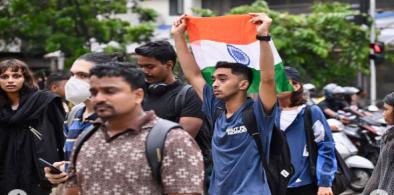
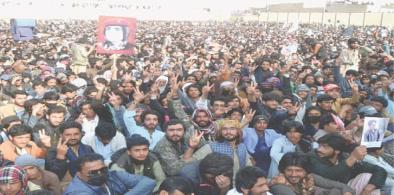
Students Must Study; But They Must Also Ask Questions and not Ignore Injustice

When the university community itself has not succeeded in resolving many serious problems confronting higher education, on what moral basis should students simply be asked to remain silent and trust the system?

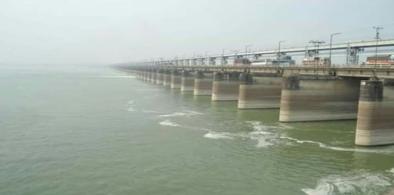
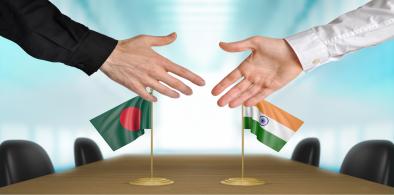
The Ganga Water Treaty Needs More Than Renewal: It Needs Reinvention

The treaty that once symbolized diplomatic success should now become a model for climate-resilient hydro-diplomacy. The river has changed, the climate has changed, and the needs of both nations have changed. The treaty must change with them.

From Farm Chickens to Cockroaches: Why South Asia’s Gen Z Is So Restive

Until the region’s economies produce jobs, and its ministers produce respect, at the pace they produce graduates, South Asia’s Gen Z will keep finding new, and increasingly desperate, ways to be heard

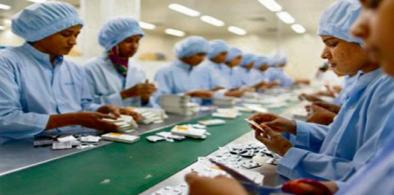
Bridging the Policy Gap: Why Northeast India Cannot Tap Bangladesh Pharma Market Across the Border?

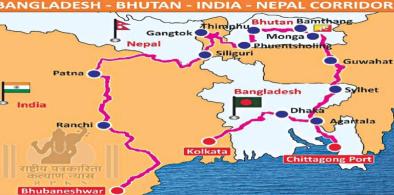
The real question is simpler: do Indian states want to use a resource that is geographically closer, internationally certified, available already, or would they prefer to continue to suffer from a yearly deficit on the other side of the Corridor?

More on Education and Gen Z Voices

The Hormuz Lifeline: Why India’s Energy Security Still Runs Through A 33-Km Strait

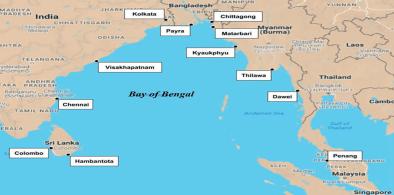
India’s diversification strategy, often cited as a mitigating factor, provides only partial relief. The country now sources crude from over 40 countries, and in recent years has increased imports from Russia, the United States, and West Africa. In fact, about 70% of crude imports are now routed outside Hormuz, reflecting a conscious shift in sourcing strategy.

South Asia’s Cities Are Growing - But May Not Remain Livable

What is unfolding across South Asia’s cities is not just an urban crisis, it is a reflection of deeper tensions within development itself. Growth is happening, but it is not translating into stability. Opportunities exist, but they are unevenly distributed. Systems are expanding, but not fast enough to keep up with demand. Cities, which have long been seen as places where people come to improve their lives, are increasingly becoming spaces where people struggle to sustain them. 

Reevaluating Shakti: Transforming Divine Energy into Powerful Social Capital in South Asia

In modern South Asia, Shakti has been reborn in a different way through social reforms, feminist movement and gender equality policies. Rather than being rooted mainly in the kinship systems, feminine power now becomes more manifest in legal rights, schooling, political involvement and social movements. South Asian feminist movements have been inspired by world notions about gender justice and local cultural practices. In most situations, activists rebrand the concept of Shakti to mean the power of women, their independence and their struggle against patriarchy. 

India’s Strategic Autonomy And Lessons For World Politics

India’s experience shows that strategic autonomy, strong institutions, and long-term thinking remain the most effective tools for safeguarding national interest in an unequal global system, where power is concentrated in the hands of a few states and pressure on independent countries is a constant reality.

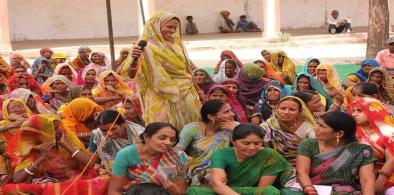
Witch-Hunting Persists in South Asia Targeting Vulnerable Women: Needed Stronger Protection Mechanisms

Social scientists argue that witch-hunting is a complex social phenomenon rooted not merely in superstition but in structural inequalities. Scholars studying rural India, including Surinder Jodhka, note that accusations of witchcraft often intersect with caste conflict, gender discrimination, and disputes over property or land. Elderly women, widows, and socially marginalized individuals frequently become easy targets because they lack protection within local power structures.

Gorkhas are Not Nepalese: Ending the Migrant Myth and the Indian Gorkha Identity Crisis

The valour of Gorkha regiments in the Indian Army is often used by the community as the ultimate proof of their Indianness. Since 1947, Gorkha soldiers have participated in every major conflict, be it Indo- Pakistan wars of 1947,1971,1999 or the Indo-China war of 1962. However, this valor is frequently undermined by the very state they defend, as civil and administrative bodies often treat them as "foreigners" even as they receive gallantry awards. 

Greenland, Great Power Politics, And India’s Strategic Imperative: A Realist Geopolitical Analysis

Greenland’s geopolitical prominence illustrates how a distant region can reflect deeper shifts in global power, economics, and security. For countries like India, Greenland is not about territorial ambition; it is a reminder that structural shifts in global power dynamics transcend geography. In a realist world, engagement is not optional; it is necessary for safeguarding long-term interests in a system where power continually redistributes itself. 

Rethinking Affirmative Action in India’s Universities: Needed Structural Reform, Not Symbolic Arithmetic

Reservation in education has achieved moral legitimacy and expanded access, but it has also created new inequalities and stagnation. Its future lies not in expansion or abolition, but in redefinition. Affirmative action must evolve from symbolic arithmetic to structural reform, grounded in data and fairness.

Podcast featuring Ashok Sawhny "Sahil"

In this exclusive conversation, Mehran Shah sits down with Ashok Sawhny Sahil, a renowned businessman and celebrated poet.

Tanhayi

Jagaiyo Na Mujhe Yaan̈
Bohot Andhera Hai

Let’s Think Again

Let’s Think Again Impatience they say,
now holds sway Impatience will bring forth gains,

What Good Is Imprecation?

What good is imprecation?
Why would you harm invoke?

Eyes

Eyes Never look at me and lie,
Cos eyes are windows to the soul,

The World Seen Through the Eyes of the Blind

How much different would the world appear Seen through the eyes of the blind?

If God Resides In The Hearts of Men

If God resides in the hearts of men
As I believe He does,